Keeping equipment powered in a remote location usually means relying on a diesel generator—and arranging regular deliveries to keep it fueled. California-based 123eSolar has developed a more efficient alternative that puts solar panels, battery storage and a backup diesel generator on one towable platform.
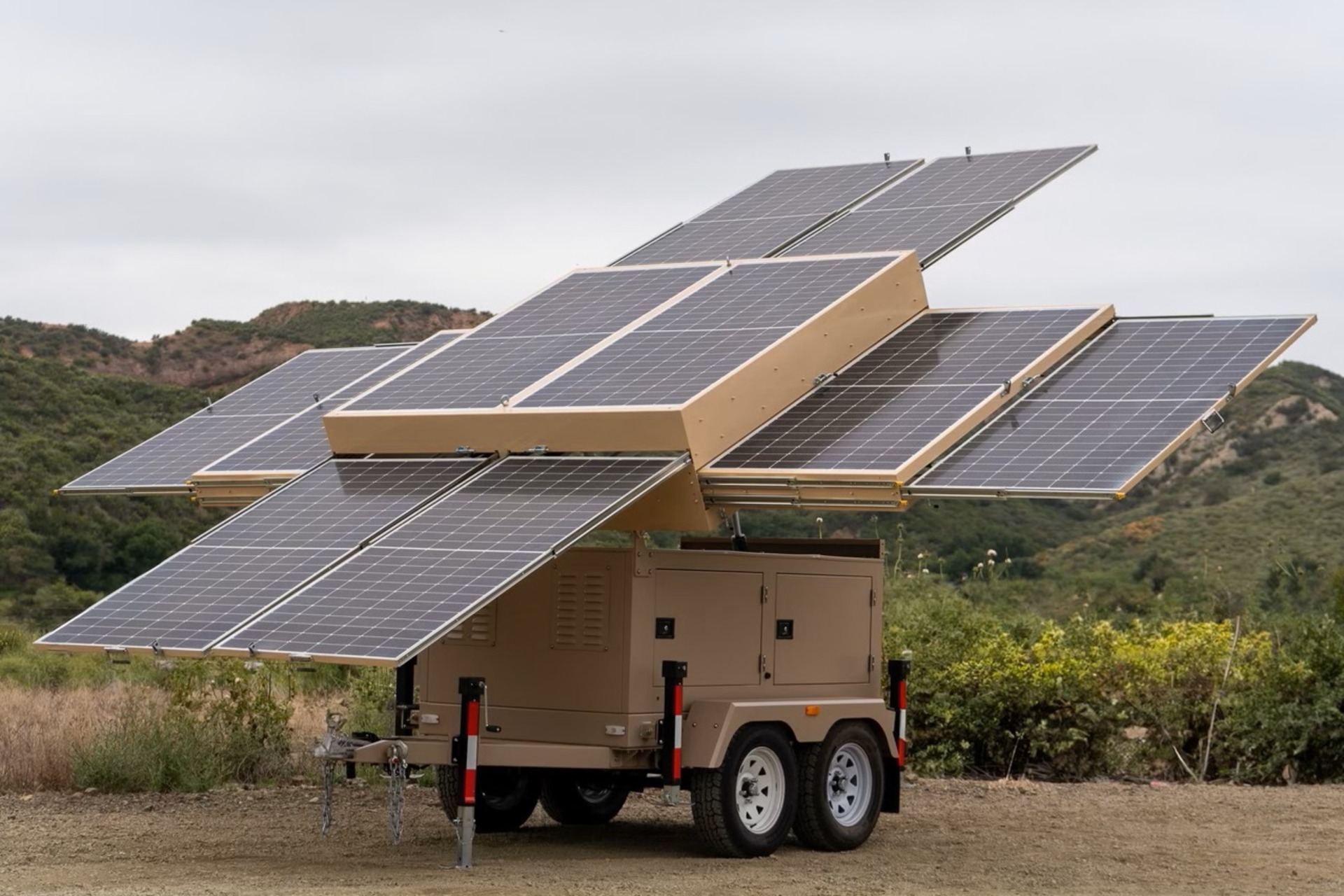
Called the 123-STG-4 Alpha 10 Tri-Brid Generator, the system is designed to supply continuous off-grid electricity while running its engine only when necessary. A hydraulically deployed solar array collects energy during the day, a 19-kWh battery powers the connected load, and an integrated 12-kW diesel generator starts automatically when the battery needs additional support.
The result is a mobile power station intended for sites where grid service is unavailable, unreliable or too expensive to install.
Three energy systems on one trailer
The STG-4’s operating sequence is relatively straightforward. Its solar panels charge the battery, and the battery’s inverter converts the stored DC energy into stable 120/240-V AC power. When solar production drops below demand and the battery reaches its programmed threshold, the diesel generator automatically starts and recharges the energy cell.
This means the engine does not have to idle around the clock simply to support a small, steady load. During periods of strong sunshine and modest consumption, the trailer may operate for long stretches on solar energy and stored electricity alone. The diesel system remains available for nighttime operation, poor weather and periods of higher demand.
123eSolar calls the battery-and-inverter assembly its 123eNRG Power Cell. The company says it converts 97% of stored DC energy into AC electricity and can be remotely monitored along with fuel level and power consumption.
A ten-panel solar array that opens in 90 seconds
Ten photovoltaic panels form a 4.6-kW array that folds into a compact stack for transport. Once the trailer reaches the site, the panels extend outward and can be hydraulically tilted toward the sun.
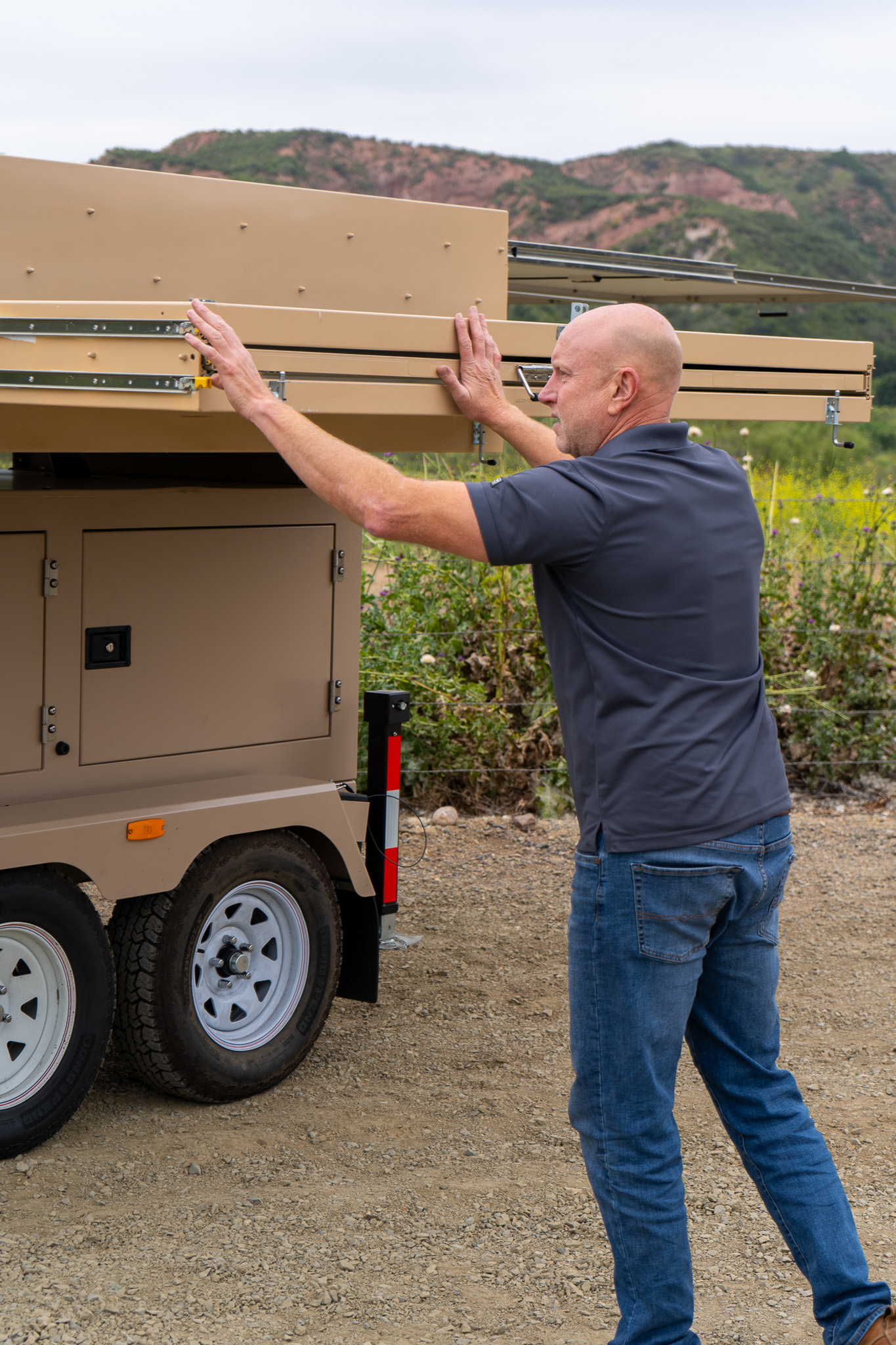
123eSolar says deployment takes less than 90 seconds. Fully opened, the array occupies an area of approximately 20 × 20 ft (6.1 × 6.1 m), so the site needs adequate clear space and an unobstructed view of the sky.
Actual daily energy production will naturally vary with location, season, weather, panel orientation and shading. With four to six equivalent peak-sun hours, a 4.6-kW array could theoretically produce around 18–28 kWh before system losses. That could cover a substantial portion of the daily consumption at a communications site, monitoring station or other installation with a relatively steady load.
A 19-kWh energy buffer
The battery separates electricity consumption from immediate solar production. Equipment can continue operating when clouds pass over the array or after sunset, while the diesel generator can run in controlled charging cycles instead of continuously following the load.
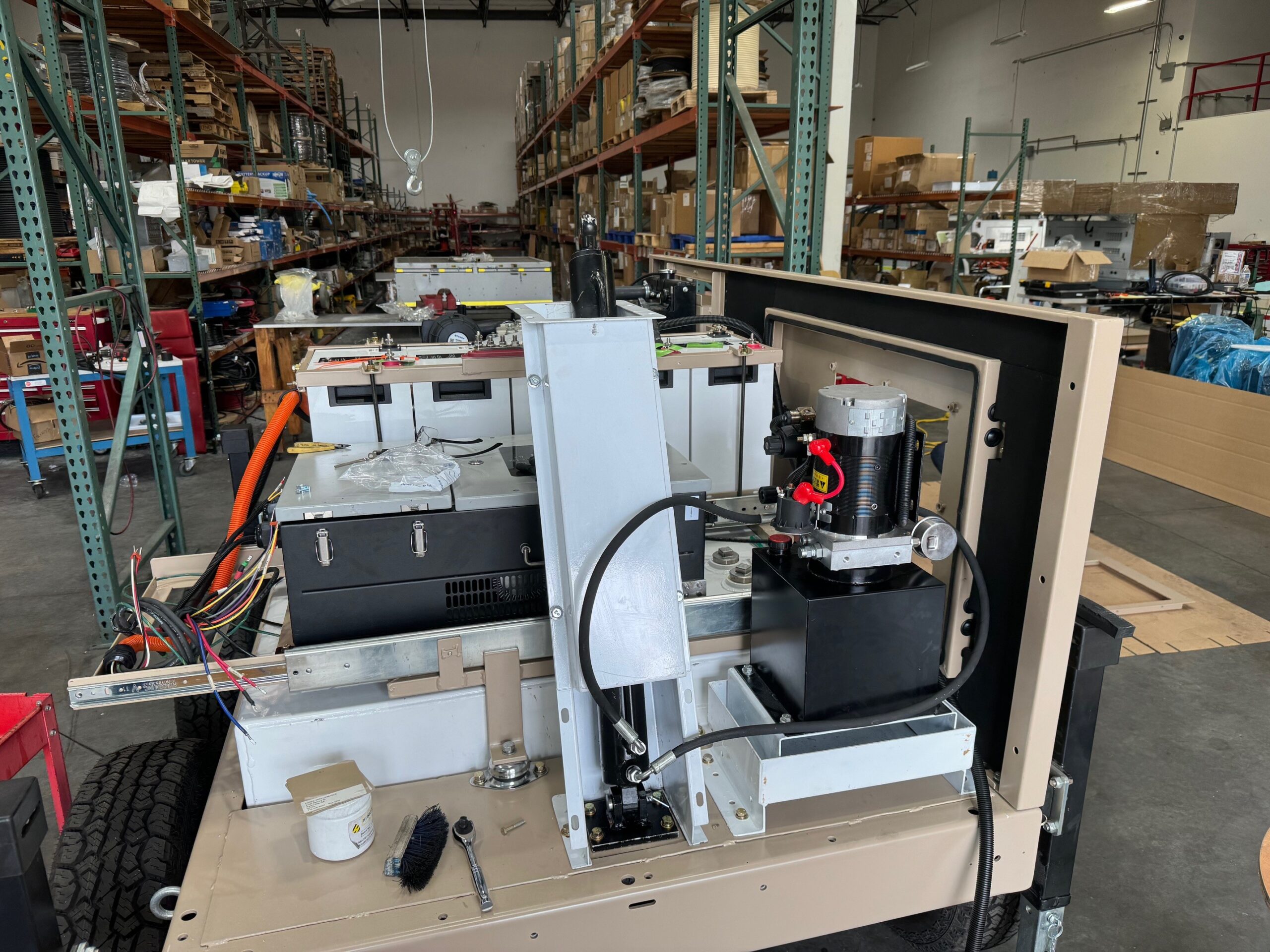
The system supplies single-phase, split-phase 120/240-V electricity through a female Cam-Lock 16 connection. 123eSolar’s downloadable specification sheet lists output of up to 6 kW continuously and 12 kW at peak, with a maximum current of 50 A.
That is enough for a wide range of tools, pumps, communications hardware, refrigeration, computers and temporary facilities. As with any power system, the equipment connected simultaneously must remain within its continuous and peak limits.
Diesel backup for round-the-clock operation
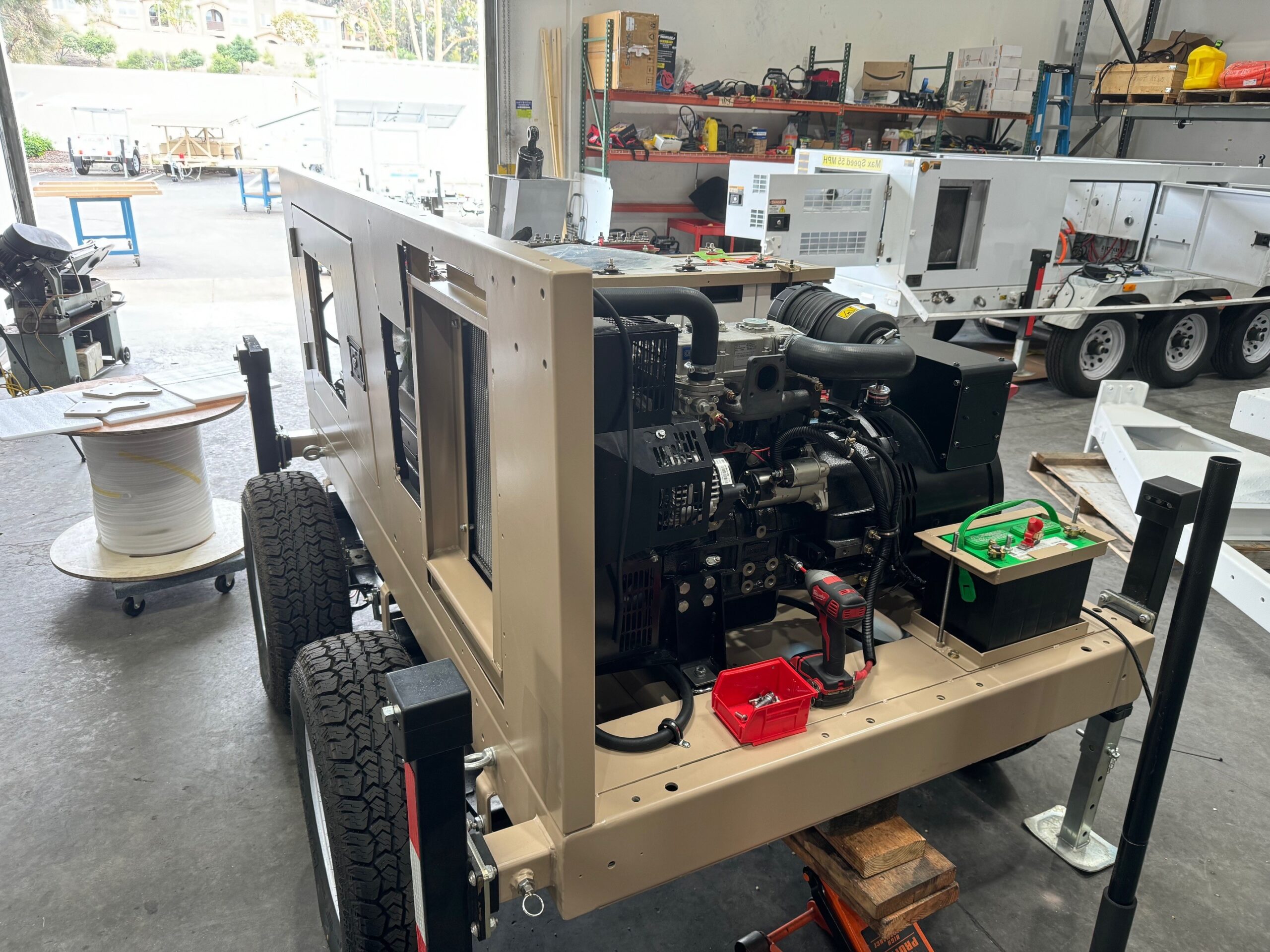
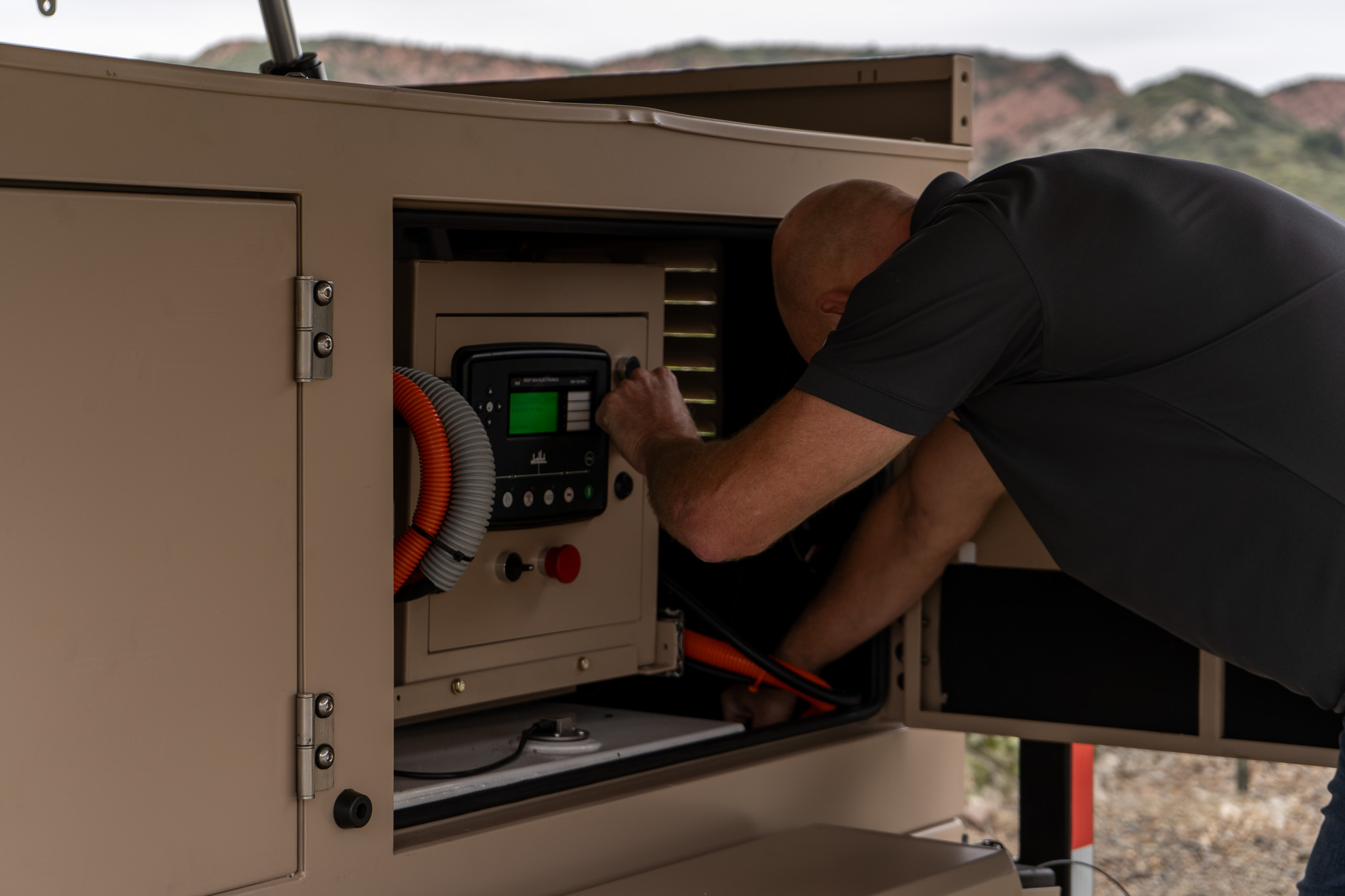
When solar and battery power are insufficient, the integrated 12-kW diesel generator takes over the charging work. It uses an EPA Tier 4 Final engine and draws fuel from a 90-US-gal (341-L) onboard tank.
Published fuel consumption is 1.21 gal/hr (4.58 L/hr) at full load. If the engine ran continuously at that rate, the tank would contain roughly 74 hours of fuel. In normal tri-brid operation, however, the engine is intended to run intermittently, allowing a tank to last much longer at suitable average loads.
123eSolar says its smart generator architecture can reduce fuel use by up to 80% compared with operating a conventional diesel generator continuously. The precise saving will depend on sunlight, electrical consumption and the generator being replaced, but the fundamental advantage is clear: every kilowatt-hour supplied by the panels or battery is one the engine does not have to produce at that moment.
The manufacturer lists a sound level of 69 dB for the diesel section. Solar-and-battery operation avoids engine noise and local exhaust emissions altogether until backup generation is needed.
Tow it to the job and plug in
With its panels folded, the dual-axle trailer measures approximately 12 ft long, 7.3 ft wide and 6.8 ft high (3.7 × 2.2 × 2.1 m). Its published weight is 3,800 lb (1,724 kg).
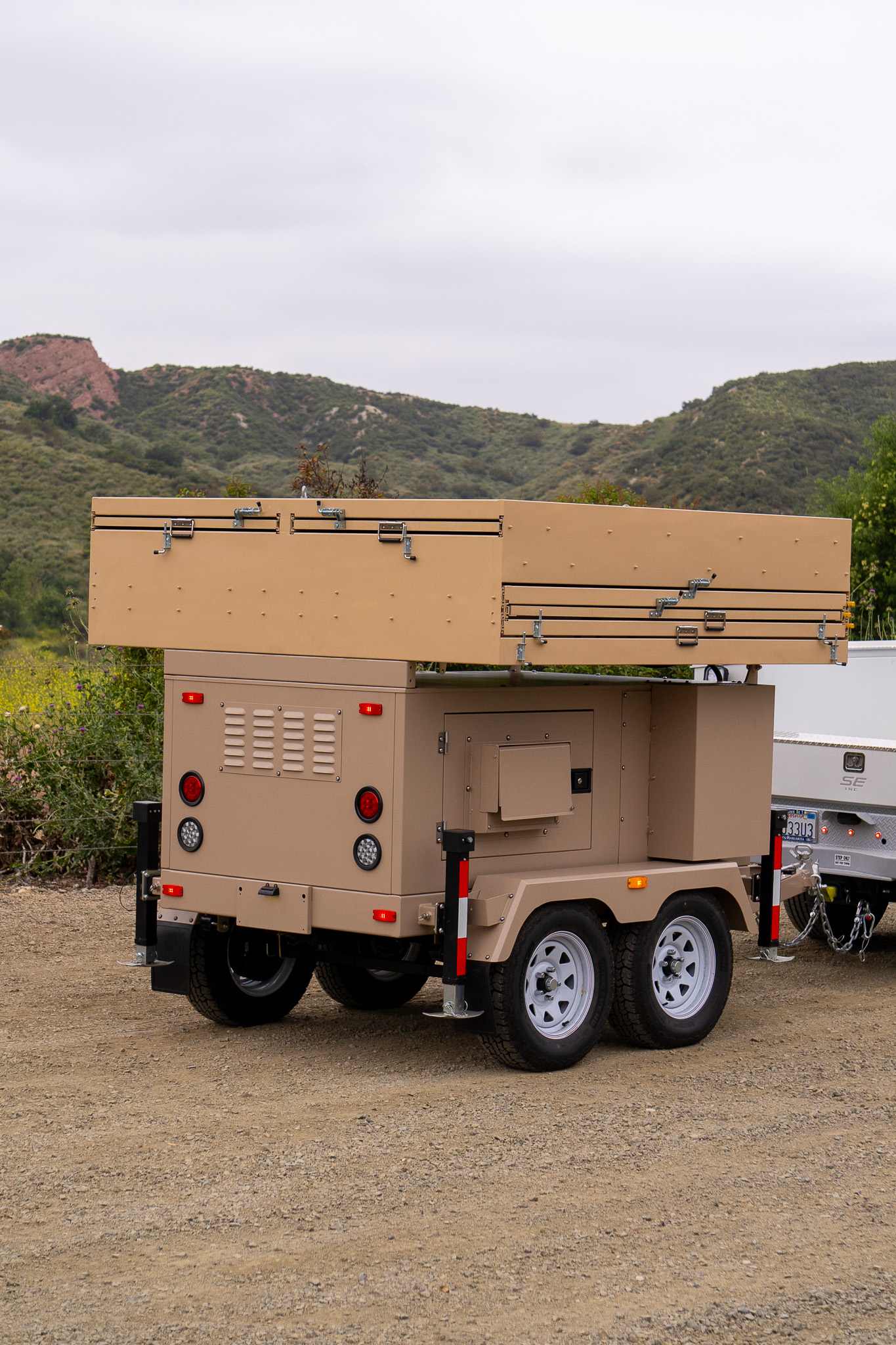
123eSolar says the STG-4 can be towed by a suitably rated three-quarter-ton pickup.
Once positioned, the operator stabilizes the trailer, deploys and tilts the array, connects the compatible load and switches on the output. This avoids pouring a concrete pad or waiting for a utility connection.
Remote monitoring lets an operator check fuel and energy consumption without remaining at the trailer. Automatic generator control makes the system particularly useful for unattended infrastructure.
Built for remote and temporary power
123eSolar identifies applications including seismic-monitoring networks, gas-reservoir instrumentation, telecommunications equipment and environmental research stations. The system could also support construction sites, agricultural equipment, emergency response, outdoor events, temporary offices and film production.
Projects needing more capacity can add battery strings and additional solar trailers. That allows customers to begin with one mobile system and expand the installation as their energy requirements grow.
Pricing and availability
123eSolar currently lists the Alpha 10 STG-4 as in stock and available for deployment, but it does not publish a fixed price. Buyers can submit the dedicated STG-4 pricing and project inquiry form with their application, contact information and power requirements.
That quotation-based approach makes sense for an industrial system whose final configuration may depend on monitoring, outputs, battery requirements, transportation and deployment support. Prospective buyers should request the complete equipment list, battery specifications, warranty coverage, delivered price and expected lead time with the quotation.
The STG-4 is not intended to eliminate diesel from every off-grid application. Instead, it uses the engine as a dependable safety net beneath two quieter energy sources. For installations with abundant sunshine and manageable average loads, that arrangement could provide the reliability of a conventional generator with fewer engine hours, lower fuel consumption and longer intervals between diesel refills.
Source: 123eSolar