A wind turbine normally needs a tall steel tower, a large rotor and a substantial foundation. German company EnerKíte is developing a system that moves the most visible part of the machine into the sky instead.
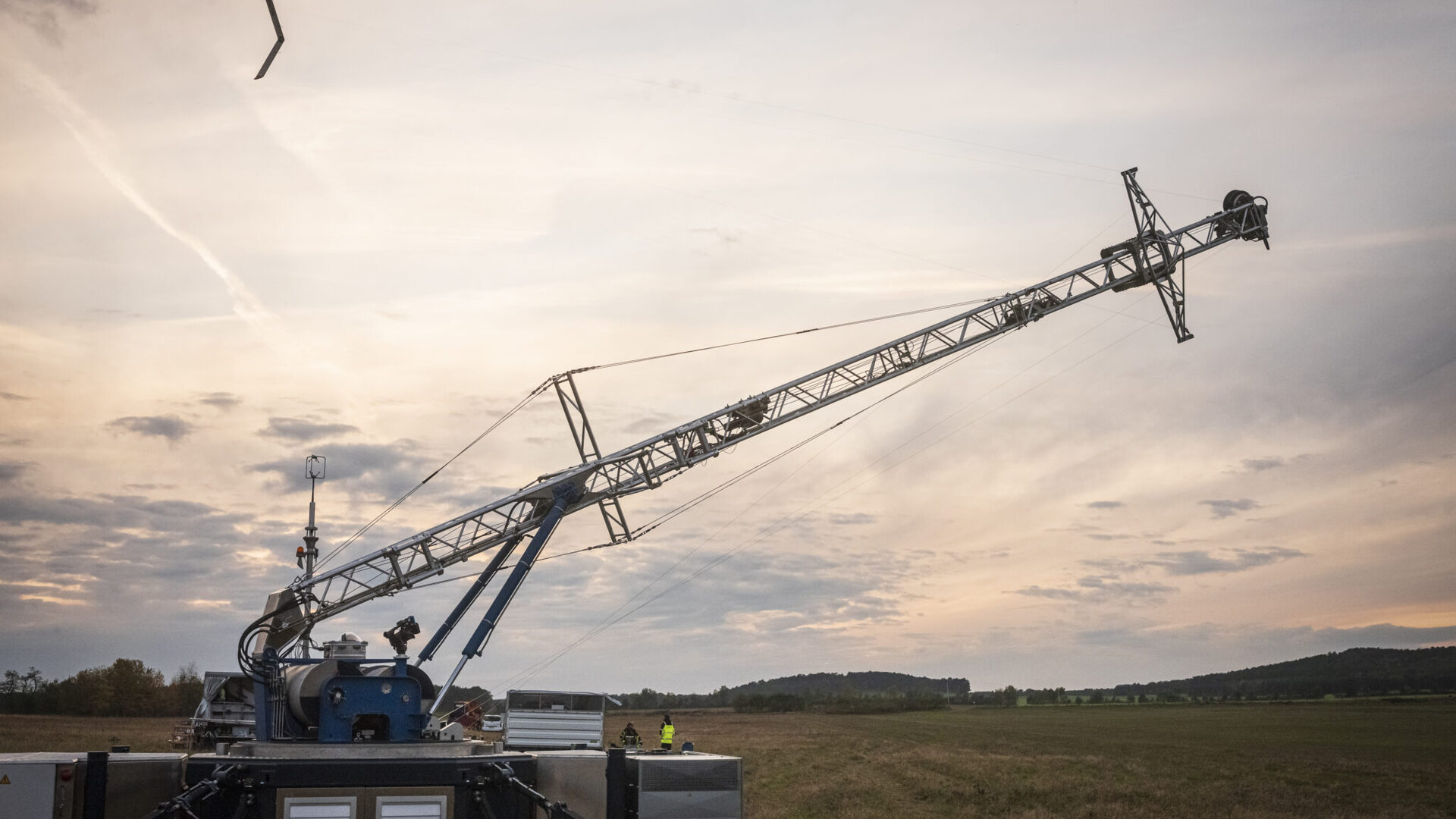
Its aircraft-like wing is attached to a ground station by three tethers. Once airborne, the wing repeatedly sweeps across the wind in figure-eight patterns, pulling the lines from drums connected to a generator. The result is an unusual form of renewable-energy technology that looks more like a giant automated kite than a conventional turbine.
EnerKíte is now working toward the commercial introduction of the 100-kW EK100. The technology has completed important automated flight tests, but it remains in the product-development and demonstration stage rather than widespread commercial operation.
The generator stays on the ground
EnerKíte uses a configuration known as ground-generation airborne wind energy. Instead of placing a generator in the flying wing, the system converts the pull of the tethers into electricity at ground level.
During the power-producing phase, the wing flies crosswind in repeated figure eights. This motion creates high tension in the lines and unwinds the tether drums. Their rotation drives a generator inside the ground station.
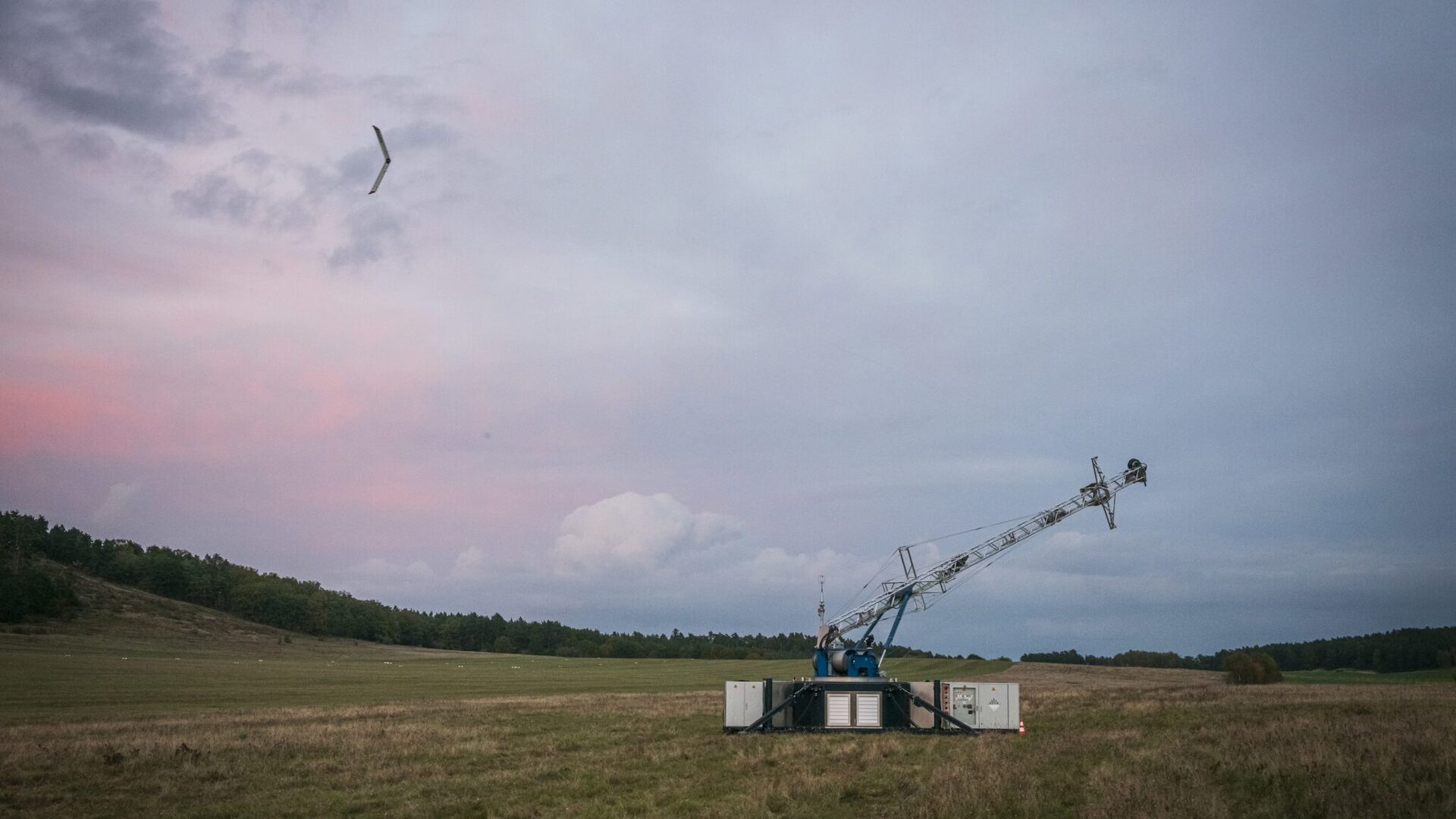
When the lines reach the end of the productive stroke, the control system changes the wing’s flight path to reduce its pulling force. The drums then reel the tethers back in while the wing glides toward its starting position. Retrieval consumes some electricity, but substantially less than the preceding outward stroke produces. The cycle then begins again.
Keeping the generator, gearbox, power electronics, controls and battery on the ground reduces the amount of mass that must remain airborne. It should also make heavy components easier to inspect and service than equipment mounted hundreds of feet above the ground.
A rotating mast handles takeoff and landing
Launching a tethered wing reliably is one of the difficult parts of airborne wind energy, particularly when there is little wind near ground level. Some concepts address this with onboard motors and propellers. EnerKíte keeps its wing unpowered and uses a rotating launch mast instead.
The mast swings the docked wing in a circle, building airspeed until it develops enough lift to climb. During landing, the wing descends in a controlled circular path, approaches the rotating structure and docks with the mast.
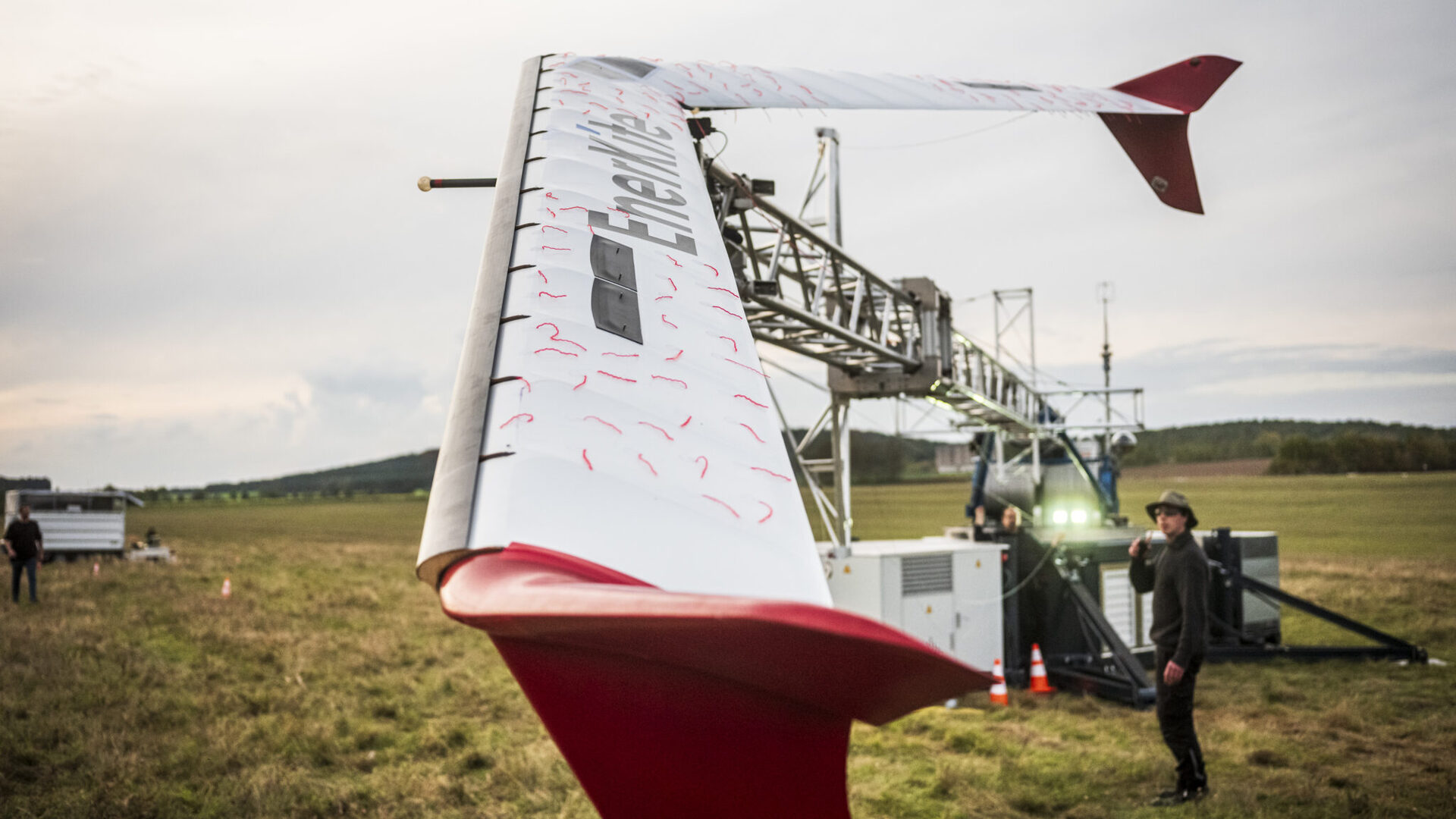
In December 2021, the company reported demonstrating a complete automated sequence covering rotational launch, transition into harvesting flight, figure-eight operation, retrieval and landing. In October 2025, its newer EK100-10P development system completed a first flight with a carbon high-performance wing in near-calm test conditions. EnerKíte said the launch and landing worked as planned and that the flight produced data for validating its simulations.
Those tests are meaningful engineering milestones. They should not, however, be confused with proof of long-term reliability, energy yield or cost from a large fleet operating in varied weather.
The EK100 is the first planned commercial model
EnerKíte currently lists the EK100 for pre-sale with a rated output of 100 kW. The company has described the EK100-10P ground station as a development platform for testing and preparing customer demonstrations.
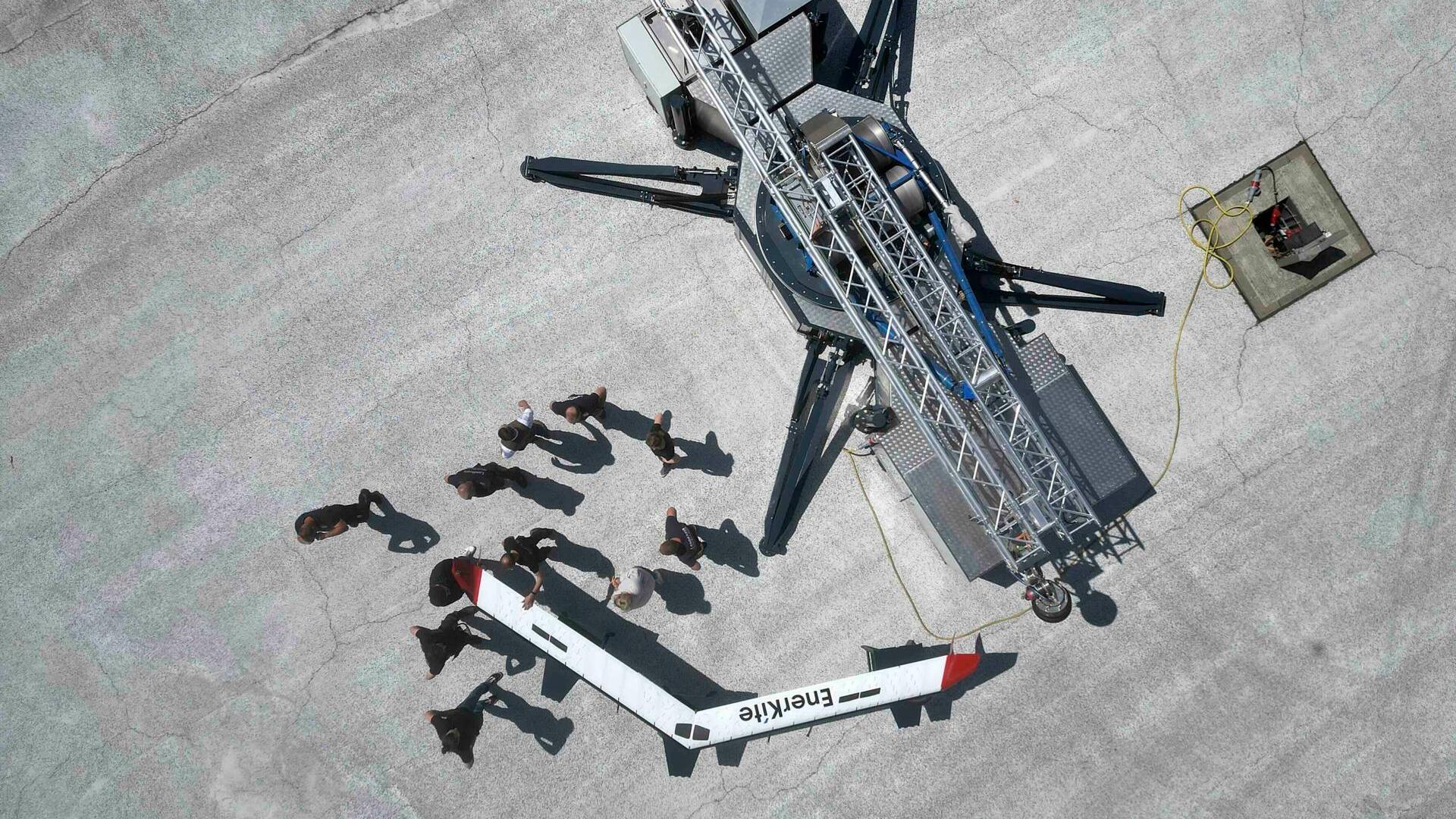
The company’s current plan places the EK100 at the beginning of a three-step roadmap. A proposed 500-kW EK500 and a future 2-MW EK2M would follow as the architecture scales. These larger systems are roadmap products rather than commercially available power plants.
EnerKíte says its container-based ground equipment can be transported and installed without the tower and large foundation associated with a conventional wind turbine. Potential applications include electricity for industrial sites, remote communities and islands, temporary installations, microgrids and renewable generation at locations with modest winds near the surface.
In 2024, the company announced that the first EK100 had been ordered by German precision manufacturer Seipp & Kehl. It later said it was preparing demonstration operation with multiple partner customers during 2026. The manufacturer’s website still presents the EK100 as a pre-sale product, so delivery and operational performance should be confirmed for individual projects.
Why fly as high as 300 metres?
Terrain, buildings and vegetation slow and disturb wind close to the ground. At greater height, it can be stronger and more consistent. EnerKíte intends its wing to harvest wind at altitudes of up to roughly 300 metres (984 ft), giving it access to a much larger vertical operating range than the rotor of a small turbine.
The wing also moves rapidly across the wind rather than remaining stationary. Crosswind flight increases the aerodynamic force on the tethers and is central to the system’s energy-producing cycle.
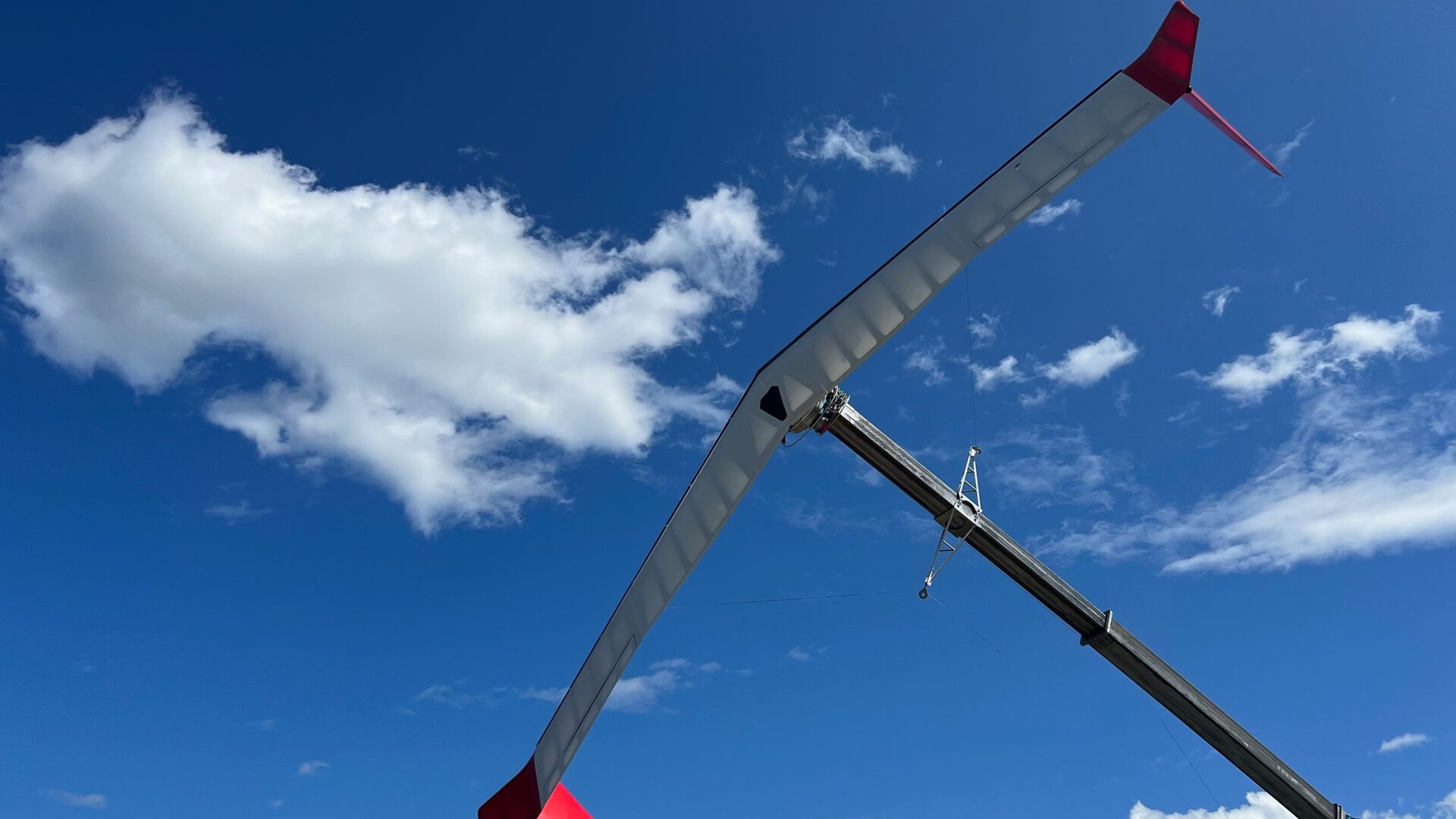
EnerKíte claims a system could deliver approximately twice the annual energy of a conventional wind turbine with the same rated capacity. It also says eliminating the tower and major foundation can reduce steel and concrete use by around 90%. For the EK100, the company advertises a target levelized electricity cost below €0.10 per kWh, with lower targets for its future larger systems.
These are projections from EnerKíte, not independently established results from a mature commercial fleet. Actual output would depend on the site’s wind resource, permitted flight envelope, downtime, retrieval losses and the reliability of an autonomous system operating through changing weather.
Less material does not mean no infrastructure
Airborne wind systems remove the tall tower and large blades, but they introduce a different set of practical requirements. The wing needs clear airspace and a suitable ground safety area. Tethers and moving flight paths must be managed around people, aircraft and other infrastructure, while severe weather can require the wing to be landed.
The system also depends on repeated automated launching, flying, reeling and docking. Long-term tether wear, component fatigue, maintenance intervals, noise, permitting and aviation coordination will all matter as EnerKíte moves beyond controlled trials.
At the same time, the approach has clear potential advantages. Most of the complex machinery remains accessible at ground level, the wing uses far less material than a large turbine rotor, and the complete installation is designed to be more mobile than permanent tower-based wind power.
Where the project stands now
EnerKíte has advanced well beyond a manually flown experimental kite. Its prototypes have generated electricity, the automated operating cycle has been demonstrated, and the EK100-10P has flown with the company’s newer high-performance wing.
The next test is commercial rather than conceptual: proving that the system can launch, generate, retrieve and land reliably over extended periods at customer sites while meeting its energy and cost targets. EnerKíte expanded its production space in Eberswalde with an additional 1,100-square-metre (11,840-sq-ft) hall in 2026 as it prepared larger next-generation wings.
If those demonstrations support the company’s projections, an electricity-generating kite could become a useful complement to conventional wind and solar—particularly where stronger winds are available overhead but building a full-size turbine is difficult. For now, the EK100 remains a promising airborne wind system approaching its most important real-world validation phase.
Sources: EnerKíte, European Commission CORDIS, Wind Energy Science