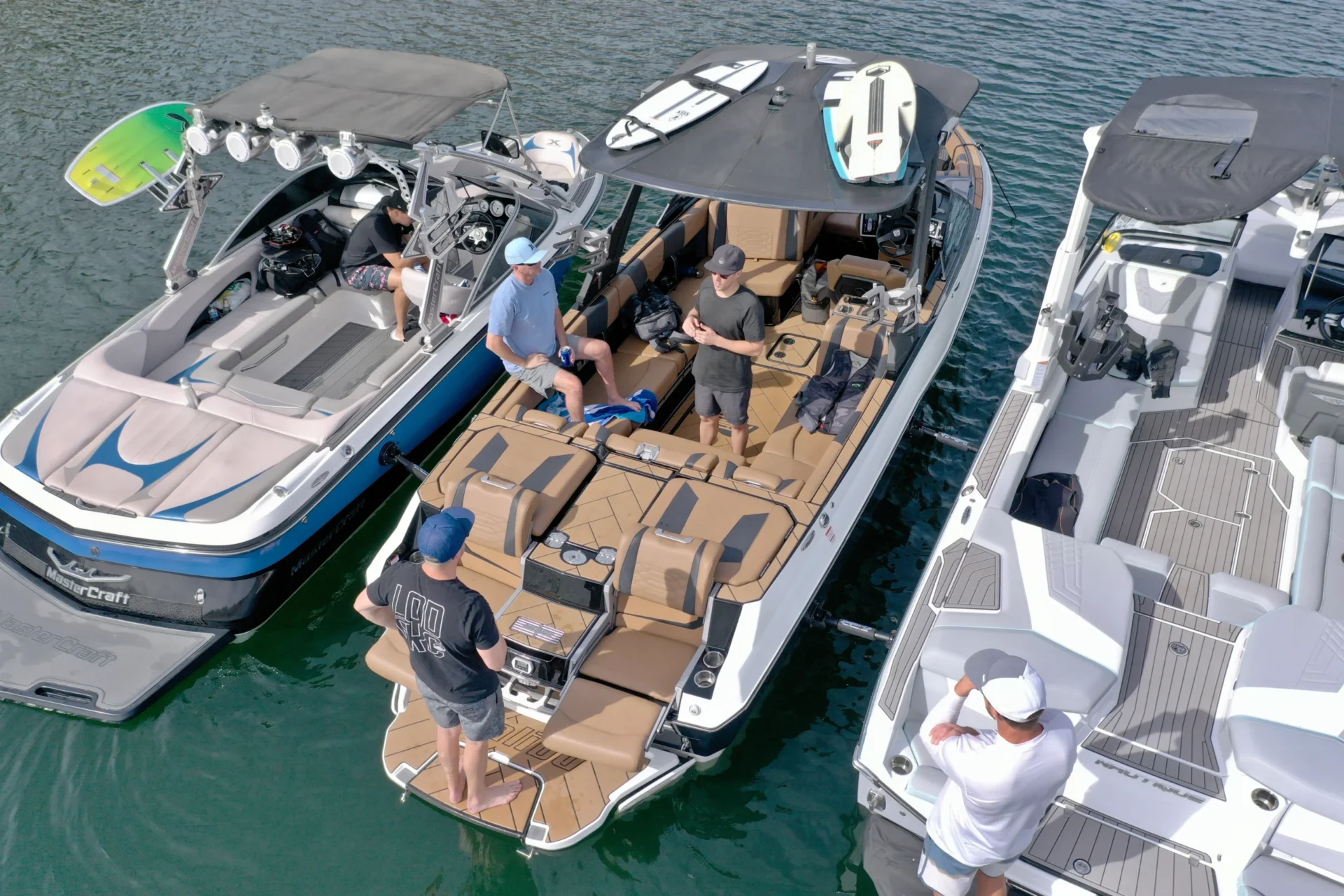
Tying two boats together on the water — for a rafted-up afternoon at the sandbar, a lake float with friends, or a quick boat-to-boat transfer — has always involved the same basic toolkit: fenders hung over the sides, ropes looped through cleats, and some combination of bumpers, buoys, or inner tubes stuffed between the hulls. It works, more or less, but it requires setup time, takes up storage space, and leaves the hulls relying on foam and rope to absorb whatever the water throws at them.
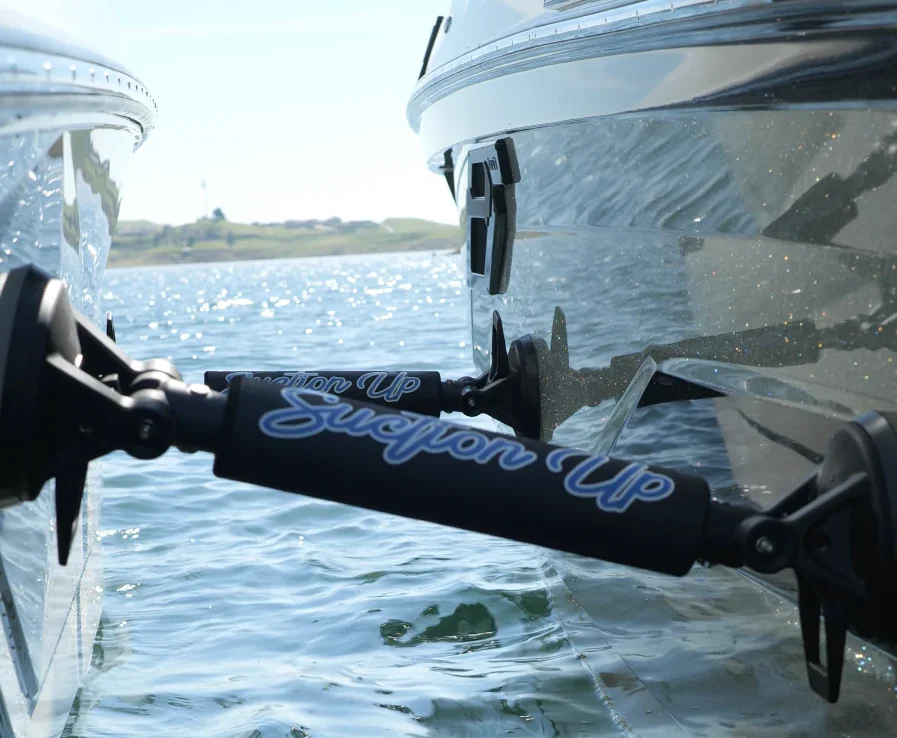
Suction Up, a patented device designed by two Fresno-based entrepreneurs, takes a different approach. Instead of rigging lines between boats, the device mounts directly onto both hulls using large industrial-grade suction cups, with a spring-loaded center bar spanning the gap between them. The springs absorb the up-and-down movement caused by waves and tides, keeping the boats connected and separated simultaneously — without ropes, without fenders hung over rails, and without the bow-to-stern adjustment that traditional setups require.
The current version, Suction Up V2, is sold as a set of two devices and is designed for use in No Wake Zones and areas with speeds at or below 5 mph.
From a block of wood to a patented product
Suction Up Inc. was founded in 2022 by Justin Perry and Brandon Cox, who describe themselves as lifelong “lake boys” — Central Valley residents who grew up spending summers on the water.
The original idea came roughly four years before the company launched, inspired by wake shapers — the suction-cup-mounted accessories that attach to the stern of a boat to redirect the wake for surfing. Perry and Cox reasoned that if suction cups could hold a wake shaper in place on a moving hull, they might be strong enough to hold two boats together when stationary.
Cox assembled the first Suction Up prototype: a block of wood between two suction cups from the store.
From there, the project grew significantly more complex. They teamed up with the engineering department at Fresno State, and students in an engineering internship program helped develop some of the first prototypes for their senior project.
“We probably did over 50 lake trips just trying to prove the concept,” Perry said. “Unfortunately, we failed many times, and it’s been a challenging number of years to get where we are. It’s very humbling.”
The result of that development process is a patented design with four springs per device built into the center bar — the mechanism that distinguishes Suction Up from simpler suction-cup products. The spring system compresses and extends with each wave cycle, absorbing the kinetic energy that would otherwise transfer directly into the hulls.
How the V2 works
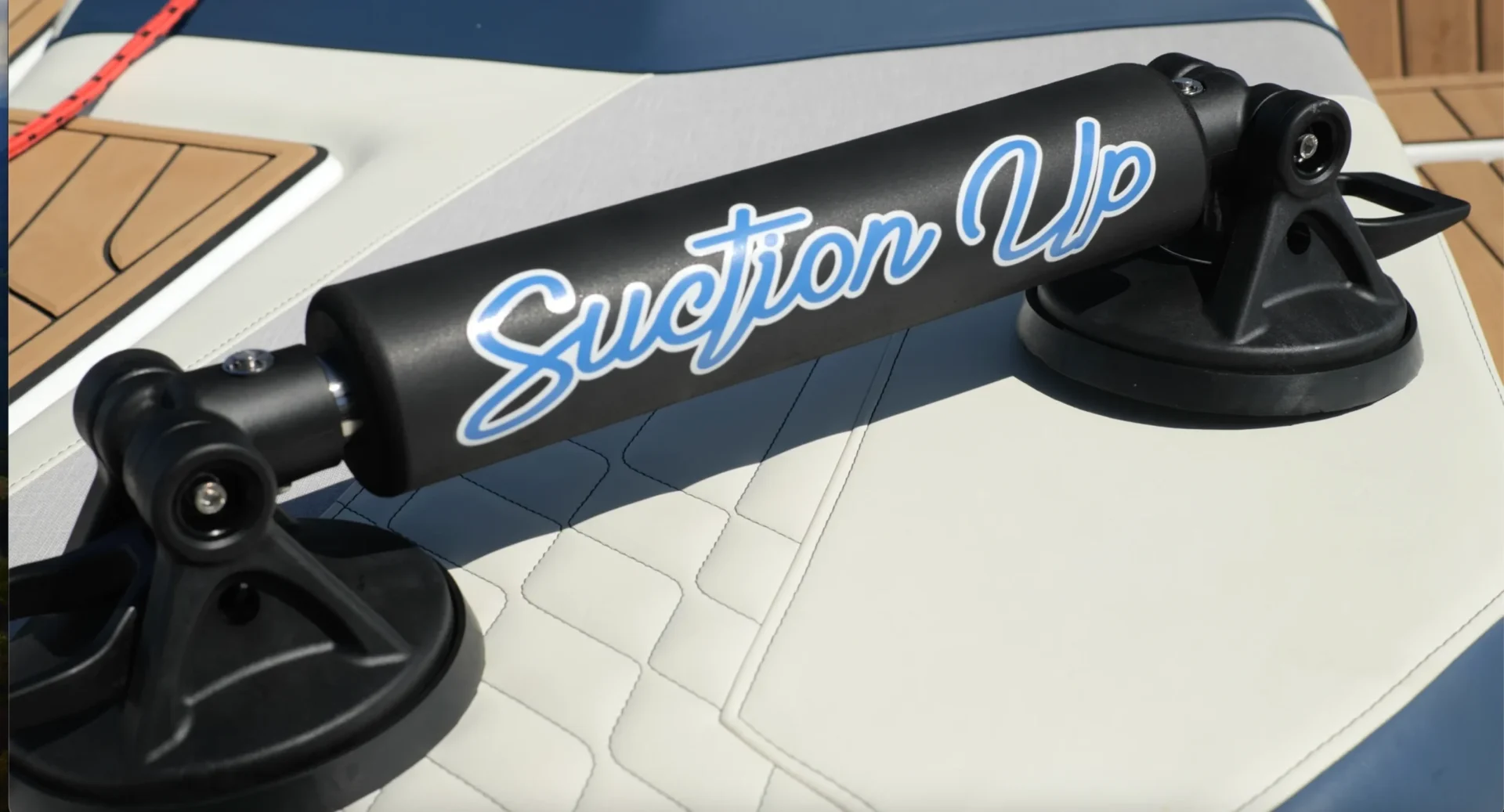
Each Suction Up V2 unit consists of a padded cylindrical center bar with a suction cup assembly at each end. To connect two boats, a device is mounted to the hull of each vessel — one suction cup on each boat, with the spring-loaded bar spanning the gap between them. Two devices are used simultaneously, one forward and one aft, to keep both boats parallel and evenly spaced.
The suction cups measure 6.5 inches (16.5 cm) in diameter. The device is 26 inches (66 cm) in total length. The design requires a clean, smooth hull surface — standard on fiberglass boats — to create an adequate seal.
The four internal springs handle the vertical and horizontal movement that occurs when two boats are floating alongside each other in water. Rather than the hulls making direct contact during wave action — which is where paint scuffs, gel coat damage, and rub rail dents typically happen — the springs compress and absorb that movement. The boats stay in contact with the device, not with each other.
“It’s a quick efficient way to connect your boat, with family, and friends,” Perry said.
What to keep in mind
Suction Up is designed specifically for calm, low-speed conditions. The devices are rated for No Wake Zones and areas with speeds at or below 5 mph — they are not intended for use while underway, in open water with significant chop, or in conditions where both boats would be subject to more than minor wave action. This is a product for anchored or drifting situations: the sandbar float, the cove hangout, the dock-side connection.
The suction cup system also depends on clean, smooth hull surfaces to seal properly. Heavily textured surfaces, painted areas with contaminants, or areas near waterline hardware may affect the hold. Users are advised to ensure the hull surface is clean and wetted before attaching each cup, and to confirm the seal before stepping back.
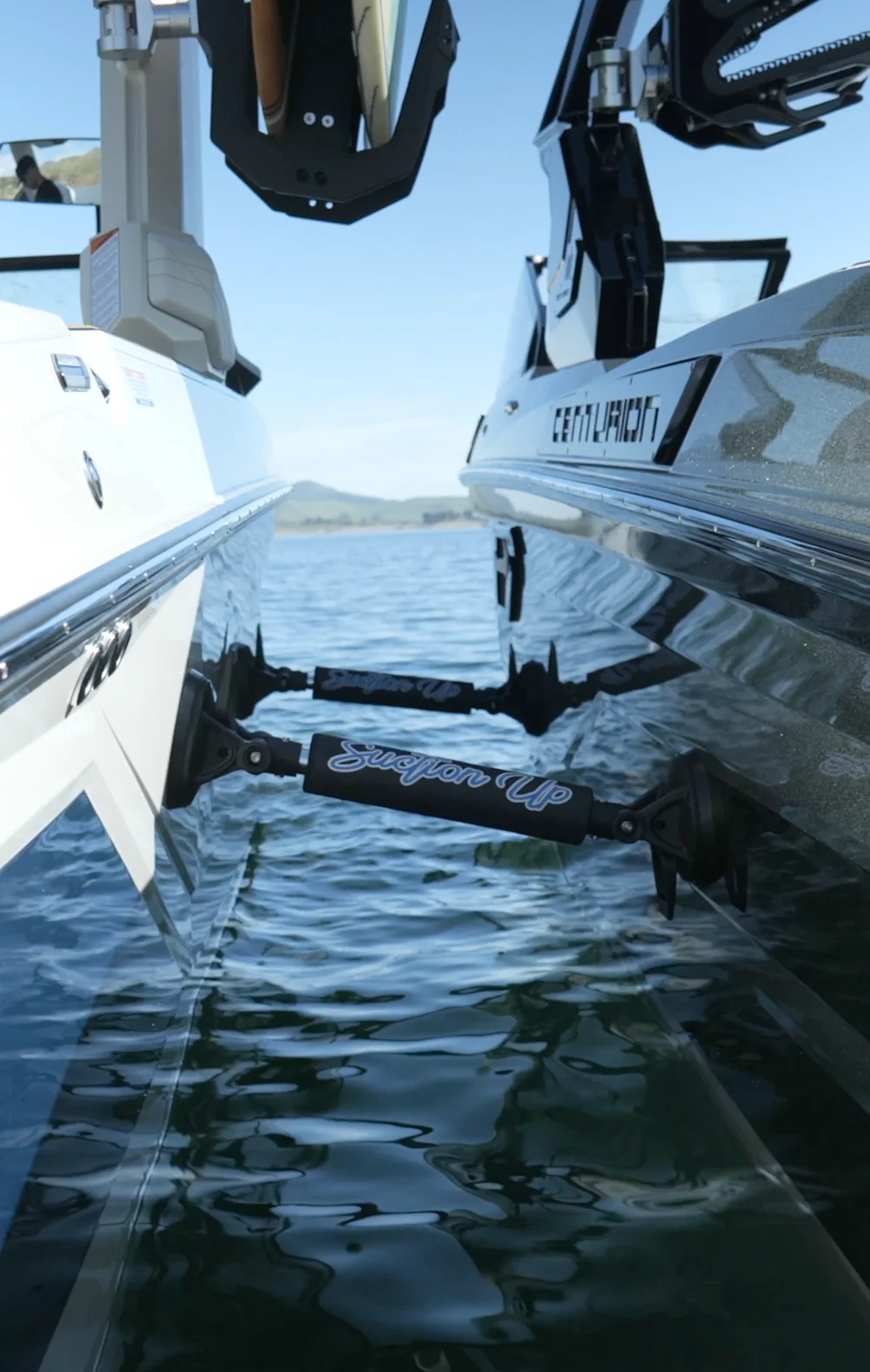
The product is currently designed for fiberglass boat hulls — the most common material in the recreational boat market — and is most commonly seen in use with wake boats, ski boats, and similar inboard watercraft.
Pricing and availability
Suction Up V2 is priced at $349.00 for a set of two devices. The product is designed in California and ships worldwide. Orders are available directly through suctionup.com. A dealer network is also in development for retailers interested in carrying the product.
Source: Suction Up