For decades, powered exoskeletons have promised to help people with mobility impairments stand and walk again. While many have reached the market, most still rely on forearm crutches to keep users balanced, meaning walking often requires significant upper-body strength and coordination.
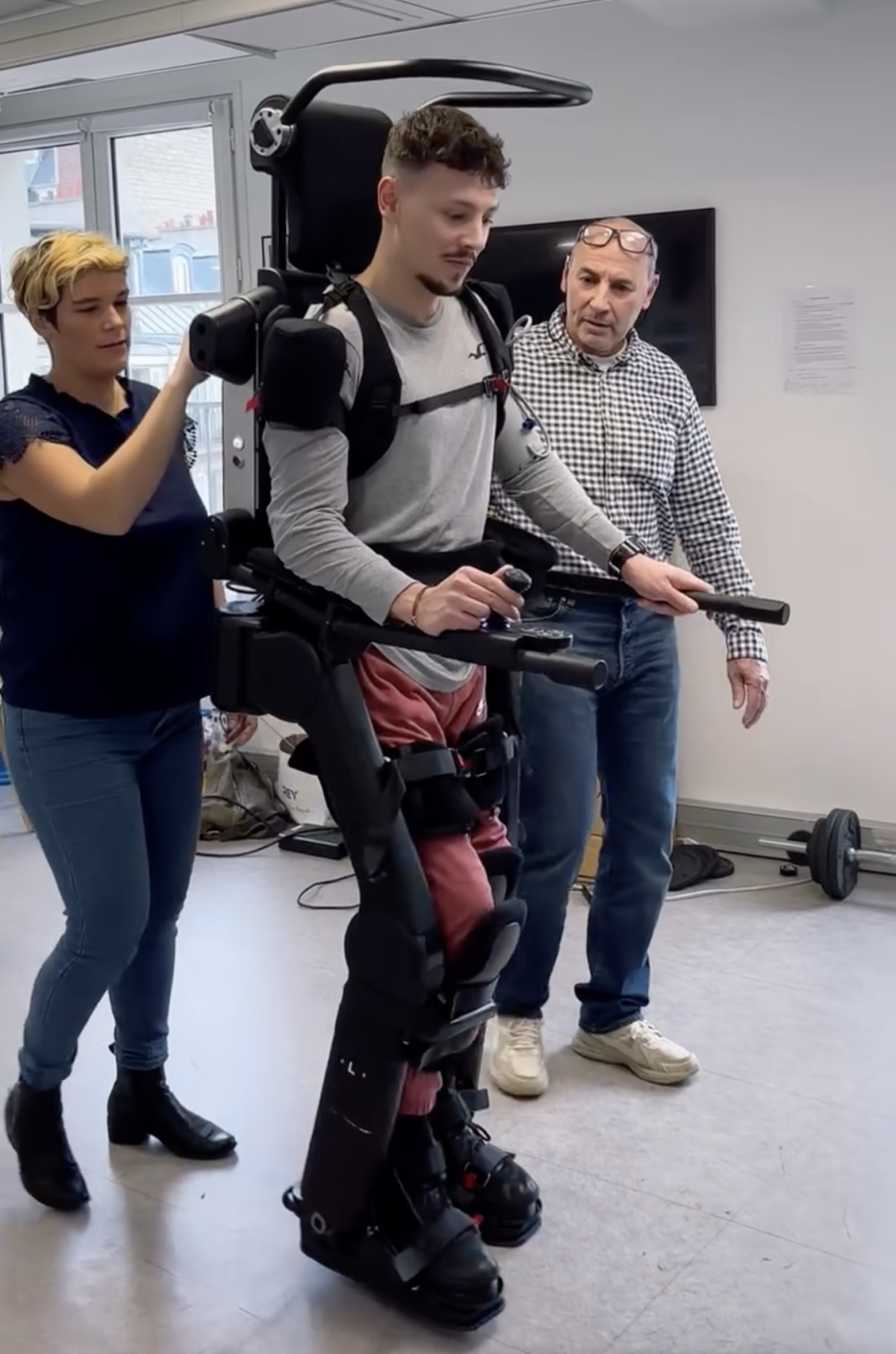
French robotics company Wandercraft is taking a different approach with Eve, a personal robotic exoskeleton that actively balances itself while walking. Rather than asking the user to stabilize the device, Eve continuously maintains its own balance, allowing hands-free standing and walking both indoors and outdoors. Wandercraft describes Eve as the world’s first FDA-cleared self-balancing personal exoskeleton. Unlike systems that require crutches or a walker for balance, it allows eligible users to stand and move upright while keeping their hands free.
Following FDA clearance in August 2026, Wandercraft commercially launched Eve in the United States on September 17, 2026. Eligible adults with spinal cord injuries can now begin the evaluation, fitting and training process required to obtain the device.
A personal exoskeleton rather than a rehabilitation device
Many robotic exoskeletons available today are primarily intended for rehabilitation clinics or therapy sessions. Patients use them under the supervision of trained clinicians to practice standing and walking as part of their recovery.
Eve is designed with a different goal.
Instead of remaining inside a rehabilitation facility, it is intended for everyday use, enabling people with walking impairments to stand and move independently at home as well as outdoors. The company envisions users incorporating the device into normal daily life rather than only during scheduled therapy sessions.
Wandercraft emphasizes that Eve is designed to complement rather than replace a wheelchair. It provides another mobility option for occasions when a user chooses to stand, walk or perform activities in an upright position.
That distinction is important because daily mobility presents very different challenges from controlled rehabilitation environments. Navigating homes, sidewalks, shops, and social settings requires both stability and confidence.
What makes Eve different?
The defining feature of Eve is its self-balancing capability.
Most powered exoskeletons move the legs while relying on crutches to prevent the user from falling. Eve instead uses active robotic balancing technology to continuously stabilize itself while walking.
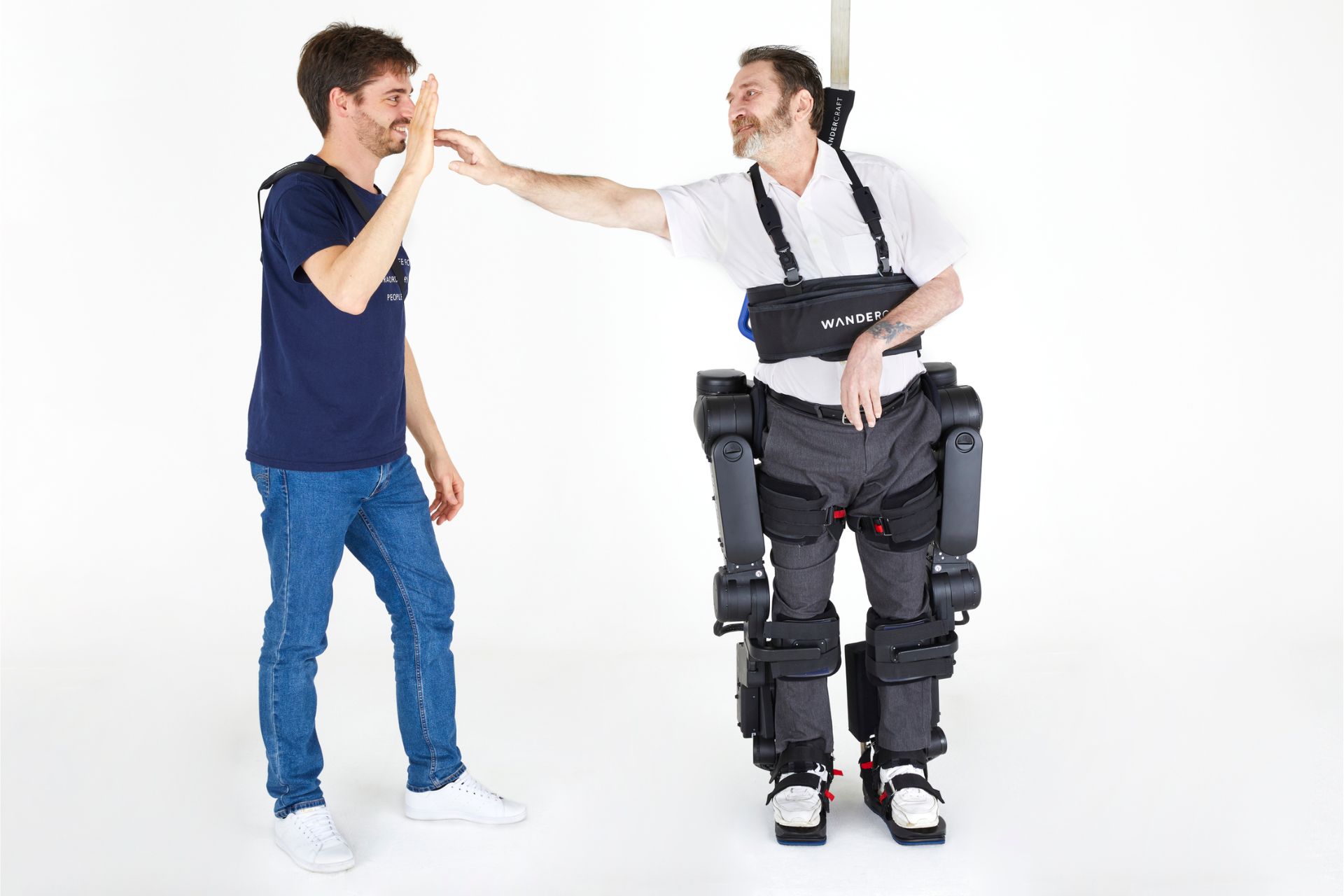
This means users can focus on moving naturally rather than dividing their attention between walking and maintaining balance. The balancing system is powered by what Wandercraft calls physical AI. A handheld controller allows the user to operate the device while its robotic system manages balance and assisted movement.
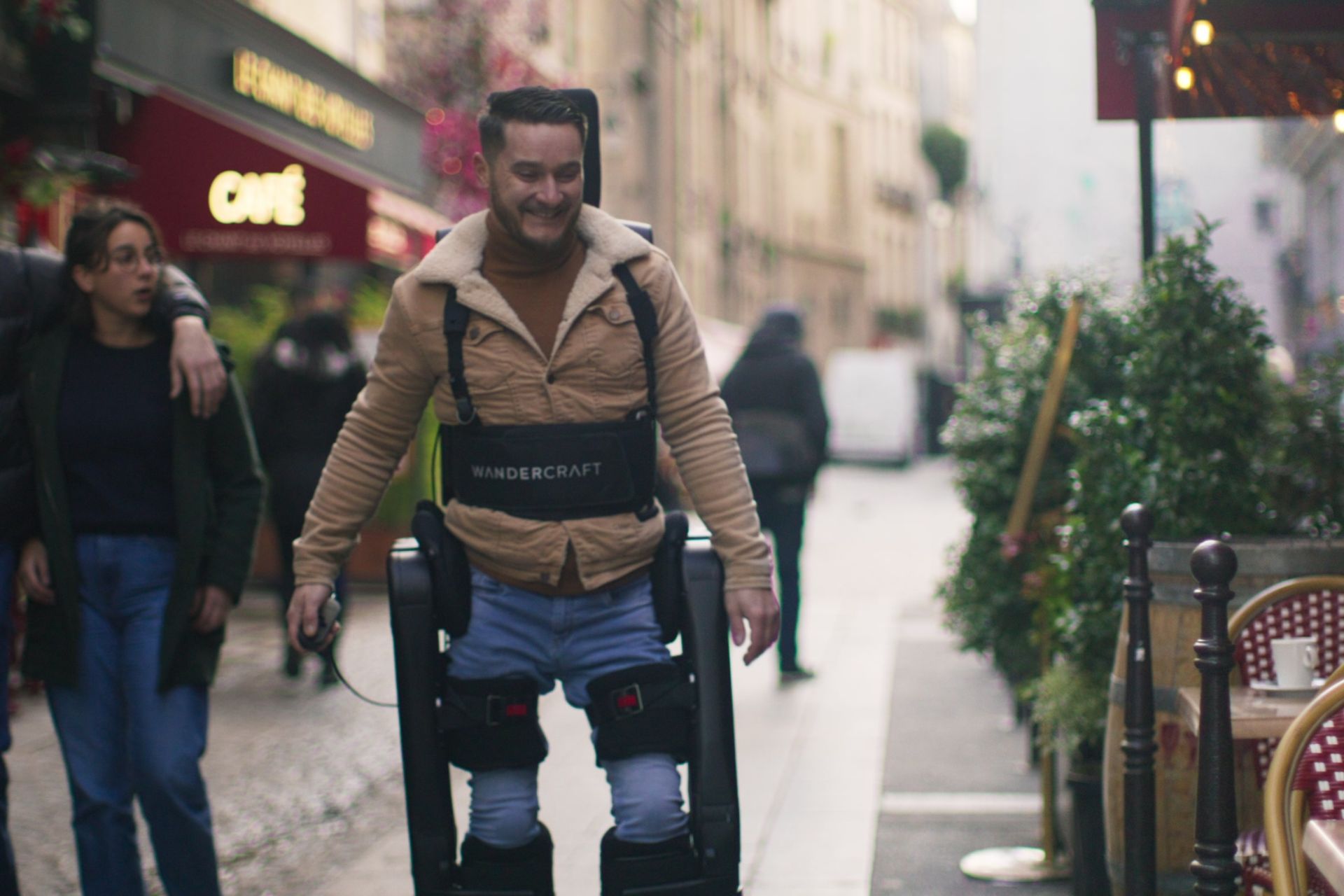
The hands-free approach also allows users to interact with their surroundings in a more natural way while standing or walking, something that has traditionally been difficult with crutch-assisted exoskeletons.
Built for everyday mobility
Wandercraft says Eve was created to help millions of people living with walking impairments regain the ability to stand upright and move independently.
Eve’s FDA clearance applies to eligible adults with spinal cord injuries at any neurological level, provided they can safely operate its controller and have none of the contraindications listed in the user manual. Wandercraft says it is the first FDA-cleared personal exoskeleton without eligibility restrictions based specifically on the neurological level of the injury.
Rather than focusing solely on straight-line walking, the company has tested the exoskeleton during activities that resemble everyday life, including:
- Standing up independently
- Walking indoors
- Walking outdoors
- Shopping
- Speaking with friends at eye level
- Going for walks with family and loved ones
These examples highlight the broader objective behind Eve. Standing and walking are only part of the experience. Equally important is enabling users to participate more naturally in everyday social interactions that many people take for granted.
Evaluation and training before taking Eve home
Eve is now commercially available, but obtaining one involves considerably more than ordering a conventional mobility product.
Prospective users begin with a clinical evaluation and trial. Following a successful trial and a physician’s order, each Eve is individually fitted and manufactured for its user. The user and a companion then complete a personalized training program with Wandercraft before the device is delivered, with ongoing support provided afterward.
Recently published research examined whether people with tetraplegia and high paraplegia, together with their companions, could learn to use a self-balancing exoskeleton for personal mobility. Among the first 16 participants who completed the protocol, all achieved the study’s performance goals for the Timed Up and Go and six-minute walk tests.
Fifteen participants achieved the study’s donning goal after four training sessions, while all achieved the doffing goal. Researchers reported no serious adverse events among the participants who completed the protocol. These early findings support the transition toward carefully supervised personal use, although they come from a relatively small initial group.
More than simply helping people walk
The potential benefits extend beyond mobility itself.
Wandercraft says enabling people to spend more time standing and walking may help reduce some of the health complications associated with prolonged wheelchair use and sedentary lifestyles.
Remaining upright places the body in a more natural position, encourages movement, and may contribute to improved overall wellbeing alongside the independence gained from being able to move through everyday environments.
A technology gaining worldwide attention
Now commercially available in the United States, Eve had already attracted significant international attention during its prototype and clinical-development stages.
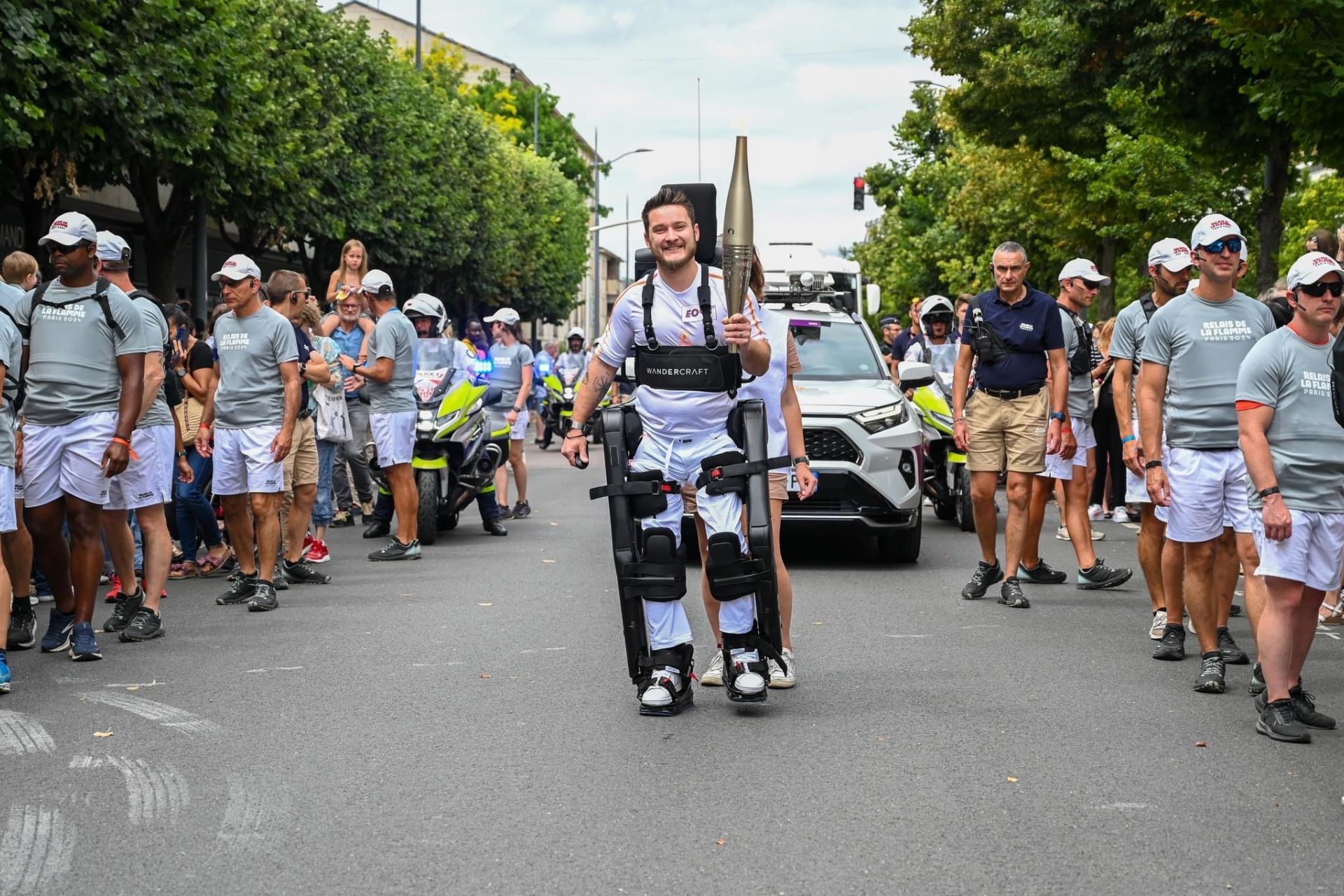
One of its most memorable public appearances came during the Paris 2024 Olympic Torch Relay, where French paraplegic Kevin Piette carried the Olympic flame while using the self-balancing exoskeleton—a world first that demonstrated the technology on one of the world’s biggest stages.
The prototype has also been showcased at major technology events including CES and SXSW, reflecting growing interest in robotic mobility systems that extend beyond hospitals into everyday life.
Pricing and availability
Eve is now commercially available in the United States for eligible adults with spinal cord injuries at any neurological level. The process begins with a clinical evaluation and trial, followed by a physician’s prescription, individual fitting, manufacturing and personalized training.
Prospective users can currently experience Eve at Walk in New York by Wandercraft. A Miami location is scheduled to open in November 2026, while additional access is being developed through National Seating & Mobility, Wandercraft’s exclusive Complex Rehabilitation Technology distribution partner. NSM operates a network of more than 180 locations.
Wandercraft has not announced a single public retail price. The company says qualifying personal exoskeletons can be covered by Medicare as custom-fitted orthoses under HCPCS billing code K1007, subject to individual eligibility and medical-necessity requirements. Access may also be available through the Department of Veterans Affairs and workers’ compensation programs, while financing options are offered to people who choose to self-pay.
Wandercraft’s Access team assists users with documentation, reimbursement, financing and coordination among clinicians, equipment providers and insurers. Coverage is not automatic, and out-of-pocket costs will depend on the individual’s insurer, eligibility and prescribed configuration.
A different vision for personal mobility
Robotic exoskeletons have been evolving steadily for years, but many still require compromises that limit everyday practicality.
Eve represents a different approach by removing one of the biggest barriers to independent robotic walking: the need for crutches. Its self-balancing design shifts more of the work from the user to the robot itself, bringing powered mobility closer to the experience of natural walking.
With FDA clearance and a supported US commercial rollout now underway, Eve has moved beyond being solely a research prototype. Wandercraft has established a pathway covering clinical evaluation, prescription, custom fitting, companion training, reimbursement support, delivery and continuing service.
Its impact will ultimately depend on factors including eligibility, reliability in everyday environments, training requirements, access to evaluation centers and insurance coverage. However, the launch represents an important step toward making hands-free upright mobility available outside rehabilitation facilities.
Updated on 21st September, 2026
Source: Wandercraft