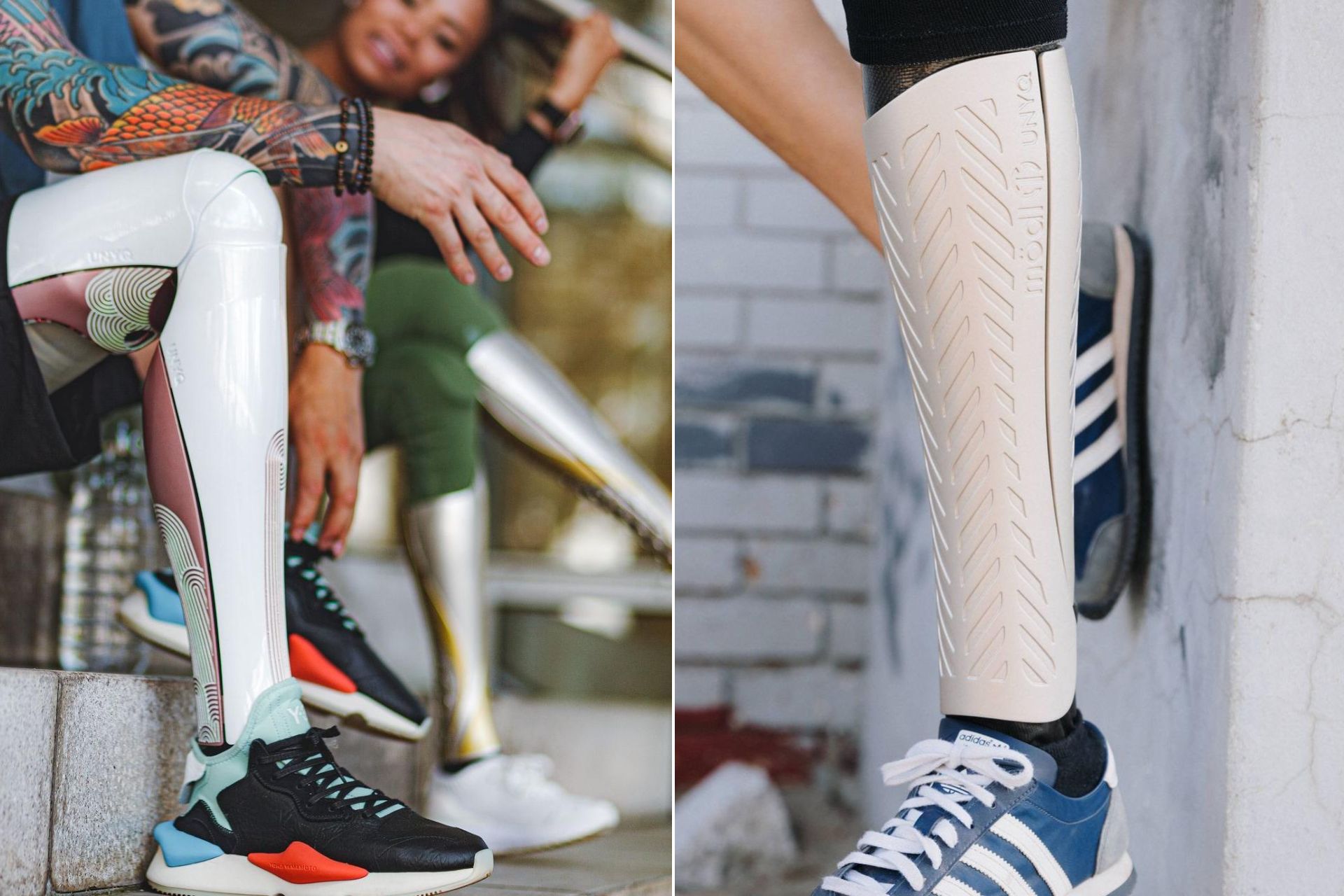
A prosthetic leg is first and foremost a functional medical device, but that does not mean it has to look purely clinical. Spanish company UNYQ is taking a more personal approach with a range of 3D-printed covers that give lower-limb prostheses a more natural outline while allowing wearers to choose their own colors, textures and patterns.
The covers do not replace any load-bearing or mechanical part of the prosthesis. Instead, they fit around its components as removable outer shells. This gives them two distinct jobs: shielding the hardware from everyday knocks and helping the wearer decide how the finished prosthesis should look.
Some users may want a cover that closely follows the shape and color of their other leg. Others can choose an intentionally bold design that treats the prosthesis as something to display rather than hide. UNYQ offers more than 20 patterns and over 40 colors across parts of its range, along with matte and glossy finishes and, on selected designs, personalized engravings or vinyl graphics.
Designed around the individual user
UNYQ’s core CustomFit range is made for both transfemoral and transtibial prostheses—more commonly described as above-knee and below-knee systems. Rather than relying on a universal shell, each CustomFit cover is designed around the wearer’s anatomy, the components inside the prosthesis and their particular alignment.
Measurements and photographs are taken through a participating prosthetic clinic. UNYQ then creates a digital design intended to reproduce the approximate shape of the user’s sound leg while leaving access to buttons, valves, charging ports and other functional elements.
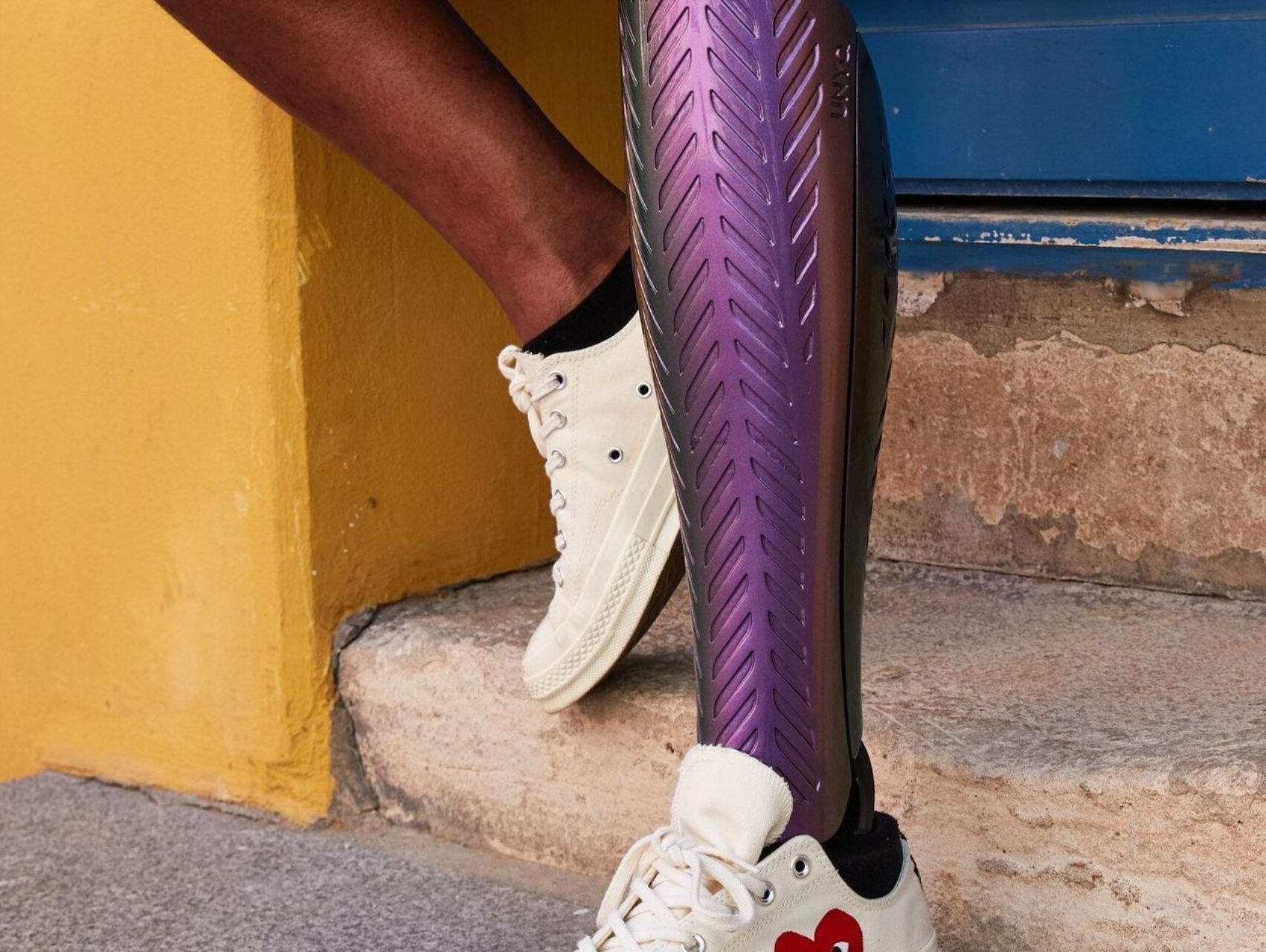
The company provides a digital preview before manufacturing begins. Once approved, the cover is 3D printed, polished and finished. UNYQ says a customized cover is normally delivered in approximately three to four weeks.
This made-to-measure approach means timing matters. If a knee, pylon or another prosthetic component is about to be changed—or if the alignment is still being adjusted—the company recommends waiting until the final configuration is complete. A cover created for the old setup may no longer fit correctly after those changes.
Firm or flexible construction
CustomFit comes in two principal material options. The Firm version is made from PA12 polyamide, a rigid and durable material commonly used in additive manufacturing. It holds its anatomical form and is intended for everyday use and moderate physical activity.
The Flex version uses TPU, a more rubber-like material that can bend and withstand greater manipulation. UNYQ positions it as the better option for people with more active lifestyles because it provides additional flexibility and resistance.
Despite wrapping around much of the prosthesis, standard CustomFit covers weigh less than 500 g (1.1 lb), according to the company, although the final weight depends on the wearer’s anatomy and chosen configuration.
Both versions normally consist of front and rear sections. One attachment option secures the front to the prosthetic pylon with a Fast-Clamp, while magnets hold the rear section in place. This makes it easier to open the cover and reach electronic knees or charging connections.
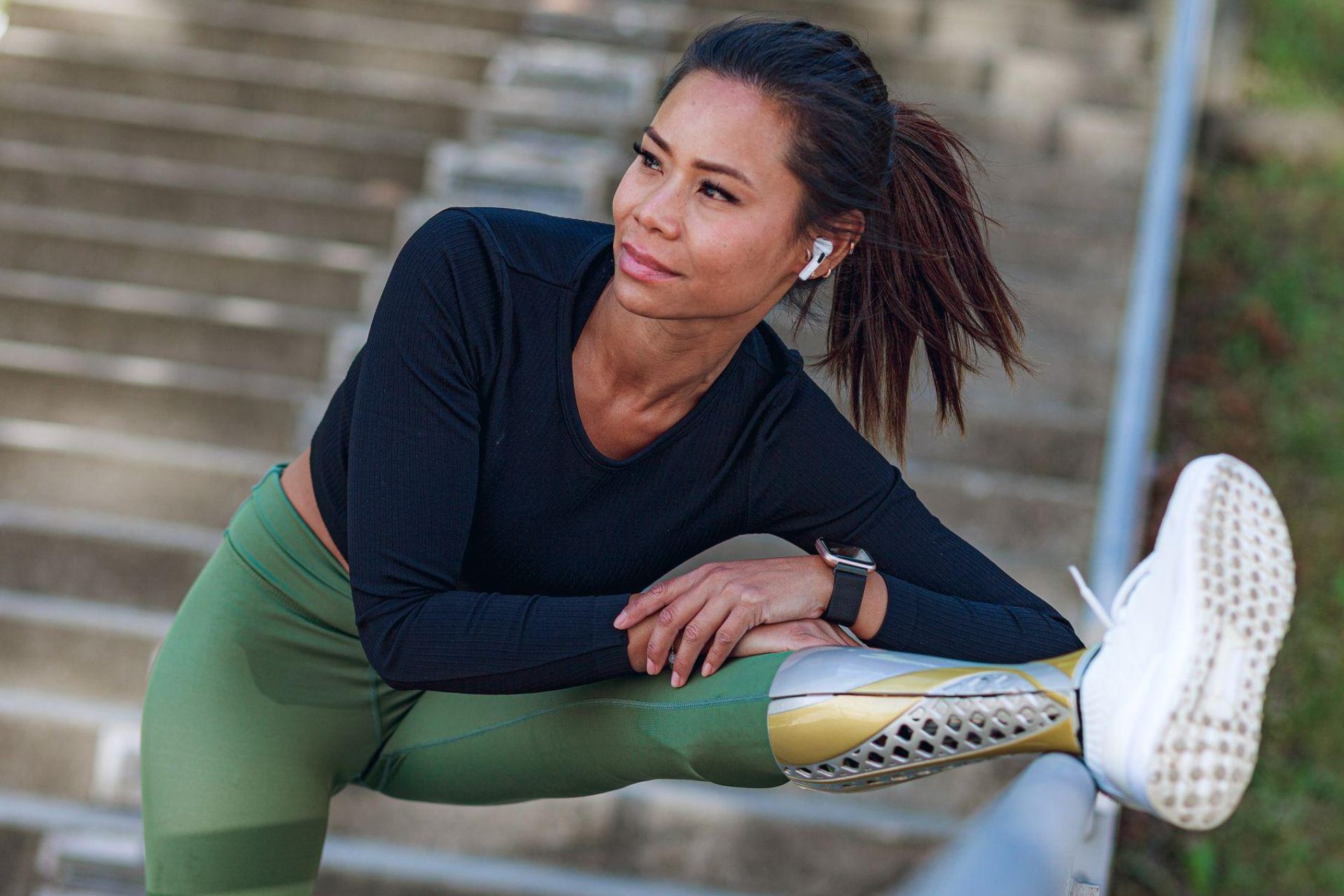
An alternative system uses a C-Clamp and screws. It takes more effort to remove but provides a more secure connection for active users, people who regularly enter the water or anyone wearing boots that may press against the rear of the cover.
More than a cosmetic shell
The most obvious change is visual, but the covers are also designed to protect the hardware underneath. They can absorb minor impacts and help stop clothing from catching directly on exposed components. Restoring the outline of the leg can also allow trousers to sit more naturally.
Unlike a permanent foam cosmetic covering, the shells can be removed in seconds, making it easier to inspect, charge and clean the prosthesis. Their smooth surfaces can be wiped with a damp cloth, and the covers themselves can be used in freshwater or saltwater.
That water resistance comes with an important qualification: placing a waterproof cover around a prosthesis does not make the electronic and mechanical components beneath it waterproof. Users still need to follow the component manufacturer’s instructions.
UNYQ also recommends rinsing the cover with fresh water and drying it thoroughly after exposure to water. This helps reduce the risk of corrosion around metal fasteners.
Full coverage and faster alternatives
CustomFit is only one part of the company’s current lineup. OneFit is its more comprehensive system for above-knee prostheses. It runs from the socket to the ankle and includes an articulated section that moves with the prosthetic knee.
Because it covers the thigh, knee and lower leg, OneFit creates a more continuous anatomical outline and protects a larger portion of the device.
OneFit is also made to measure and can be designed around electronic knees, rotation adapters, valves, buttons and charging ports. Ordering it requires measurements and a 3D scan through a prosthetic clinic.
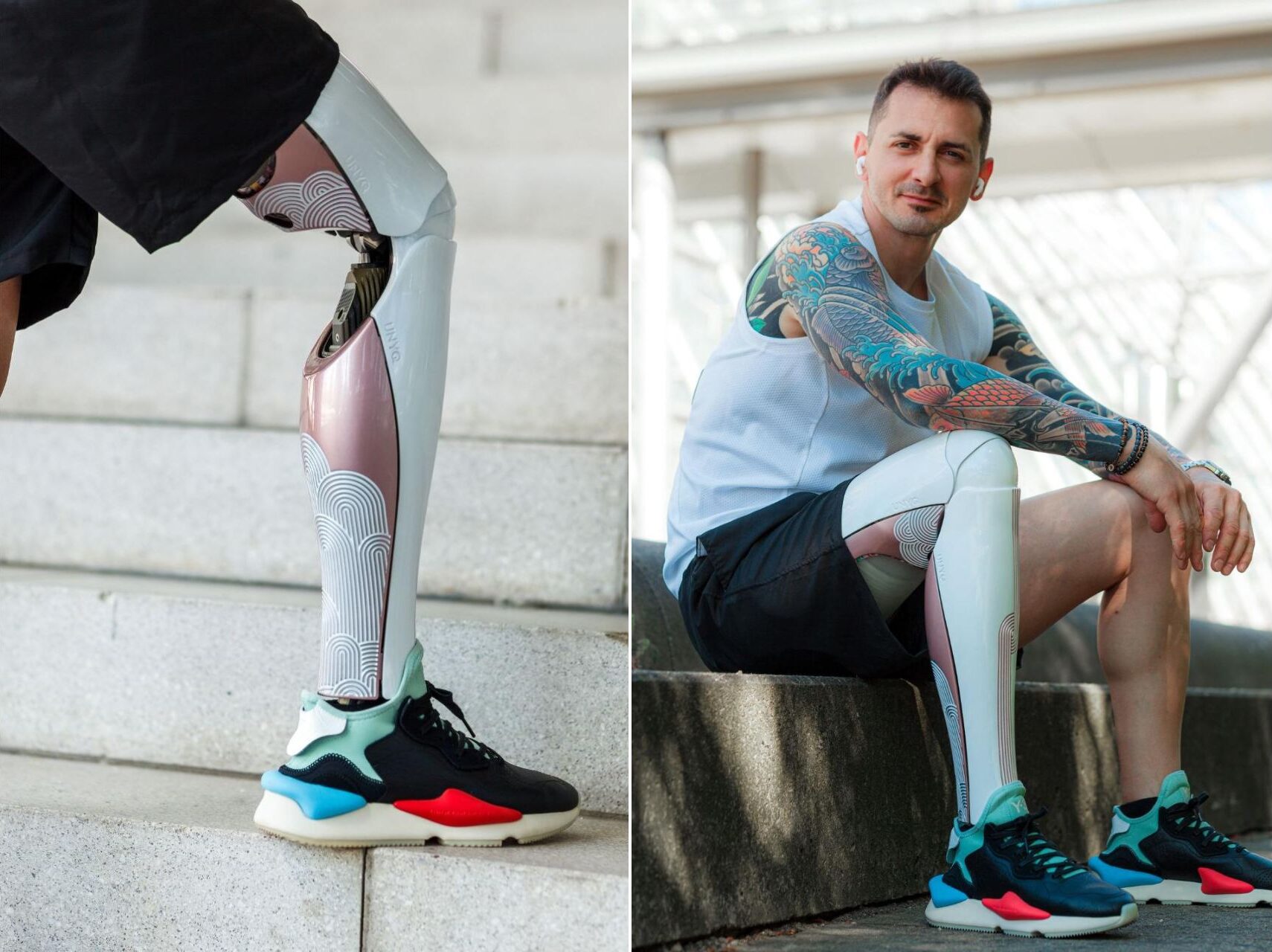
For people who do not need that degree of personalization, QuickFit offers a faster, semi-custom alternative. These rigid covers are manufactured for selected above-knee prosthetic knees and supplied in two sizes.
A prosthetist trims the cover to the required length and fits it using screws and magnets. No individual scan or photographs are needed, allowing a clinic with the correct version in stock to fit it during a single appointment.
QuickFit is currently offered in nine satin colors, including five skin tones, white, blue, grey and black. QuickFit+ adds an articulated upper section and extends the coverage farther toward the socket.
Compatibility is limited to particular prosthetic knee models, however, so neither system is a universal cover for every prosthesis.
A tougher new option
UNYQ has also introduced CustomFit Xtreme, a newly launched design that the company describes as its most technically advanced cover so far.
Instead of separate rigid front and rear panels, Xtreme wraps around the prosthesis as a flexible, single-piece shell with an integrated magnetic closure. It is produced through Multi Jet Fusion, or MJF, 3D printing using flexible TPA material designed to deform under pressure and return to its original shape.
Internal structures are intended to absorb impacts before they reach the prosthetic components. The material is also dyed throughout rather than painted only on the surface.
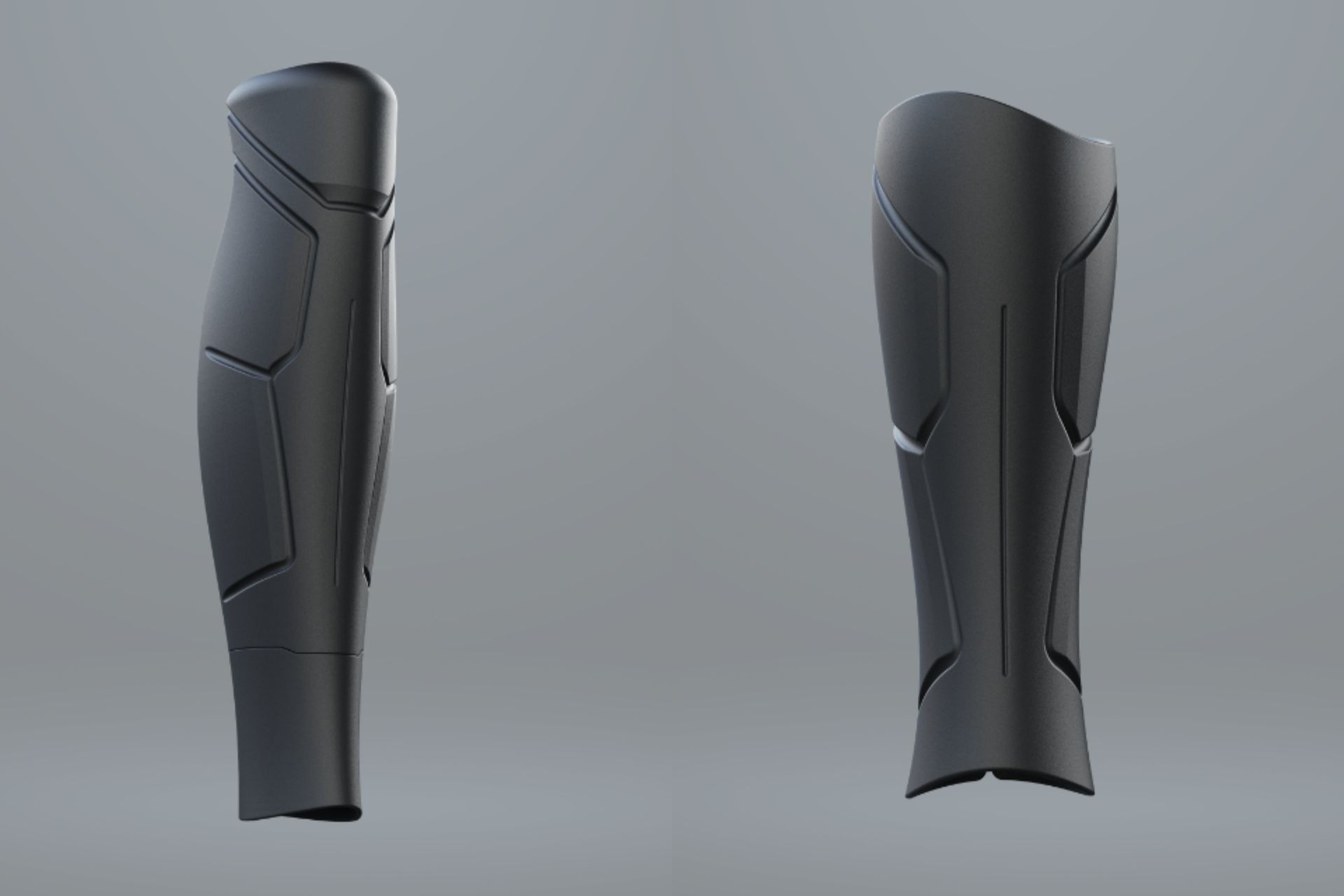
As a result, scratches should be less conspicuous because they do not expose a differently colored layer beneath the finish. However, UNYQ’s claims about maximum protection and scratch resistance have not been independently verified.
CustomFit Xtreme is available for both transfemoral and transtibial systems and is customized to the wearer and their specific prosthesis.
Protection has its limits
These covers should not be mistaken for indestructible armor. UNYQ provides a one-year warranty against material defects during moderate-impact activities such as walking, bathing, cycling, golf and dancing.
Damage caused by dropping or striking a standard cover is excluded, as is damage to its painted finish. The company also advises removing its standard covers for high-impact sports and before kneeling on a hard surface.
While the new Xtreme model is promoted as offering greater impact protection, its detailed technical limits and warranty conditions should be confirmed through UNYQ or an authorized clinic.
Ordering, availability and price
Users generally order UNYQ covers through participating prosthetic clinics rather than buying them as universal accessories.
The process begins by choosing a cover type, pattern, color and finish. A prosthetist then takes the necessary photographs, measurements or 3D scans. With fully customized products, the user receives a digital preview before the final cover is manufactured.
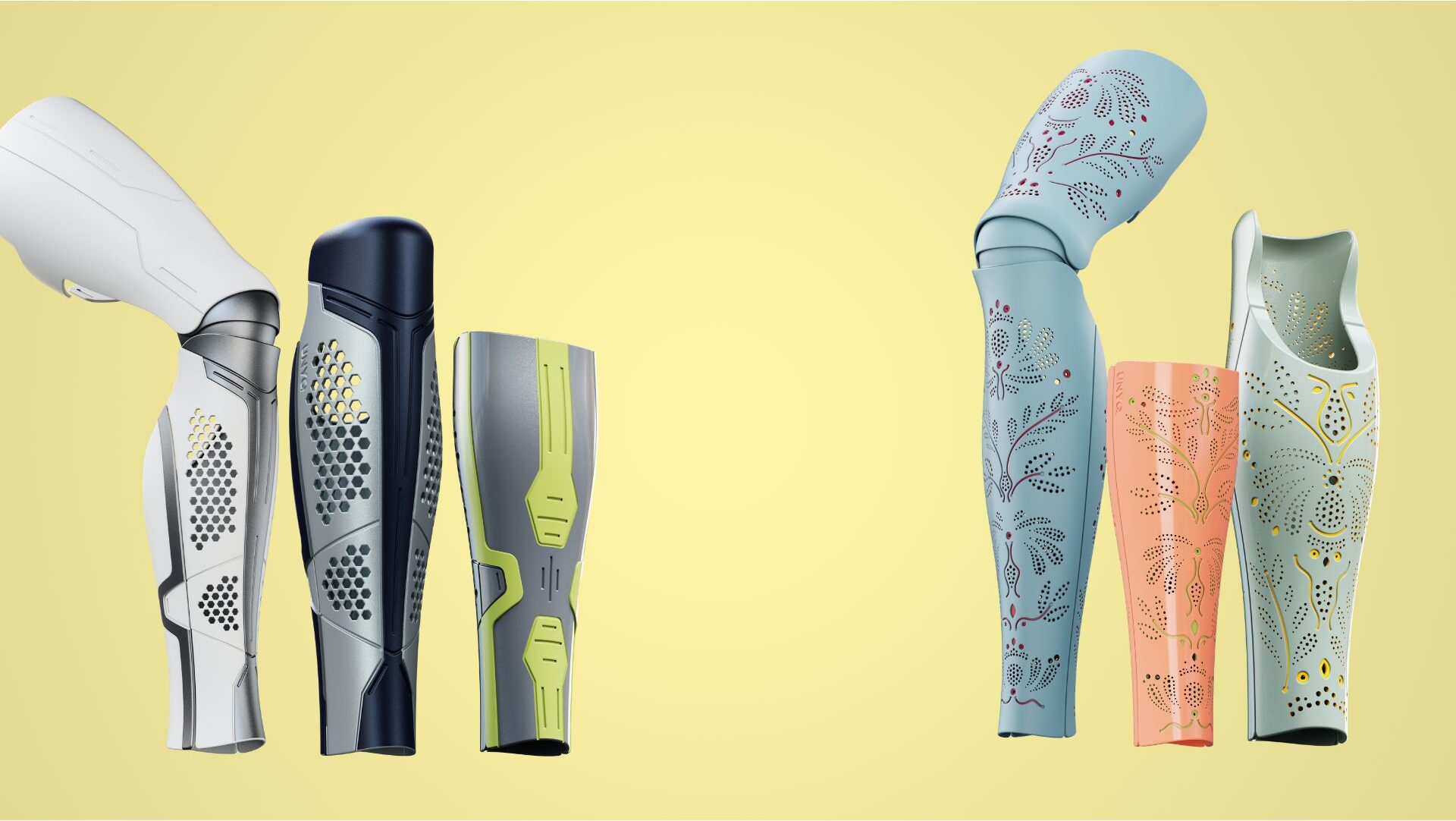
UNYQ does not clearly publish consumer prices on its public product pages. The final cost is likely to depend on the model, level of customization, clinic fees, country and any available insurance reimbursement.
The company says its products are offered through more than 700 clinics across dozens of countries.
Making prosthetic design more personal
For decades, cosmetic prosthetic covers were largely intended to make an artificial limb less noticeable. UNYQ’s approach recognizes that wearers may want very different things.
One person may prefer anatomical symmetry and a restrained skin tone. Another may choose an open geometric pattern, vivid colors or personalized artwork that deliberately draws attention to the prosthesis.
UNYQ is not redesigning the functional prosthetic leg itself. Instead, it is using digital measurements, 3D printing and removable attachments to transform the outer covering from a generic cosmetic component into something shaped around both the device and the person wearing it.
Source: UNYQ