Moving between a bed, wheelchair and toilet can be one of the most difficult parts of daily life for a person with limited mobility. Conventional patient lifts can help, but they commonly involve a sling, an overhead rail or assistance from a caregiver.
The REVIMO Niko is designed to perform the same basic job in a very different way.
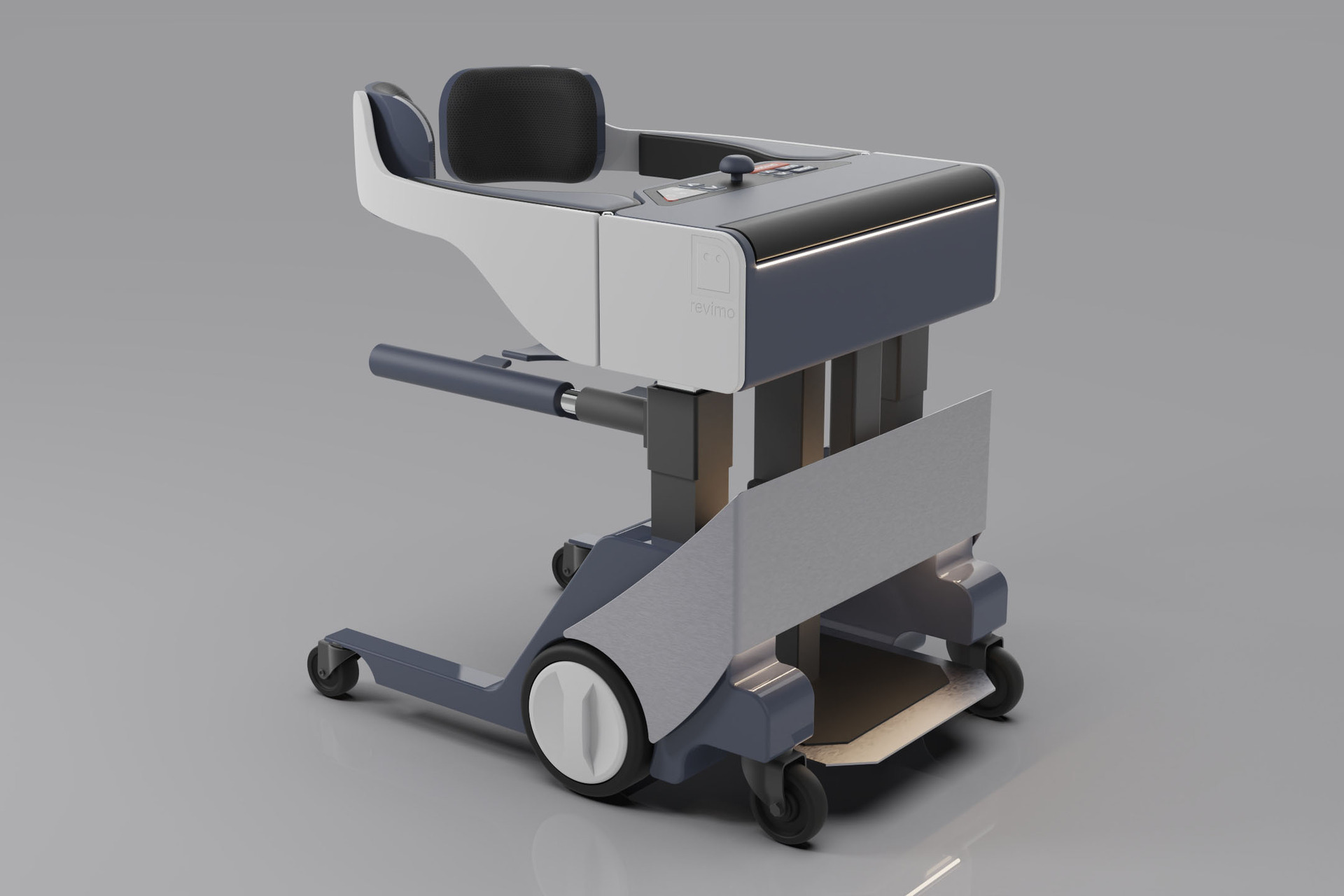
Rather than suspending a person in fabric, the compact robotic device rolls up to an existing seat and forms a padded seat beneath the user. It can then lift and carry them to another surface, potentially allowing some users to complete transfers without waiting for physical assistance.
A seat that opens around the user
Niko has two padded seat sections that separate so the device can approach someone sitting on a bed, wheelchair, recliner or shower bench.
Once in position, the sections slide underneath the user’s thighs and close to create what REVIMO calls a “scooping seat.” A padded support curves around the upper body to function as a backrest.
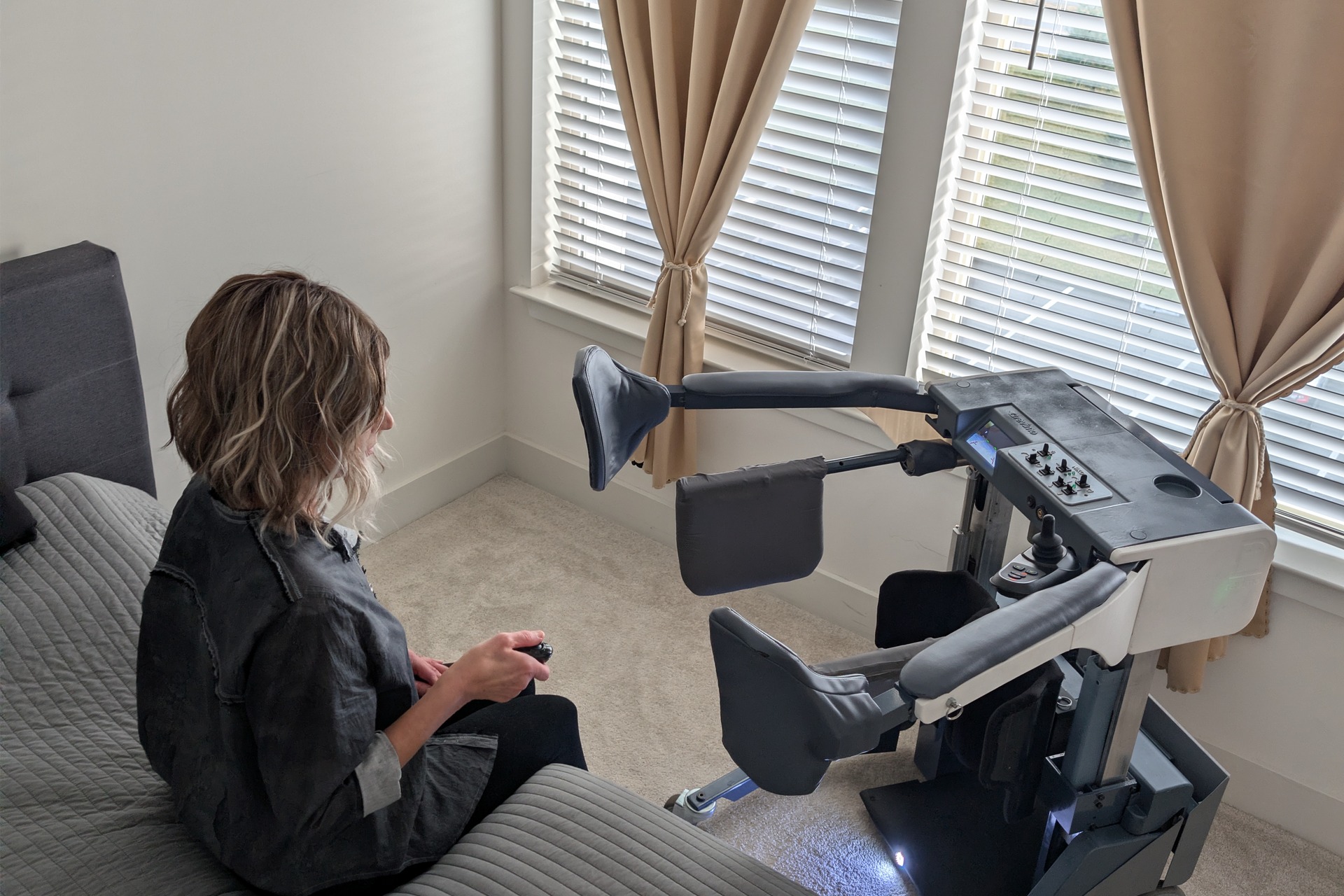
The mechanism raises the seated user clear of the original surface. Niko can then move across the room and reverse the process to place the person on a new seat.
This removes the need to first position a separate sling beneath the user. It also avoids a permanently installed ceiling track and is intended to reduce the bending and pulling demanded of a caregiver during a manual transfer.
Whether someone can use Niko completely independently will depend on their strength, balance, coordination and individual care requirements. The device also has direct onboard controls, allowing a caregiver to operate it when self-transfer is not appropriate.
Wireless control and built-in safety equipment
Users can control Niko through a wireless remote or the controls mounted on the device. REVIMO also lists a rear-view camera, safety sensors and an alarm button among its safety features.
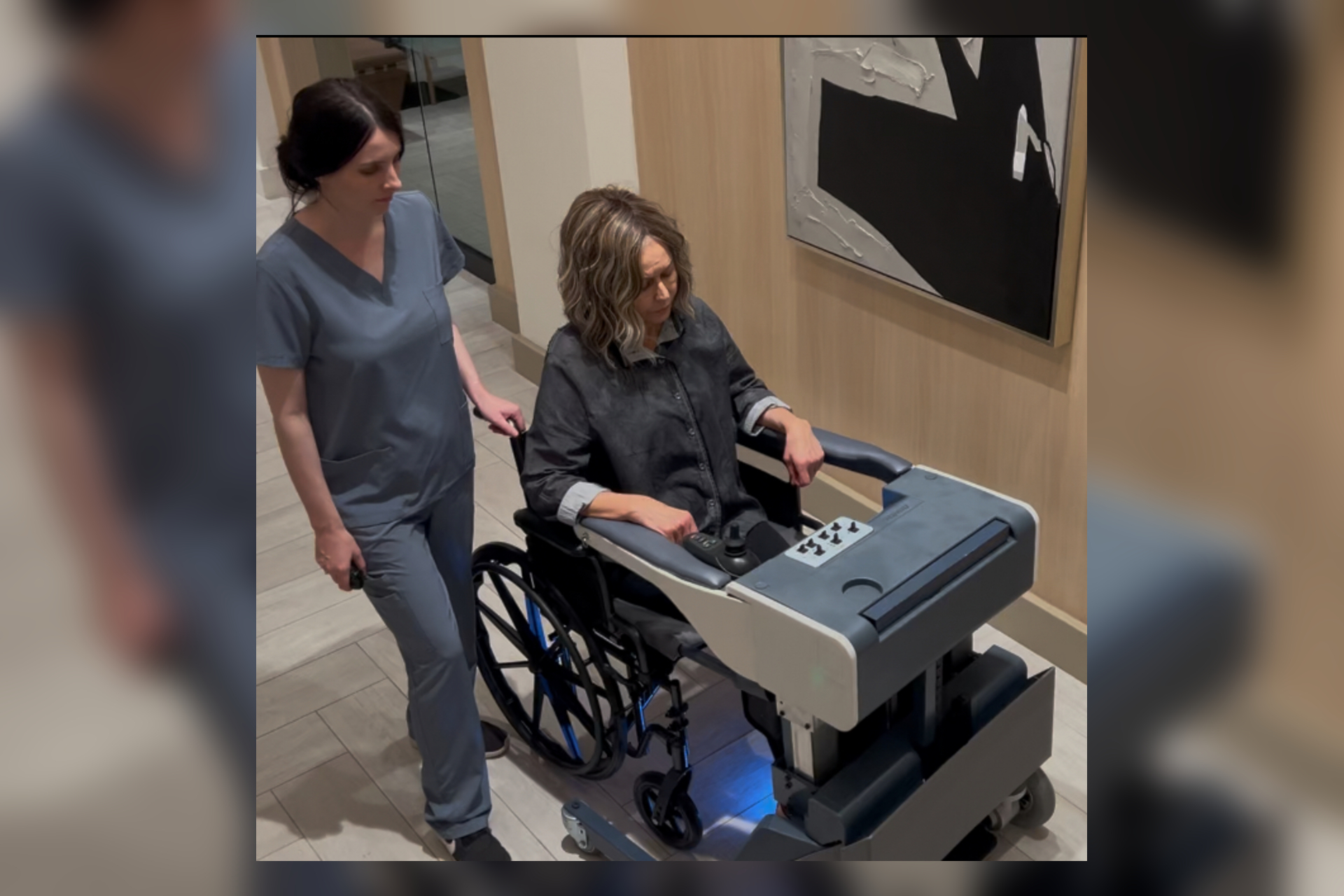
The current public specification gives Niko a maximum capacity of 250 lb (113 kg). REVIMO says it is developing another version rated for 400 lb (181 kg), but that higher-capacity model is not currently available.
The company says the base has a footprint smaller than many conventional wheelchairs and a tight turning radius for use in compact rooms. Its legs are shaped to move around compatible chairs, though REVIMO recommends arranging a demonstration to confirm that a particular wheelchair, bed or bathroom will work with the device.
It can position a user over a regular toilet
One of Niko’s most significant applications is bathroom use. Its seating remains open through the center, allowing the device to move over a conventional toilet while continuing to support the user.
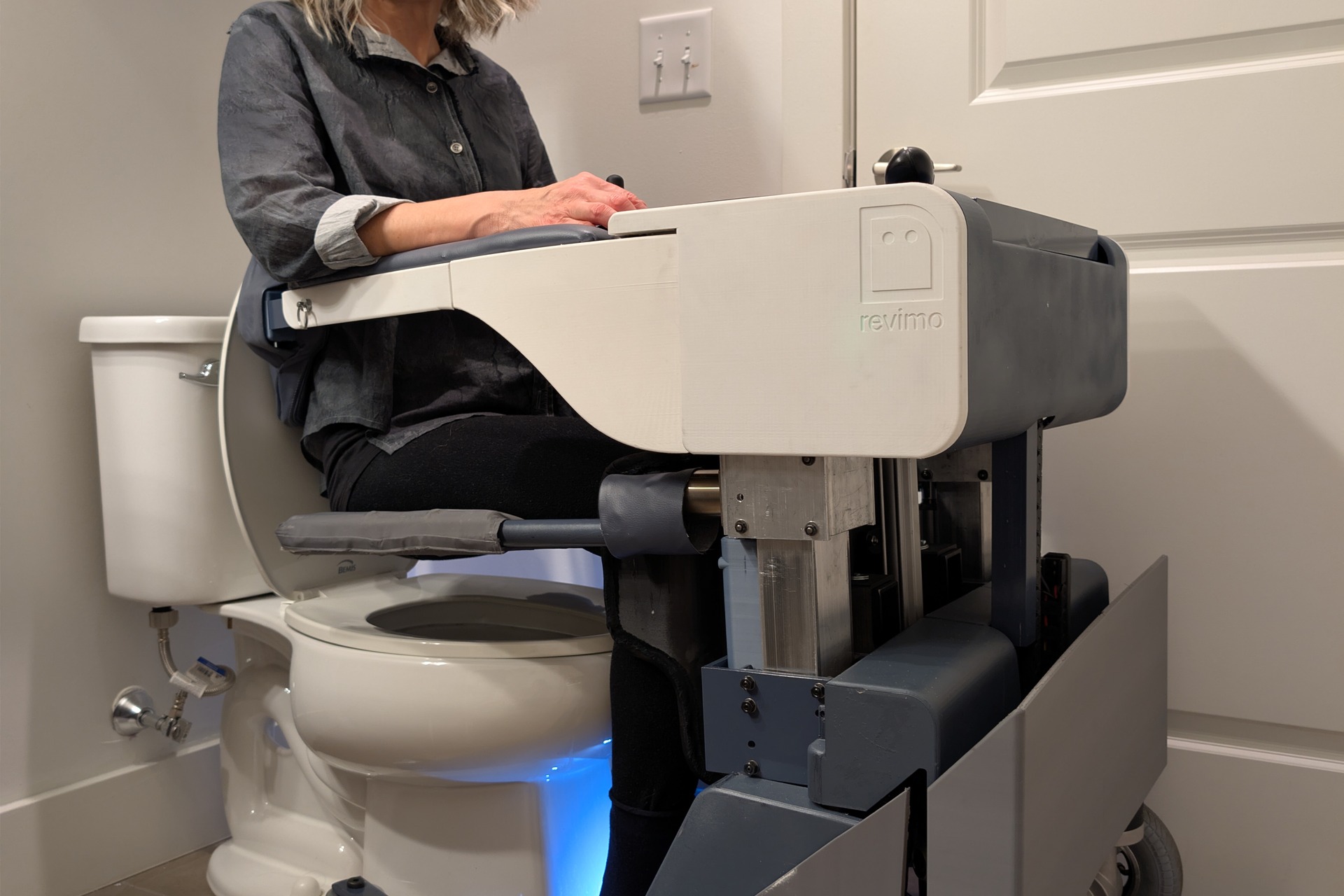
That means the person does not necessarily need to complete another transfer onto a separate commode. Disposable seat covers are available for hygiene, while the device’s solid surfaces are designed to be wiped down between uses.
REVIMO says Niko works with most recliners, wheelchairs and shower benches in addition to beds and toilets. Compatibility will still vary according to seat height, available clearance, body positioning and the surrounding room.
It can raise a person toward standing height
Niko is not limited to moving someone at normal chair height. Its powered lifting columns can raise the seat toward a standing level, which may help a user reach a countertop or high cabinet.
A retractable handlebar provides something to hold during supported standing and rehabilitation exercises. However, those uses would need to follow an individual’s clinical assessment and professional guidance; the company has not published evidence that Niko itself improves a particular medical condition.
The device is intended for homes as well as hospitals, rehabilitation centers, assisted-living communities and other care facilities. Even when operated by staff, its powered seat could reduce the physical effort involved in repeated transfers.
Compact enough to travel in a car
Unlike a ceiling-mounted lift, Niko is designed to move with its user. REVIMO says it folds into a form compact enough to fit inside most cars, making it possible to take the transfer device to another home, a restaurant or an appointment.
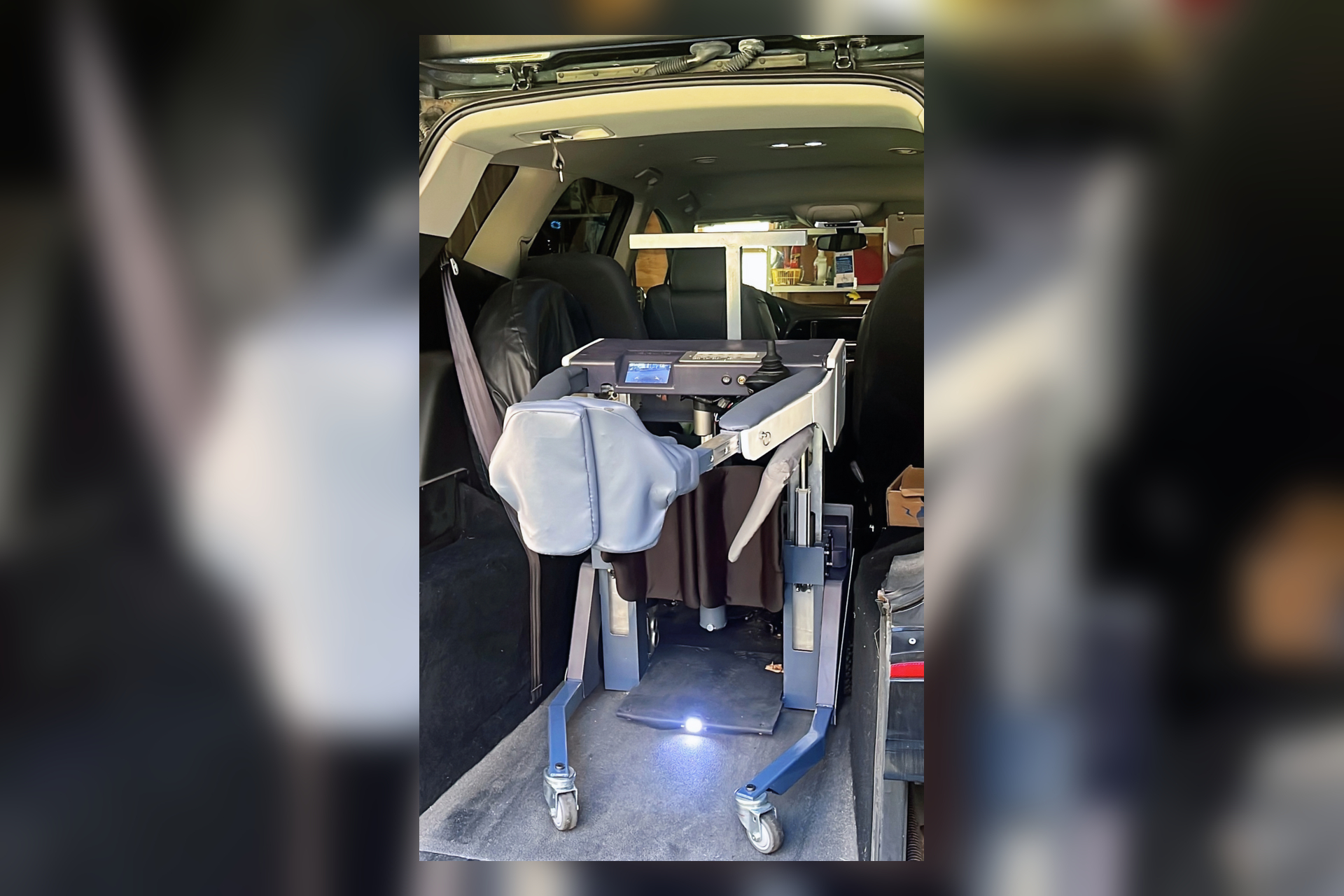
Portable does not necessarily mean lightweight, and REVIMO does not currently publish the device’s total weight or folded dimensions on its main specification page. Buyers should therefore confirm how it must be loaded and whether their vehicle has enough space before relying on that feature.
Price, FDA status and availability
Niko is not currently available for general purchase. REVIMO says it is completing certification and preparing production, while its website explicitly states that the device remains subject to FDA approval and that specifications may change.
The company says its first production batch has already been pre-ordered. A free waitlist is open for subsequent units, with first-come, first-served delivery currently listed for 2027 and no priority allocation.
REVIMO does not presently display a final retail price on its public pricing page. During the device’s CES 2026 demonstration, Engadget reported that Niko was expected to cost about US$15,000, with rental options also planned. That figure should be treated as a preliminary estimate rather than a confirmed current price.
Insurance coverage is not yet available, according to REVIMO, though the company says it is working toward it. Free demonstrations can currently be requested through its website.
The idea behind Niko is compelling because it addresses more than movement alone. For a person able to operate it safely, transferring without waiting for someone else could offer greater privacy and control. For a caregiver, the same machine could reduce some of the lifting, pulling and awkward positioning associated with moving another person.
Whether it can deliver those benefits at scale will depend on regulatory clearance, the finished production specifications, real-world reliability and eventual cost. For now, Niko remains a promising pre-production device rather than an approved product available for immediate purchase.
Product page: REVIMO Niko