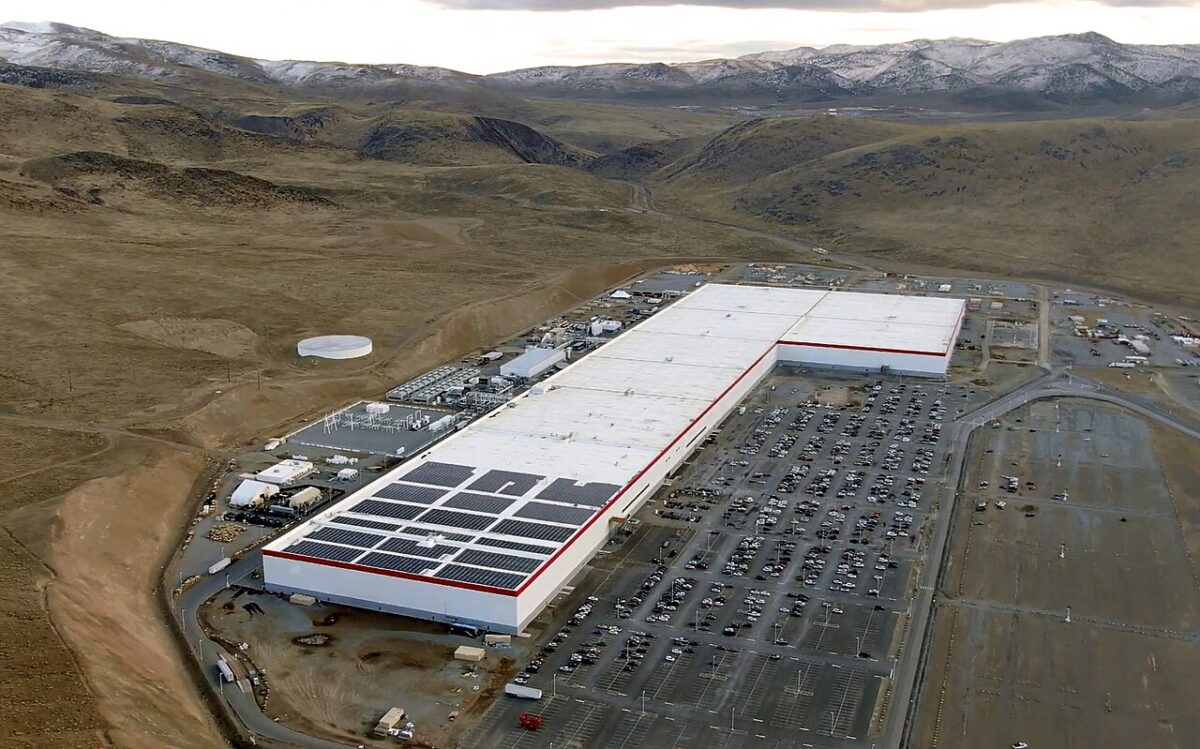
Tesla is considering one of the largest manufacturing investments in its history — a $10.1-billion solar factory in Fort Bend County, Texas.
The proposed development appears in an application submitted under Texas’ Jobs, Energy, Technology and Innovation program, better known as JETI. Tesla is seeking a 10-year limitation on the taxable value of eligible property through the Lamar Consolidated Independent School District.
The project carries the codename Project Crystal Sun and would be built southwest of Houston if Tesla ultimately selects the Texas location.
A vertically integrated solar factory
According to Tesla’s filing with the Texas Comptroller, the proposed plant would manufacture photovoltaic solar cells and assembled solar modules for utility-scale, commercial and distributed installations.
The equipment list points to a more extensive operation than a plant that simply assembles imported cells into finished panels. Tesla lists ingot- and wafer-manufacturing equipment, coating machinery, metallization and printing lines, cell-testing equipment, cleanrooms, automated material-handling systems and supporting chemical, utility and safety infrastructure.
In practical terms, that would allow several major stages of solar production to take place at the same complex. Silicon ingots can be sliced into wafers, processed into photovoltaic cells and then incorporated into finished modules.
The proposed site includes portions of five parcels near FM 762 and FM 1994 in Fort Bend County. Those parcels collectively cover roughly 3,050 acres (1,234 hectares), although the application makes clear that the factory may occupy only parts of them.
More than $10 billion in projected spending
Tesla estimates total capital investment at $10.116 billion. That includes approximately $1.52 billion for real property and $8.60 billion for equipment and other personal property.
The filing schedules that spending across 2026, 2027 and 2028, with construction projected to finish in 2028. Commercial operations are targeted for the first quarter of 2029.
If the project reaches full scale, Tesla estimates it would support 9,712 permanent full-time positions with an annual payroll of around $1.3 billion. However, the filing’s own hiring schedule shows those jobs arriving gradually: 795 permanent positions are projected in 2029, rising to the full 9,712 by 2033.
Construction employment would peak at approximately 1,147 temporary jobs in 2028.
The Texas factory is not confirmed
Despite the scale and detail of the filing, Project Crystal Sun should not yet be treated as an approved factory.
Tesla says it is evaluating possible locations across multiple US states and has at least one other viable site under consideration. The company argues that property taxes make the Fort Bend County location less competitive without the requested JETI limitation and additional agreements with local jurisdictions.
The proposed reinvestment zone would also need to be established by the Fort Bend County Commissioners Court. In other words, the application is part of a site-selection and incentive process rather than a final construction announcement.
The distinction also applies to the investment and employment estimates. The $10.1-billion expenditure, nearly 10,000 permanent jobs and 2029 production target are projections submitted in support of Tesla’s incentive request, not completed commitments.
A much larger push into solar manufacturing
Tesla is already active in residential solar through conventional panels, Solar Roof, inverters and Powerwall battery systems. Project Crystal Sun would move the company deeper into domestic production of the underlying solar cells and modules.
The application also cites Elon Musk’s public ambition for Tesla and SpaceX to help build toward 100 gigawatts of annual US solar manufacturing capacity. However, the filing does not state how much annual production capacity Project Crystal Sun itself would provide.
If Tesla chooses Texas and the project proceeds substantially as described, the plant would represent an enormous expansion of the company’s energy business. For now, though, it remains a highly ambitious proposal whose location, incentives and final construction decision are still unresolved.
Sources: Tesla’s JETI application via the Texas Comptroller, Houston Chronicle, pv magazine USA