Motorcycles rely on wheels, suspension and a rider’s ability to choose a path through difficult terrain. Kawasaki’s CORLEO proposes something far more unusual: replace the wheels with four robotic legs and control the machine by shifting your body weight, almost like riding a horse.
Unveiled at Expo 2025 Osaka, CORLEO is Kawasaki Heavy Industries’ vision for a new category of off-road personal mobility. It combines ideas from the group’s motorcycle, robotics and hydrogen-engine programs in a machine intended to walk across places where ordinary motorcycles and all-terrain vehicles would struggle.
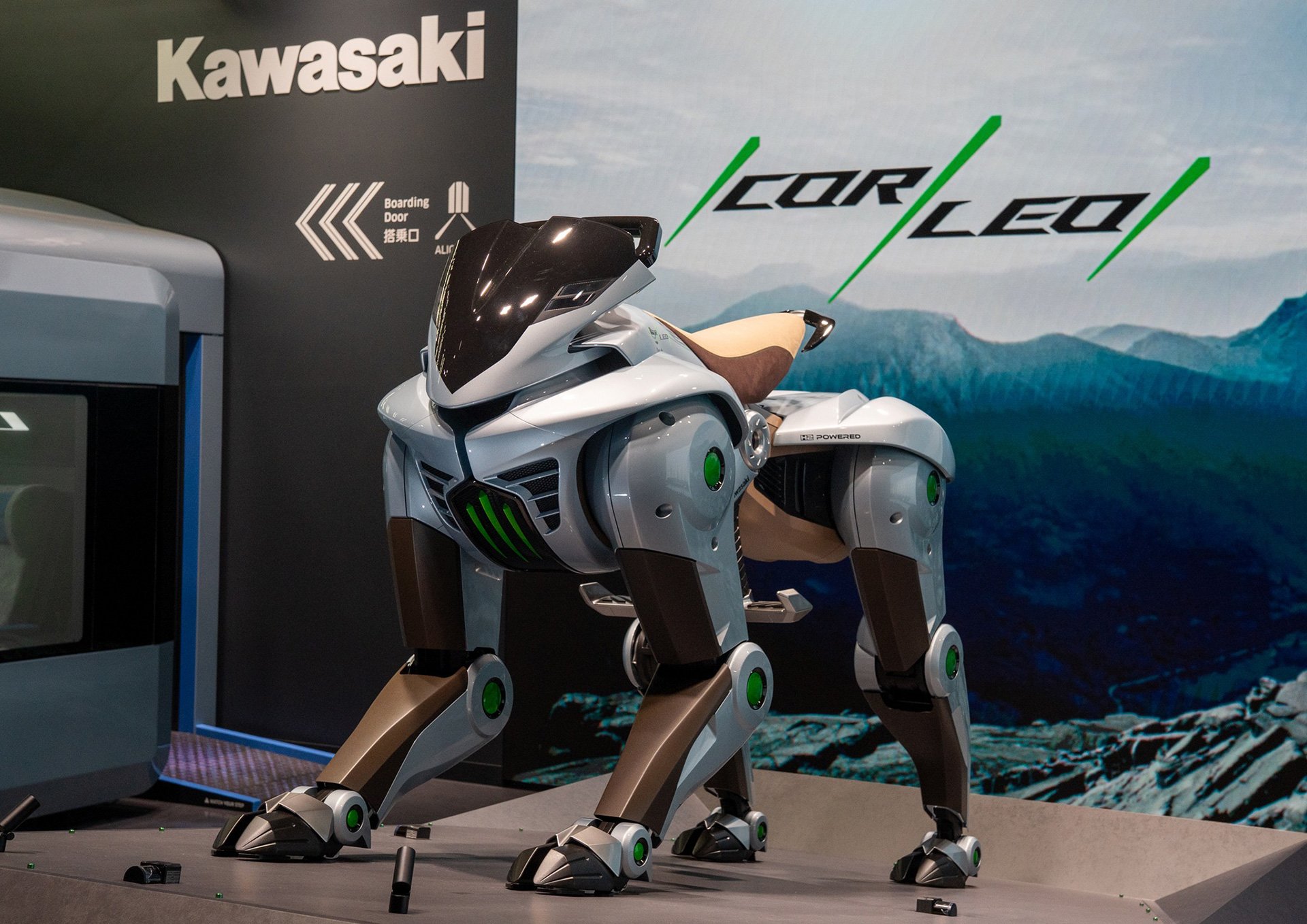
There is now a genuine full-size CORLEO model. Kawasaki displayed the physical concept at the Expo and has released real photographs of it. However, the dramatic promotional scenes showing CORLEO galloping through forests, climbing rocky mountains and jumping over gaps are CGI or CGI-enhanced concept visuals—not footage of a working vehicle.
That distinction is important, but CORLEO is no longer being treated only as a distant design exercise. Kawasaki announced in December 2025 that it had established a dedicated development organization, with the goal of operating the vehicle at Expo 2030 Riyadh and potentially commercializing it around 2035.
A motorcycle that walks on four legs
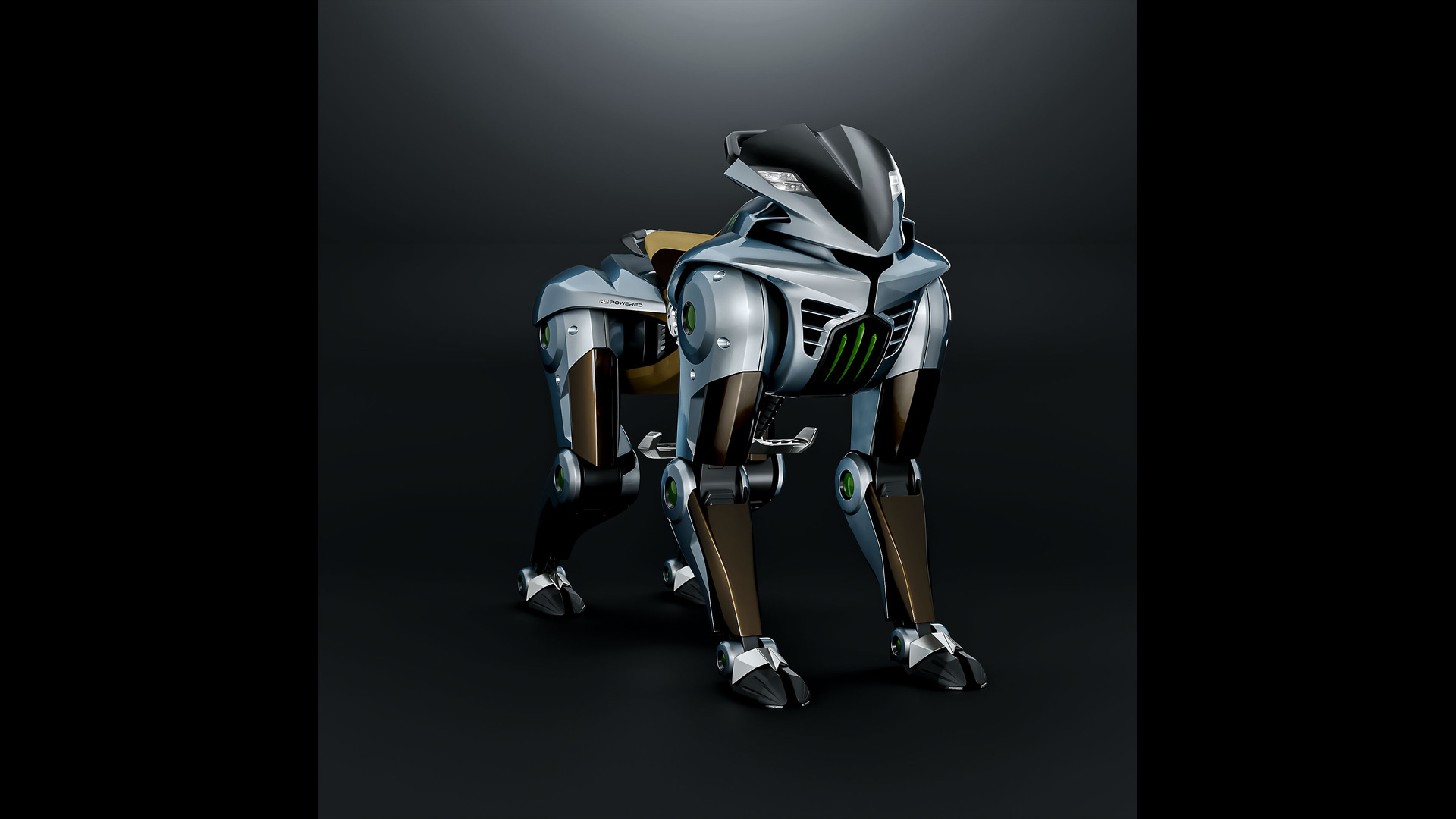
CORLEO is designed around four individually driven robotic legs. Instead of balancing on two wheels or following the fixed axle arrangement of a conventional ATV, the proposed machine would place each foot independently to negotiate rocks, steps, grass, rubble and other irregular surfaces.
Its body still borrows heavily from motorcycle design. The rider sits astride a saddle, holds a pair of handlebars and places their feet on adjustable steps resembling stirrups.
The rear leg assembly uses a swingarm-inspired mechanism that can move vertically independently of the front section. Kawasaki says this arrangement would absorb shocks during walking and running while helping the rider maintain a forward-looking posture when climbing steps or steep ground.
Rather than controlling each leg manually, the rider would guide CORLEO through body movement. Sensors in the steps and handlebars are intended to detect shifts in weight and translate them into changes of direction and movement.
Kawasaki compares the experience with horseback riding: the rider indicates where to go through posture and weight transfer, while the machine’s control system manages the complex job of coordinating four legs and maintaining stability.
No public demonstration has yet shown how naturally or reliably that interaction works with a person aboard. Balancing a static display model is very different from carrying a rider across loose rock, slopes or water, so the control system will be one of the program’s most important engineering challenges.
Split rubber hooves for uneven terrain
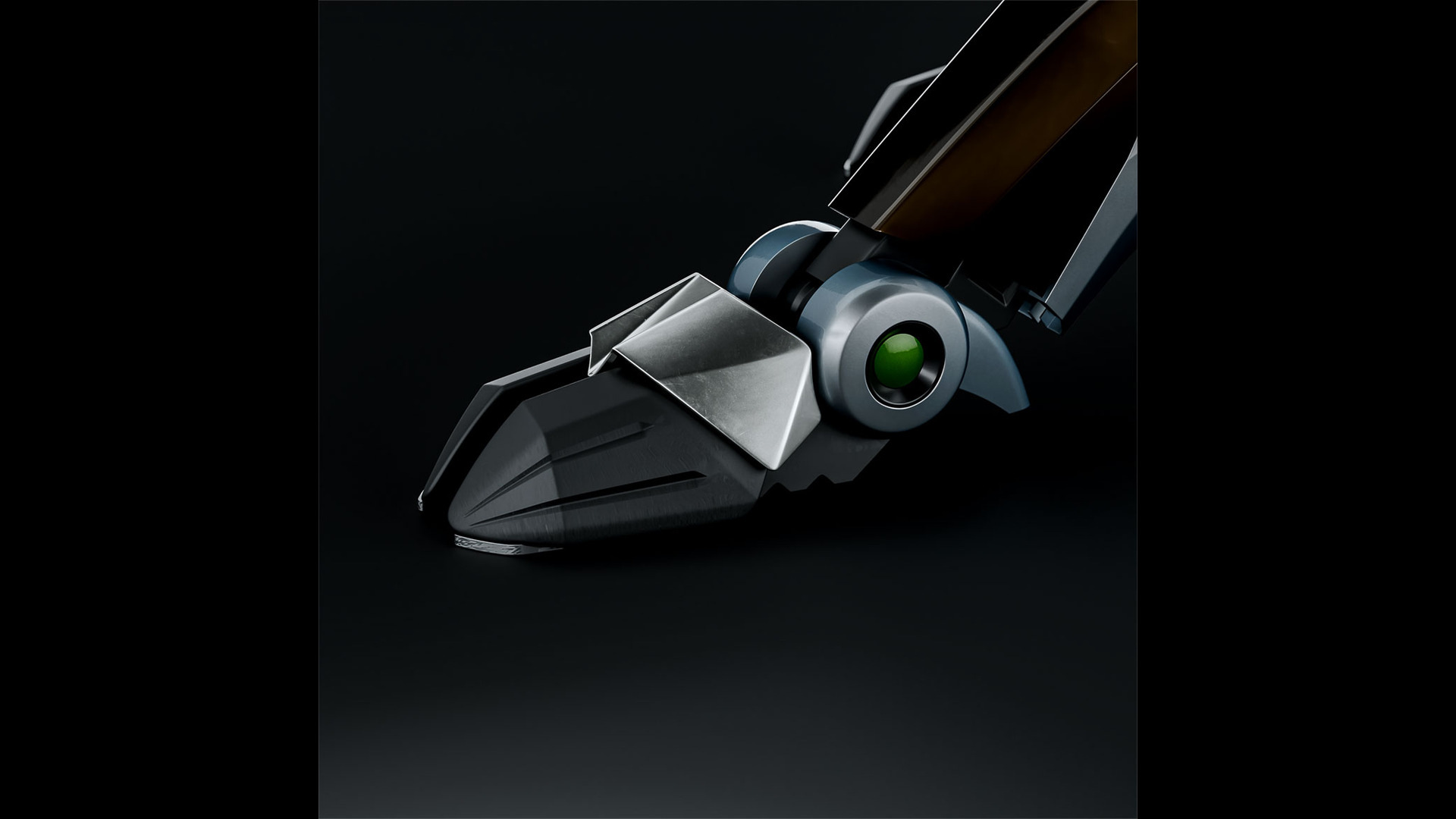
Each CORLEO leg ends in a divided rubber hoof rather than a wheel or conventional robotic foot.
The left and right sections are intended to conform independently to small changes in the surface. Kawasaki says the rubber construction would absorb irregularities and provide grip on terrain including grass, rocks and rubble.
Hoof-like feet could give a legged vehicle advantages in places where a tire cannot maintain continuous contact. A robotic leg can theoretically lift over an obstacle, select a stable landing point and alter its height as the terrain changes.
That flexibility also creates considerable complexity. The vehicle would need to assess the ground, coordinate multiple joints, carry the rider’s changing weight and recover safely when a foot slips or finds an unstable surface.
Kawasaki has not disclosed CORLEO’s intended speed, payload, dimensions, operating range or maximum climbing ability. It has also not shown an unedited test of the system walking under its own power.
A hydrogen engine would generate electricity
Despite its animal-like movement, CORLEO is being designed as a series-hybrid machine rather than a mechanically driven quadruped.
Kawasaki’s concept specification calls for a 150cc hydrogen-fueled engine located toward the front of the vehicle. Hydrogen would be carried in a replaceable canister mounted in the rear leg section.
The engine would not directly turn shafts connected to the feet. Instead, it would operate as a generator, producing electricity for drive units installed in each of the four legs.
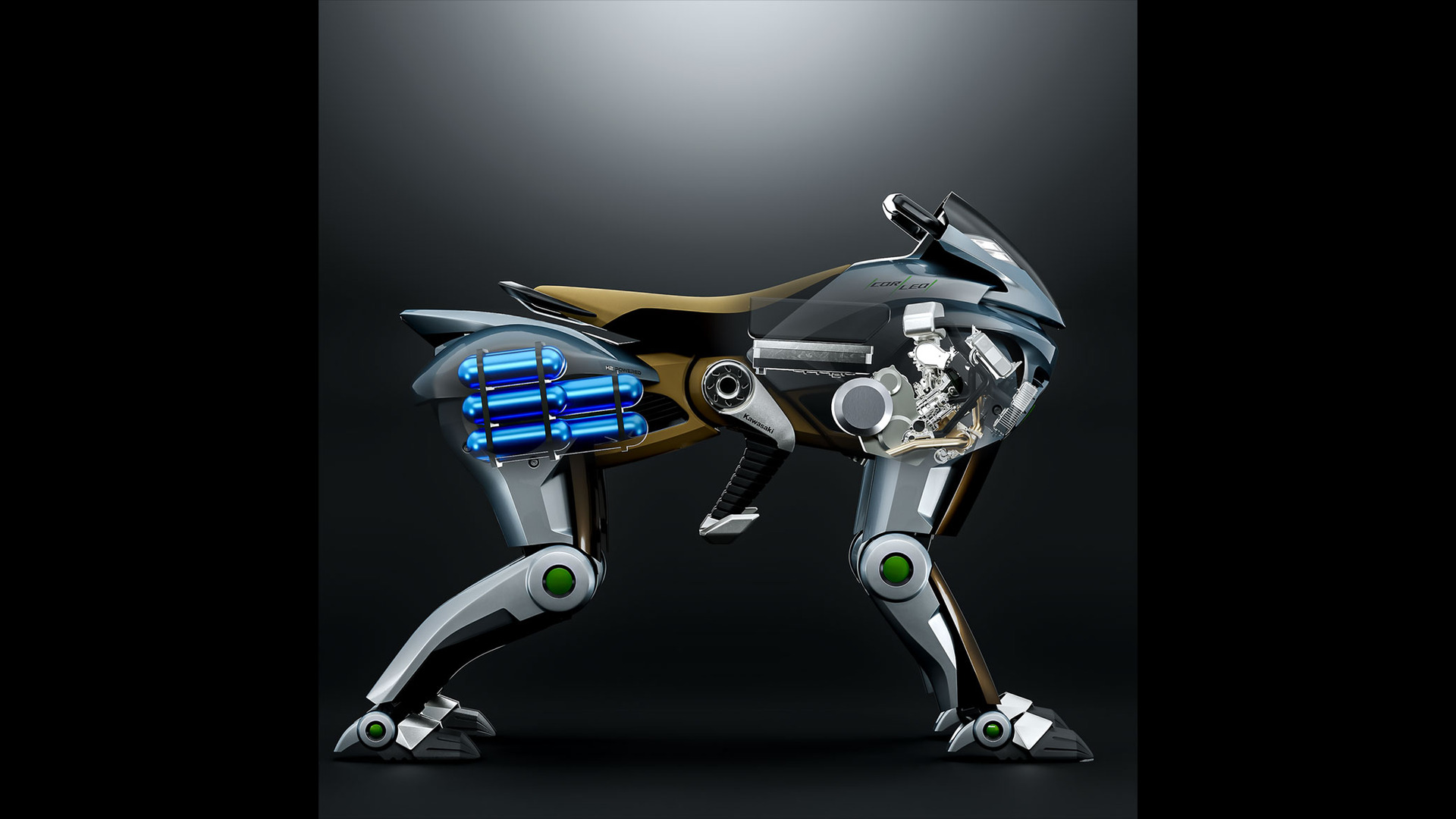
This arrangement would allow the individual joints and legs to be controlled electrically while using liquid or compressed hydrogen storage—Kawasaki has not publicly specified the storage state—to extend operation beyond what a small battery alone might provide.
Important details remain unknown. Kawasaki has not published the engine’s output, hydrogen capacity, fuel pressure, electrical architecture, battery-buffer arrangement or expected range. The company also has not released emissions data. Burning hydrogen avoids fuel-derived carbon dioxide, but a hydrogen internal-combustion engine can still produce nitrogen oxides, making combustion control and aftertreatment relevant.
Navigation intended for mountains after dark
CORLEO’s proposed instrument panel would show the remaining hydrogen level, route information and the machine’s center-of-gravity position. Kawasaki also envisions projecting illuminated markers onto the ground to identify a safe path during nighttime travel.
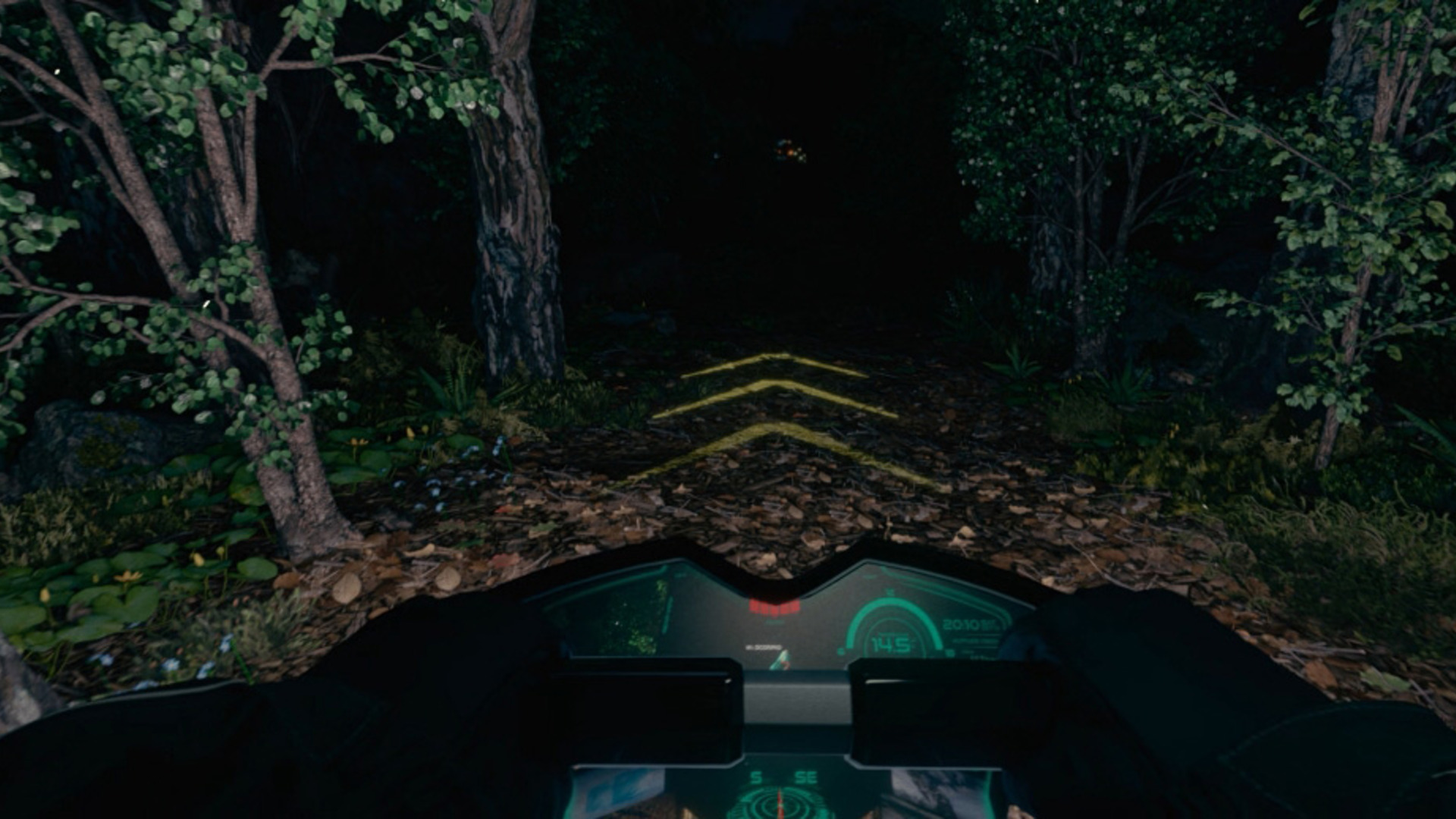
The company’s broader SAFE ADVENTURE plan extends beyond the vehicle. Kawasaki says it wants to develop a navigation system that monitors factors such as weather, temperature, trail conditions and wildlife sightings, then directs users toward safer routes through a connected device.
The idea positions CORLEO as more than a recreational robot horse. Kawasaki is investigating it as mobility for mountainous destinations where conventional transport is difficult and where changing conditions can create risks for visitors.
The real model and the CGI footage are not the same thing
The full-size CORLEO displayed at Expo 2025 was a physical object, and Kawasaki’s official photographs show substantial exterior detailing, articulated-looking joints, split hooves, a saddle and rider controls.
But Kawasaki described the exhibit as a concept model. The company has not claimed that the displayed machine could walk with a passenger, and it has not published real footage demonstrating the mountain-crossing performance shown in its promotional film.
Many newer CORLEO social posts carry the disclaimer: “Concept vehicle shown. Not available for purchase. CGI-enhanced image.” Images placing the vehicle and a rider in outdoor locations should therefore be understood as illustrations of Kawasaki’s intended experience.
Kawasaki’s development announcement changes the project’s status, but it does not prove that the envisioned performance has already been achieved. A dedicated team is now working toward turning the concept into usable hardware.
A simulator first, then Expo 2030
Kawasaki has outlined three major milestones for CORLEO.
The first is a riding simulator targeted for completion in 2027. The company plans to use the simulator and associated motion data in gaming and esports as well as vehicle development.
The second target is deploying CORLEO as an on-site mobility vehicle at Expo 2030 Riyadh in Saudi Arabia. Kawasaki has not said whether that deployment would involve public riders, restricted demonstration routes or remotely supervised prototypes.
Finally, the company says it is working toward commercialization in 2035. That is a development objective rather than a confirmed launch date. No price, production volume, customer specification or reservation program has been announced.
The original CORLEO presentation framed the machine as a vision for 2050. Bringing the target forward by 15 years shows that Kawasaki sees enough potential to investigate it seriously—but the engineering gap between an impressive physical model and a safe, rideable quadruped remains enormous.
If Kawasaki can solve balance, terrain perception, energy storage, rider protection and mechanical durability, CORLEO could create a genuinely new kind of personal transport. Until real prototypes begin walking with riders, however, its most spectacular abilities remain an illustration of where the company wants to go rather than evidence of what the machine can do today.
Sources: Kawasaki, Kawasaki Heavy Industries