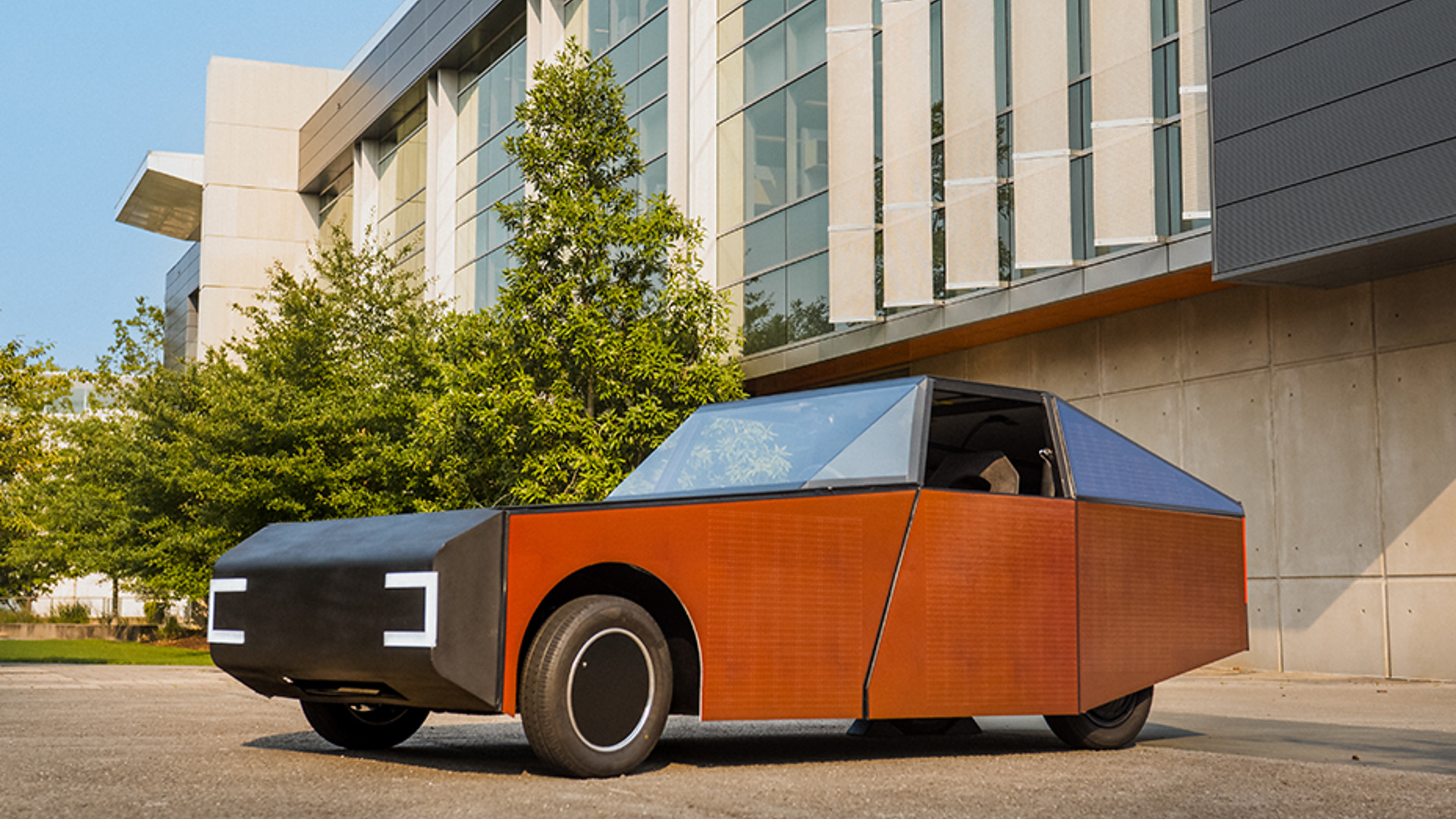
Most electric cars depend almost entirely on energy supplied through a charging cable. Clemson University’s latest experimental vehicle explores a different possibility: what if an electric car could collect more solar energy throughout a typical day than it consumed during the owner’s commute?
Called Deep Orange 17, and given the model name Luminetta, the fully functioning prototype was developed by 16 graduate students in Clemson University’s Department of Automotive Engineering. The students worked alongside BMW’s research and development team to combine integrated photovoltaics, lightweight construction and carefully optimized vehicle controls.
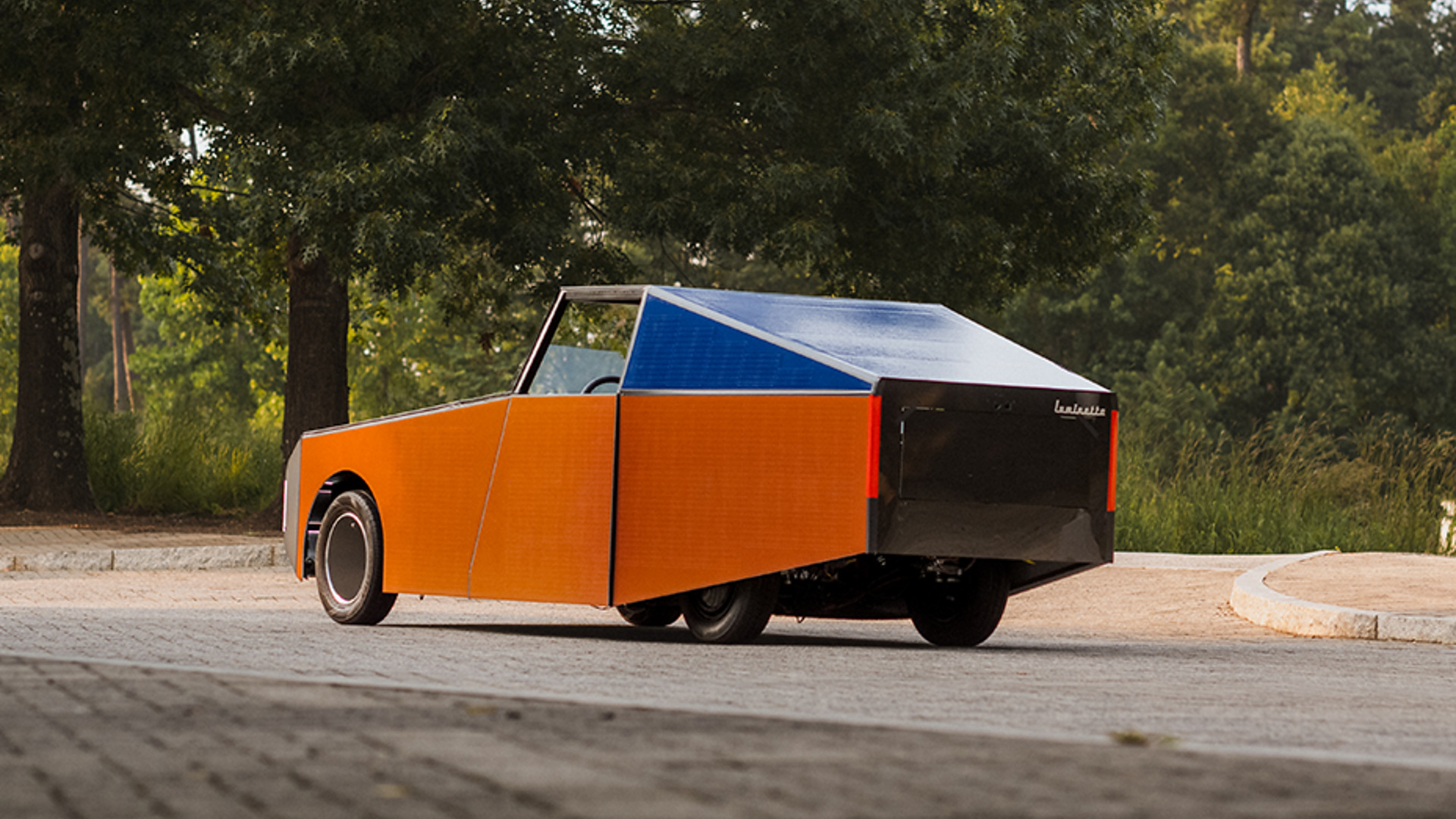
The result is an unusually light two-door electric coupe covered with 1,781 photovoltaic cells. According to Clemson and BMW, computer modeling found that the car could achieve a positive energy balance over a typical day involving a relatively short urban commute.
That does not make it an endlessly self-powering car. Instead, the concept takes advantage of something most privately owned vehicles do for the majority of the day: remain parked in the sunlight.
Turning the car’s exterior into a solar collector
Solar power is not treated as a minor auxiliary feature on Deep Orange 17. The photovoltaic system forms a central part of the vehicle’s energy strategy.
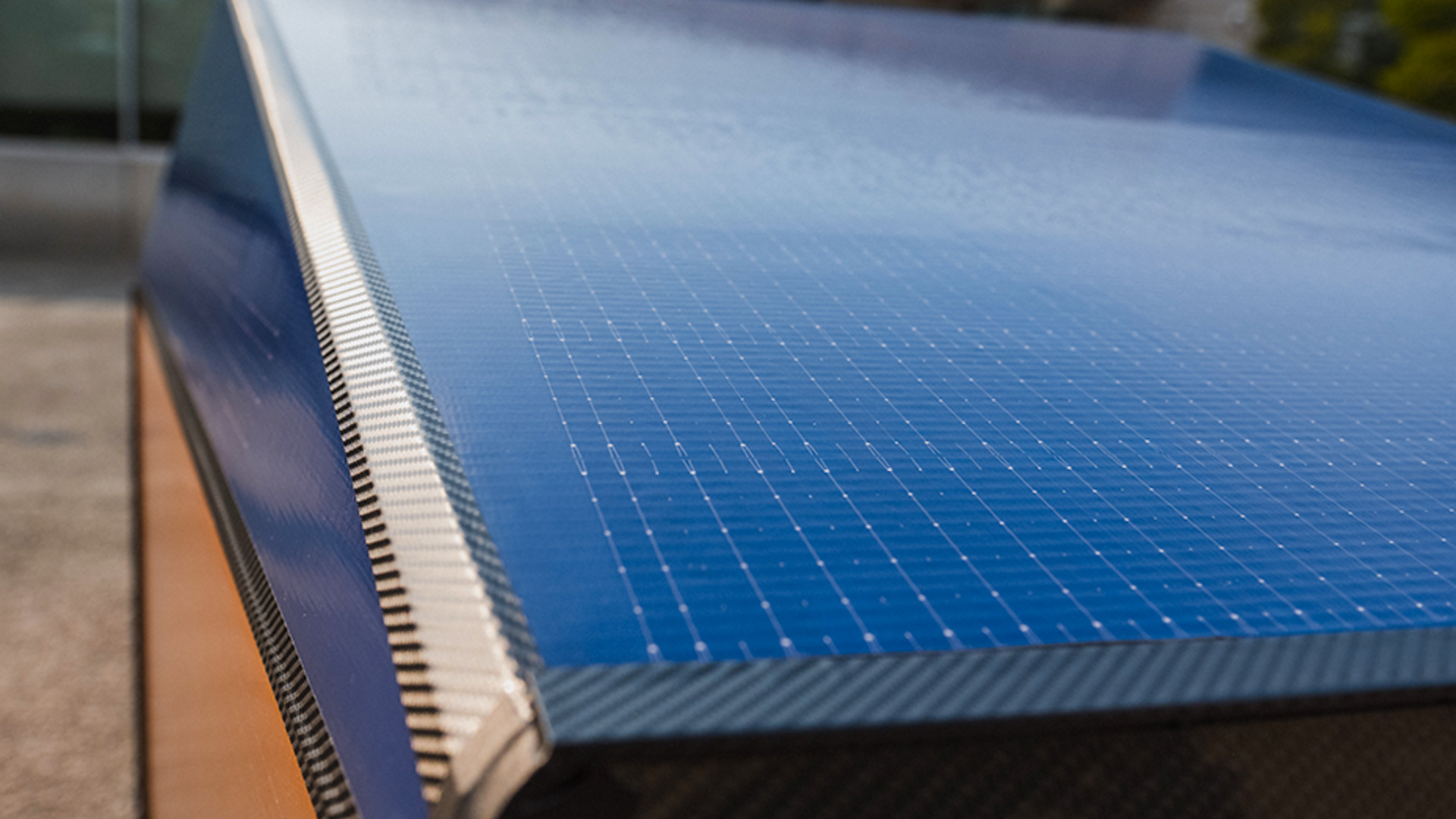
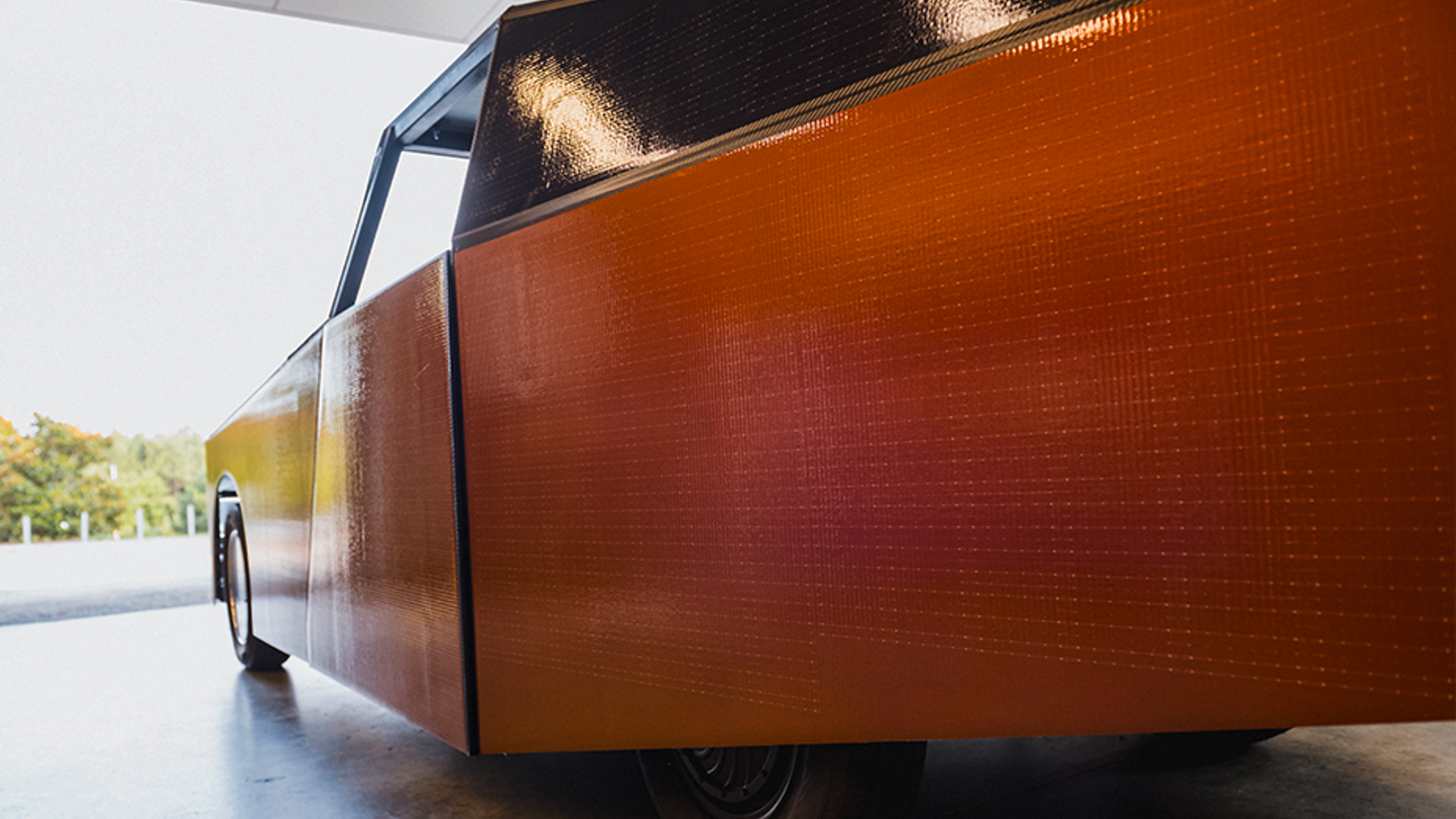
Its 1,781 cells are distributed across the exterior surfaces, allowing the car to collect sunlight both while moving and while parked. Rather than concentrating the cells on a single flat roof panel, the design uses a much larger portion of the available bodywork.
The solar-panel construction was developed in collaboration with Germany’s Fraunhofer Institute for Solar Energy Systems ISE. Clemson says the arrangement can continue producing power when sections of the panels are shaded, an important consideration for a car passing buildings, trees and other vehicles.
A durable outer film protects the cells. The vehicle’s distinctive orange color was produced through an advanced laser-manufacturing process rather than simply covering the photovoltaics with conventional opaque paint.
Energy collected by the cells is used to replenish the vehicle’s energy storage, reducing the amount of electricity that would otherwise need to come from a charger.
What “energy-positive” actually means
The description “energy-positive” requires some context.
Clemson is not claiming that the car generates more power than its motors consume at every moment while driving. It also does not mean the vehicle can travel continuously without eventually needing an outside source of energy.
Instead, the comparison covers a complete day. The car may consume energy during a short journey, but it can continue collecting sunlight during the hours it remains parked. If the solar energy harvested over that period exceeds the energy used for the commute, the daily balance becomes positive.
To evaluate that idea, the students modeled environmental conditions and sunlight availability in Greenville, South Carolina; Frankfurt, Germany; Madrid, Spain; and Mumbai, India.
The study assumed a daily urban commute of 12 miles (20 km). Across the four locations, Clemson says the vehicle produced enough surplus solar energy to provide an average of 31 miles (50 km) of additional driving range.
In other words, under the modeled conditions, the car harvested enough energy to replace what the 12-mile journey consumed and leave additional energy in storage.
The result remains dependent on variables such as location, season, cloud cover, parking conditions, shading and daily driving distance. A longer commute, covered parking or poor weather would produce a very different energy balance.
Extremely low weight reduces energy demand
Adding solar cells would accomplish relatively little if the underlying vehicle consumed as much energy as a conventional production car.
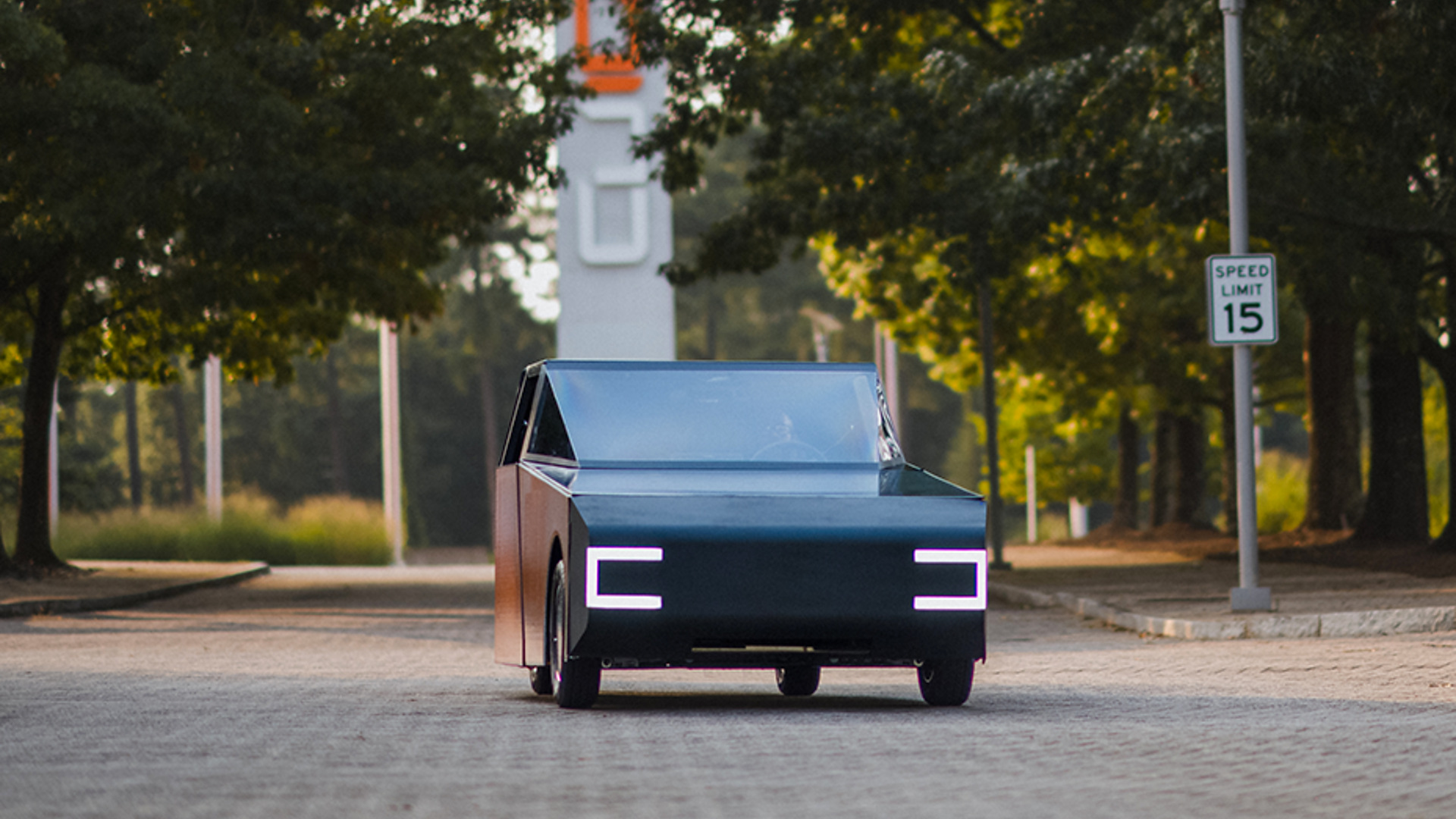
Deep Orange 17 therefore weighs just 1,212 lb (550 kg). Clemson describes that as approximately one-fourth the weight of many similarly sized production vehicles.
Its multi-material chassis combines structural steel in areas important for passenger protection with aluminum components, carbon-fiber structural members and 3D-printed metal joints. This approach allowed the team to reduce weight while retaining the strength required by the functioning prototype.
The lightweight construction decreases the amount of energy needed to accelerate and move the vehicle, making it easier for the body-mounted solar system to offset the electricity consumed during a short journey.
Clemson has not disclosed the prototype’s battery capacity, motor output, top speed or conventional driving range. It is therefore difficult to compare its performance directly with that of a production electric car.
Boxfish-inspired exterior and intelligent controls
Although its angular body may initially appear unconventional, the vehicle’s shape was partly inspired by the boxfish.
The fish combines a relatively voluminous body with aerodynamic characteristics that help it move efficiently through water. Clemson’s students used that example while attempting to preserve usable interior space without creating excessive aerodynamic drag.
The vehicle also incorporates regenerative braking, which recovers some of the energy normally lost while slowing down. Intelligent torque distribution and optimized drivetrain controls further reduce waste and manage the available power more efficiently.
Together, these systems demonstrate that the energy-positive target was not reached through photovoltaics alone. It required lowering vehicle mass, reducing energy consumption and recovering energy wherever practical.
A BMW-influenced two-door coupe
BMW asked the team to show that extreme efficiency did not necessarily have to produce an emotionless vehicle.
The resulting two-door coupe incorporates elements inspired by BMW’s design heritage alongside its more experimental solar bodywork. The Luminetta name refers to both the vehicle’s relationship with sunlight and its retro-modern styling.
Inside, a custom human-machine interface displays real-time vehicle telemetry. The prototype also supports familiar consumer technologies including Apple CarPlay and Android Auto.
The interior makes Deep Orange 17 more than a rolling solar experiment. It was designed as a complete vehicle concept with controls and features intended to resemble those found in a usable road car.
Built by students from concept to functioning prototype
Deep Orange is a two-year vehicle-development program operated through Clemson University’s Department of Automotive Engineering at the Clemson University International Center for Automotive Research.
Students do not simply design a digital concept. They conduct market research, define customer requirements, develop the vehicle architecture, engineer its major systems, manufacture components and assemble a functioning prototype.
They must also manage real-world considerations including budgets, development schedules, packaging, software, manufacturing processes and performance validation.
BMW has supported five Deep Orange projects and was one of the founding partners of CU-ICAR. For Deep Orange 17, the company presented the students with the energy-positive vehicle challenge and provided technical mentorship through its research and development organization.
Prototype status and availability
Deep Orange 17 is an experimental research vehicle and is not an upcoming BMW production model. No price, production schedule or commercial release has been announced.
Research involving the prototype is expected to continue at CU-ICAR in Greenville, South Carolina. The vehicle is also scheduled to be displayed at CES 2027 in Las Vegas.
Even if its exact construction never reaches production, the project demonstrates how integrated solar cells, radical weight reduction and efficient controls can work together.
Its most important idea may not be that every future electric car will run entirely from sunlight. It is that a small, highly efficient vehicle used for short daily journeys could collect a meaningful portion of its own energy during the many hours it would otherwise sit inactive.
Sources: Clemson University, BMW Group