

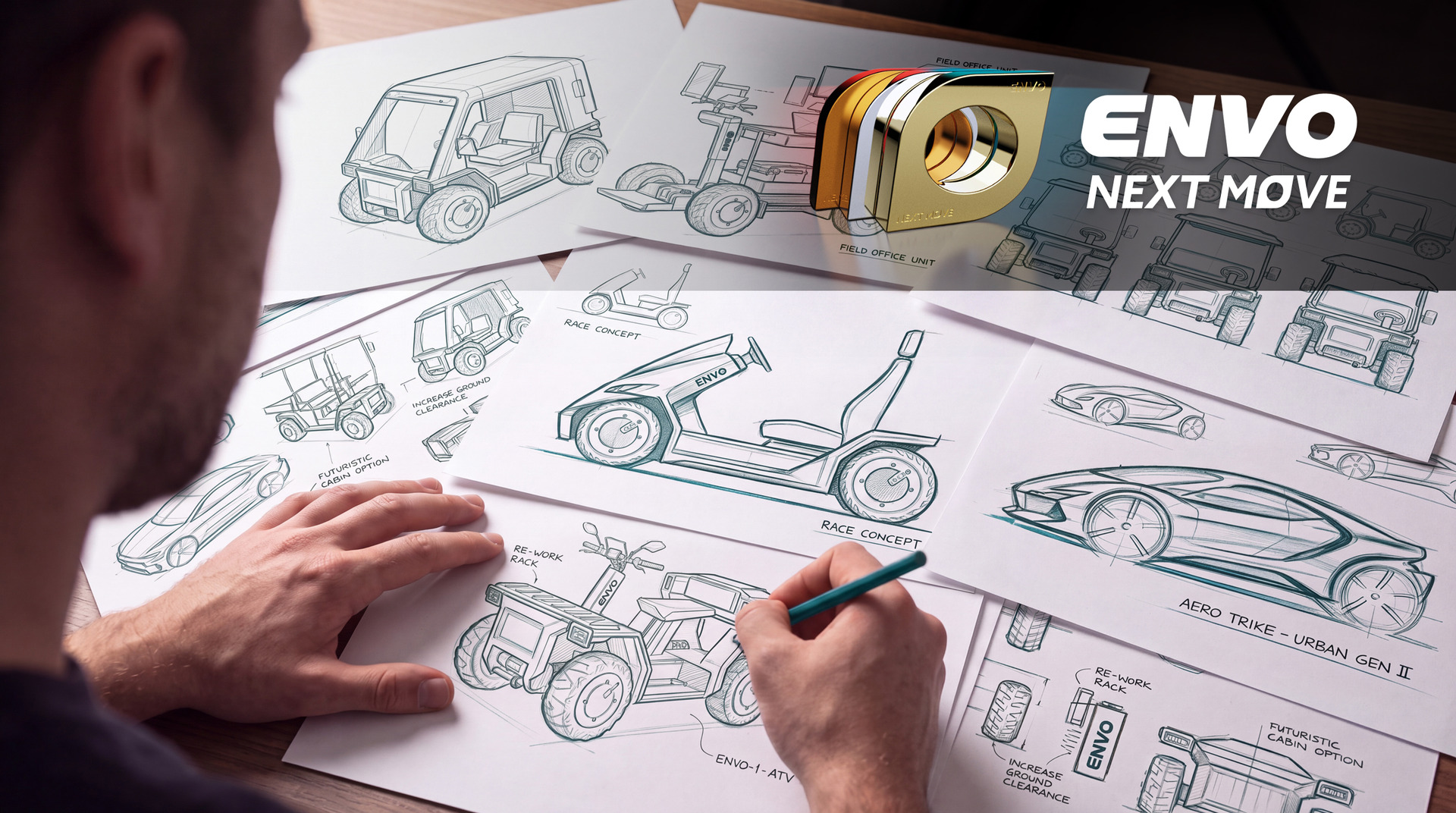
ENVO’s Next Move 2026–27 competition invites people worldwide to design a new vehicle around the modular UPT platform, with three early concepts eligible to be featured at CES 2027.
Canadian mobility company ENVO Drive Systems has reopened its Next Move global design contest, inviting students, designers, engineers, businesses and anyone with a practical mobility idea to propose a new vehicle built around the company’s UPT electric platform.
Entrants do not need professional design qualifications or a finished CAD model. They can submit either a visual concept or a clearly explained written idea showing who the vehicle is for, what job it performs and how it uses—or expands upon—the existing UPT architecture.
Registration and submissions are open, with final entries due by February 15, 2027. ENVO plans to select three eligible early concepts for display with their creators’ names at its CES 2027 booth in Las Vegas. One overall winner will receive an ENVO D50 or ST50 e-bike of their choice.
The competition also closes a circle in the UPT story. Alan Tam’s modular NEXT-GEN concept won Gold in ENVO’s first Next Move contest, and he later joined the company as its industrial designer. That early proposal helped develop toward the adaptable platform now being offered for pre-order.
Use the UPT Configurator to choose the chassis, battery, tires, seats and cargo equipment, then watch the vehicle take shape on screen.
What if configuring a farm vehicle, park-maintenance cart or compact cargo hauler felt more like assembling a set of building blocks? Canadian mobility company ENVO Drive Systems is developing the UPT—short for Utility Personal Transporter—as a common electric platform that can be adapted for very different jobs.
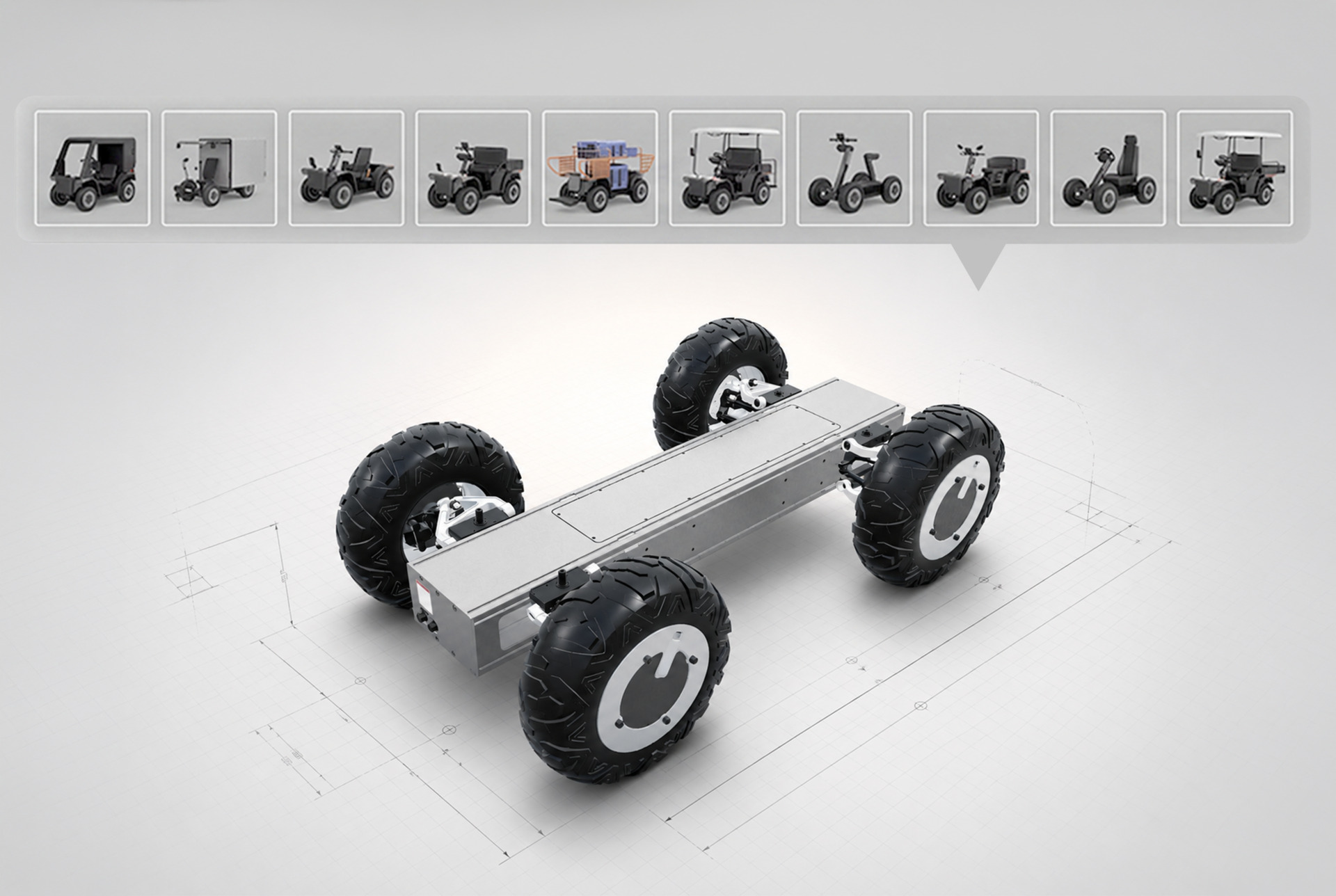
Instead of engineering every vehicle from the ground up, ENVO shares the costly hardware across more than 18 proposed configurations. The chassis, batteries, motors, suspension and control architecture remain broadly consistent; seating, bodywork, tires, storage and job-specific equipment change around them.
Design the vehicle in your browser
The clearest way to understand the concept is through ENVO’s browser-based 3D UPT Configurator. Buyers can begin with a preset vehicle or assemble a more individual specification by working through options for the chassis layout, drivetrain, battery, steering position, tires, seats, bumpers, charging equipment, cargo components and accessories.
The model updates on screen as parts are selected, giving users a visual preview without requiring vehicle-design experience. A farm build might emphasize all-wheel traction, ground clearance and carrying capacity, while a park or resort vehicle could prioritize passenger seating, a roof and compact dimensions.
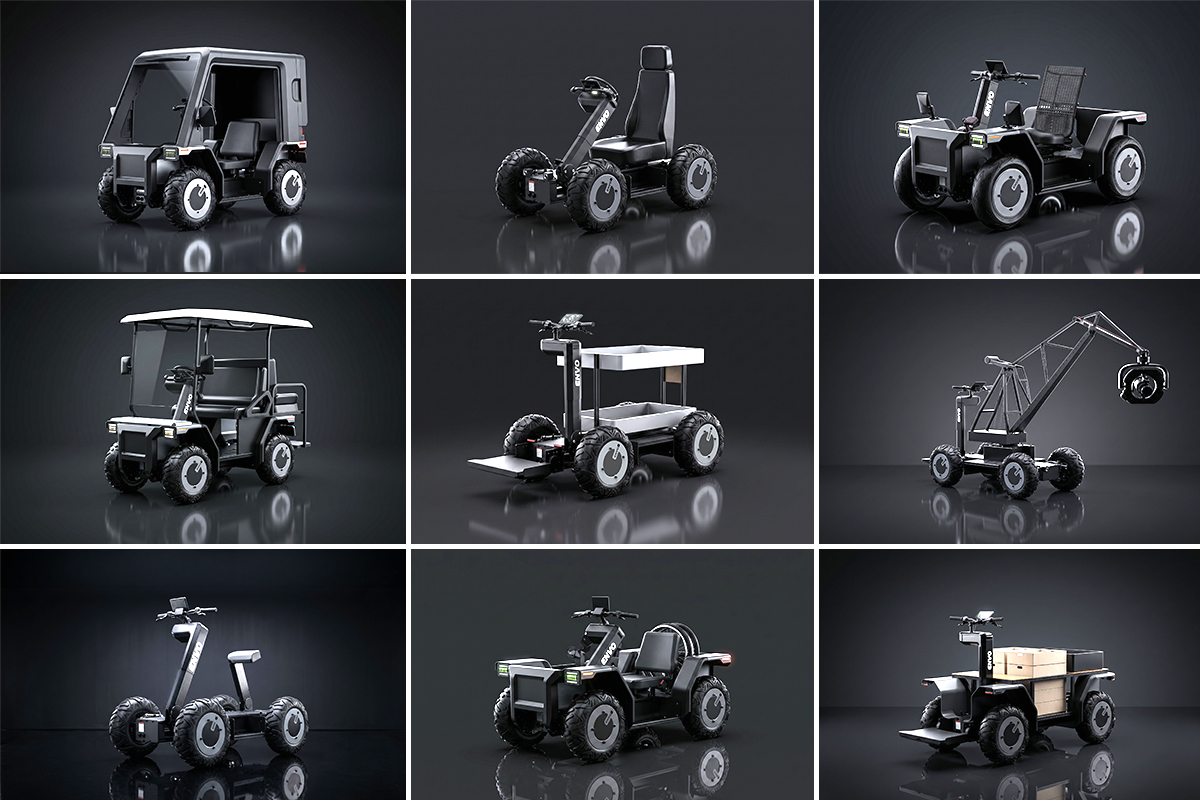
Customers can also choose a prepared configuration. ENVO’s growing catalog includes an all-terrain vehicle, off-road scooter, mobility vehicle, compact side-by-side, golf cart, microcar, cargo quadricycle and several industrial transporters.
One platform, more than 18 possible vehicles
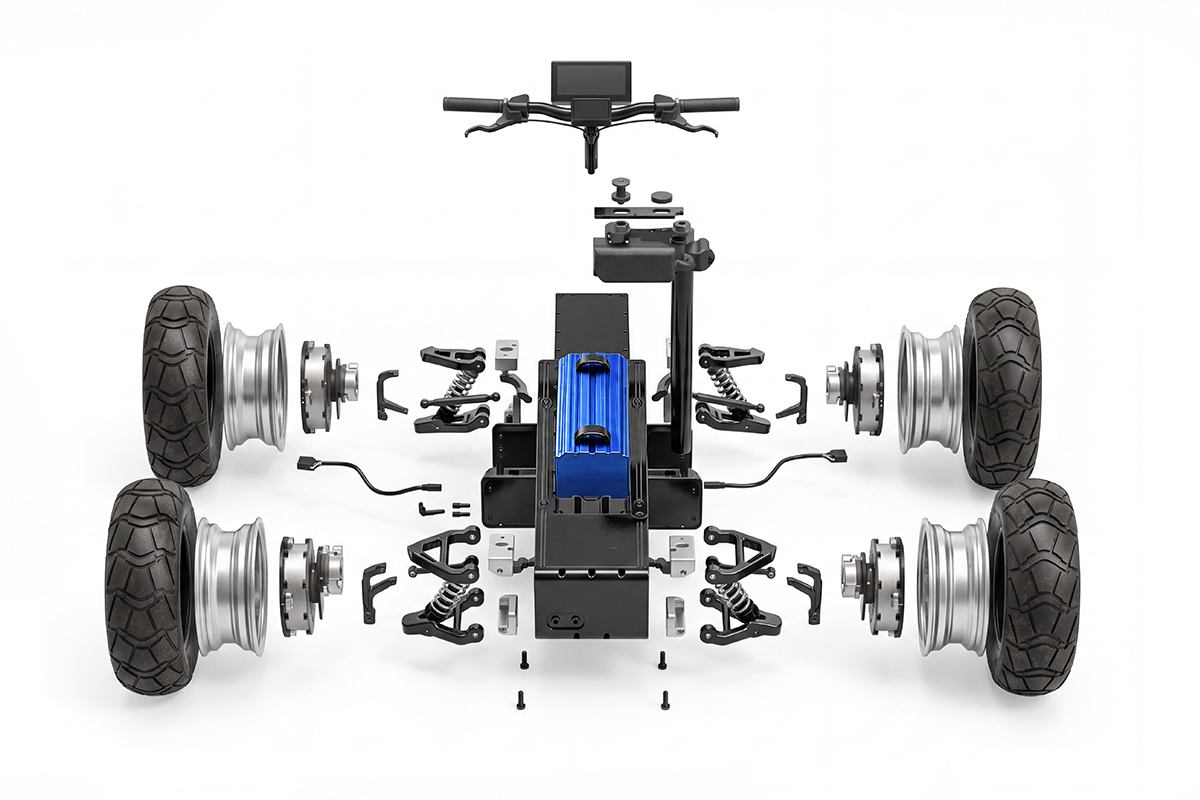
At the center of the UPT is a T-slot aluminum frame containing the battery and electronic systems. Its mounting channels make it easier to attach different seats, body panels, racks, work surfaces and cargo modules. Wheelbase, track width, steering and suspension can also vary with the application.
“Most manufacturers sell one vehicle for one job,” explains ENVO founder and CEO Ali Kazemkhani. “With UPT, we build one platform that users can tailor into the right vehicle for what they need today and adapt for what they may need tomorrow.”
The strategy is intended to make specialized light vehicles more economical to produce. A farm transporter and an airport service cart may look unrelated, but using the same underlying drive and control hardware lets ENVO manufacture common components at greater volume rather than treating every application as a low-volume standalone machine.
How the Next Move contest works
The free competition is open globally to individuals, teams of up to four and businesses, subject to applicable local rules. Participants can submit an original written idea, drawing, CAD model or conventionally produced render; AI-generated vehicle designs and images are not eligible.
Every proposal must begin with a specific user and purpose. Entrants can use the UPT Configurator and ENVO’s platform references to develop the body, seating, cargo space, attachments or equipment their application requires. New modules and technical changes are welcome as long as the entry explains what uses existing UPT technology and what would require further development.
Submissions will be scored on context of use, form factor, performance constraints, technical feasibility, simplicity, social awareness, sustainability and business viability. The final winner is scheduled to be announced on February 28, 2027, while selection does not automatically guarantee production or a commercial agreement.
Built around the job rather than the vehicle category
Potential applications extend well beyond personal transportation. ENVO proposes UPT variants for farming, landscaping, construction, warehouse movement, last-mile deliveries, resort and campus transport, airport operations, municipal maintenance, emergency response, security, film production and recreation.
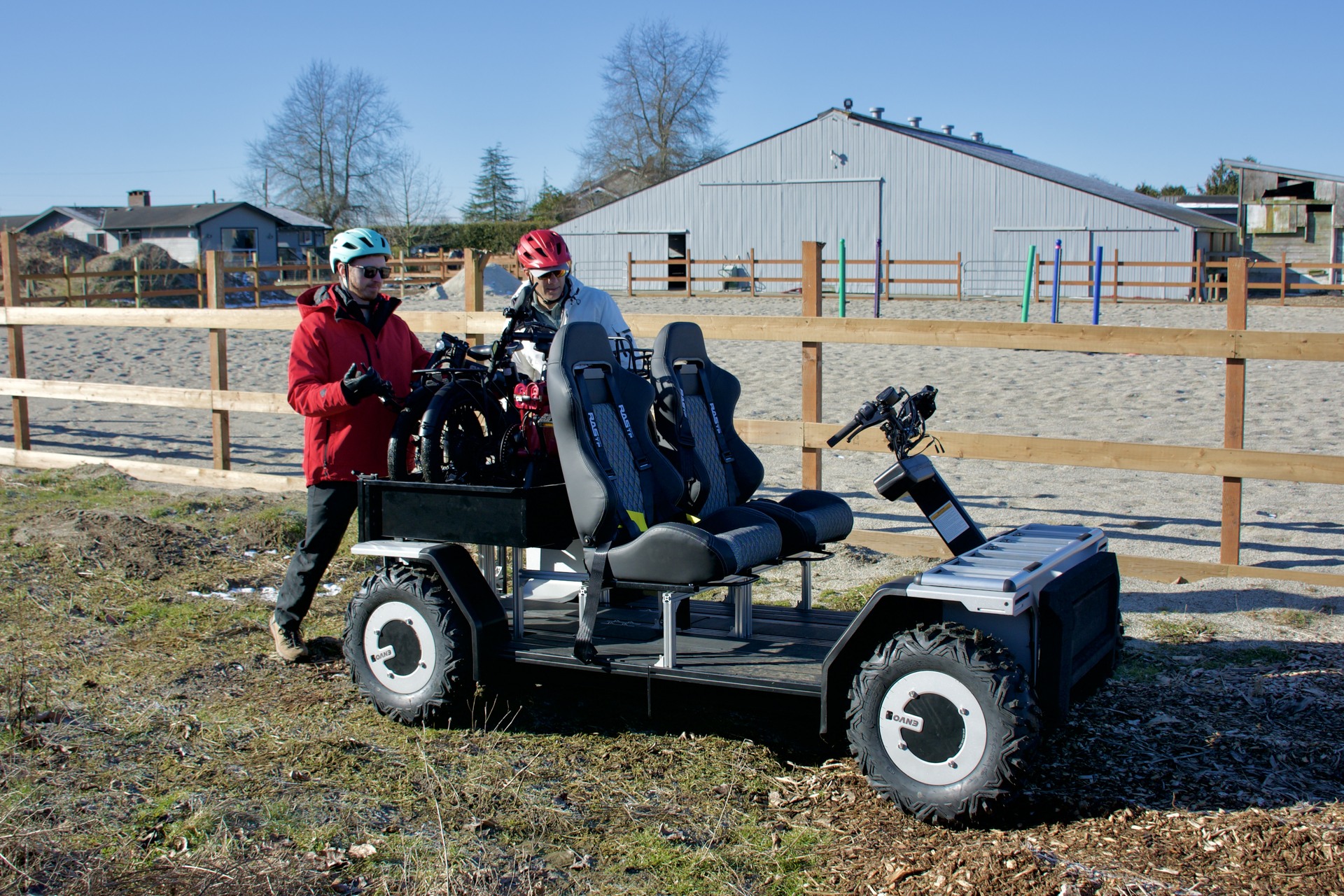
This is where the modular approach becomes more useful than simply offering a long accessories list. A landscaping crew could add tool storage and cargo space, a resort could specify multiple seats and a canopy, and an industrial customer could integrate shelves or a mobile workstation. The same 12- and 48-volt accessory architecture can provide up to roughly 2.5 kW for tools and external equipment.
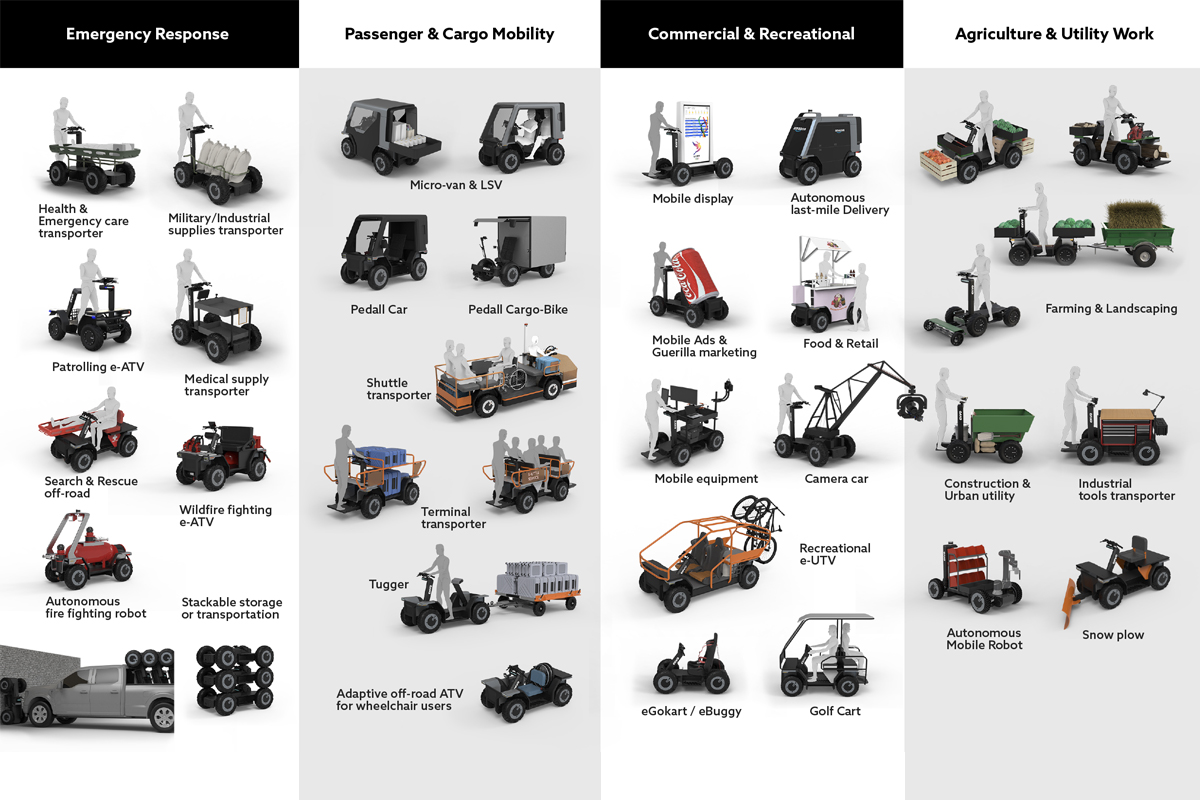
Changing between roles will not always be as instantaneous as snapping toy bricks together. Simple racks, seats and accessories may be installed with ordinary tools, but larger body conversions or specialized equipment can require more time and professional integration. ENVO says standard kit-based vehicles may take approximately 6–20 hours to assemble, depending on specification and the buyer’s mechanical experience.
Compact enough to store and connected enough to evolve
The base platform measures approximately 1,650 × 1,000 × 520 mm (65 × 39 × 20 in) when folded and weighs about 180 kg (397 lb), although a completed vehicle typically weighs at least 220 kg (485 lb). Folding the steering column and seating helps reduce storage and transport space for individuals and fleet operators.
Its CAN bus-based electronic architecture supports dual vehicle-control units, Bluetooth connectivity, diagnostics, over-the-air updates and app-ready controls. ENVO also describes the main lower assembly as being designed toward IP67 protection for operation in demanding environments.
ENVO designs, manufactures and assembles the UPT in Vancouver, Canada. The company says development and testing have taken about four years, with the platform progressing from prototypes into pre-production planning and customer pilots.
Pricing and pre-orders
ENVO expects UPT pricing to fall between approximately US$8,000 and US$12,000, depending on the configuration, equipment and level of assembly. Final totals can also vary with shipping and application-specific hardware.
Customers can reserve a UPT online through one of three refundable options. A US$100 deposit secures an early place in the queue. A US$1,000 priority deposit is expected to become US$1,500 in purchase credit, while a US$2,500 business-pilot deposit is expected to provide US$4,000 in credit.
Production is targeted for late 2026, with the first customer deliveries planned for early spring 2027. As specifications and availability can differ by destination and intended use, buyers will need to confirm the final configuration, road classification, delivery format and local operating rules with ENVO before completing an order.
The UPT’s most compelling idea is not that one small EV can perform every task simultaneously. It is that a shared electric foundation can become the right-sized vehicle for many different tasks—without each version requiring an entirely new machine. The only real starting question is: if you could build a compact EV around one job, what would you ask it to do?
Sources: ENVO Next Move 2026–27, Modular-EV by ENVO


