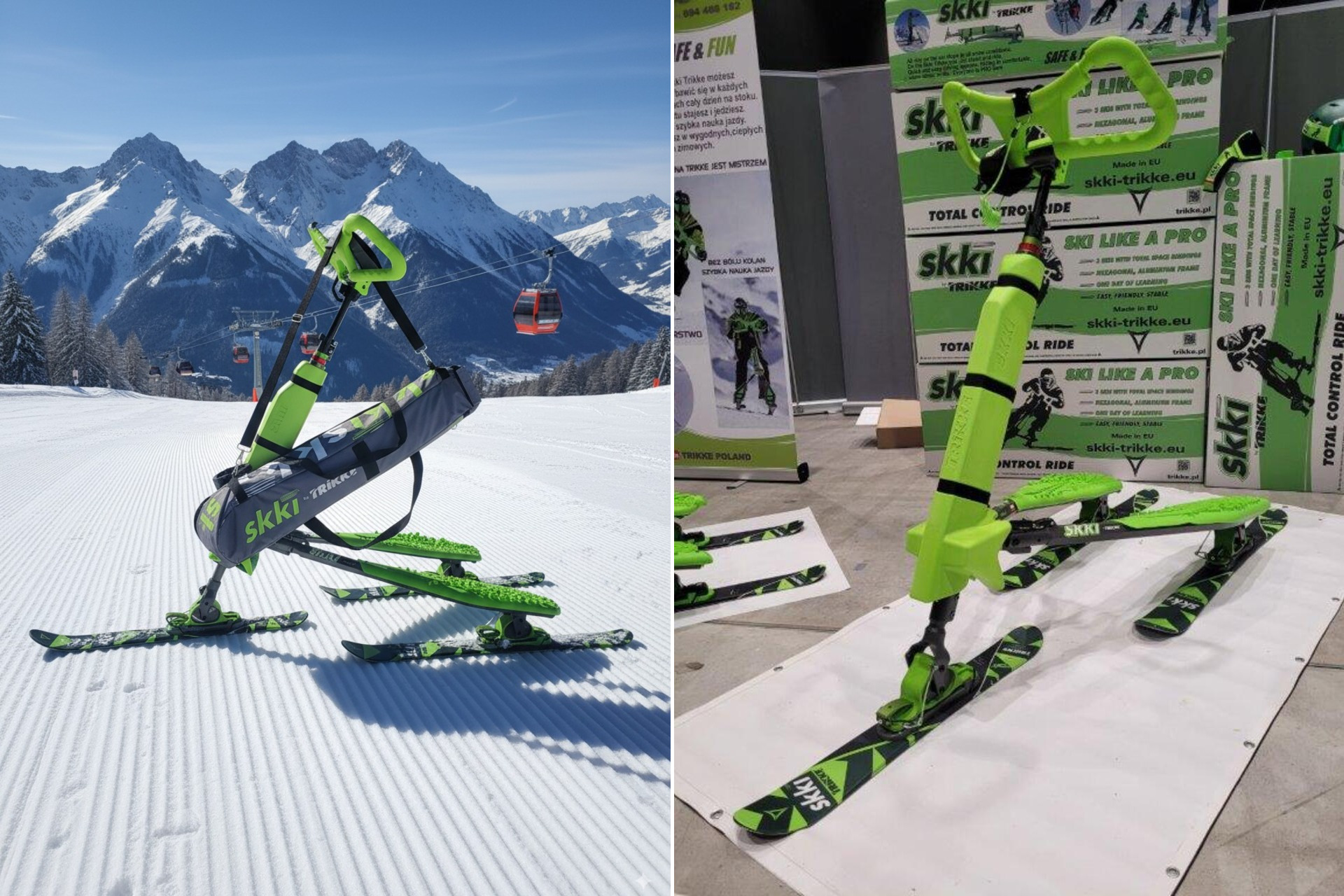
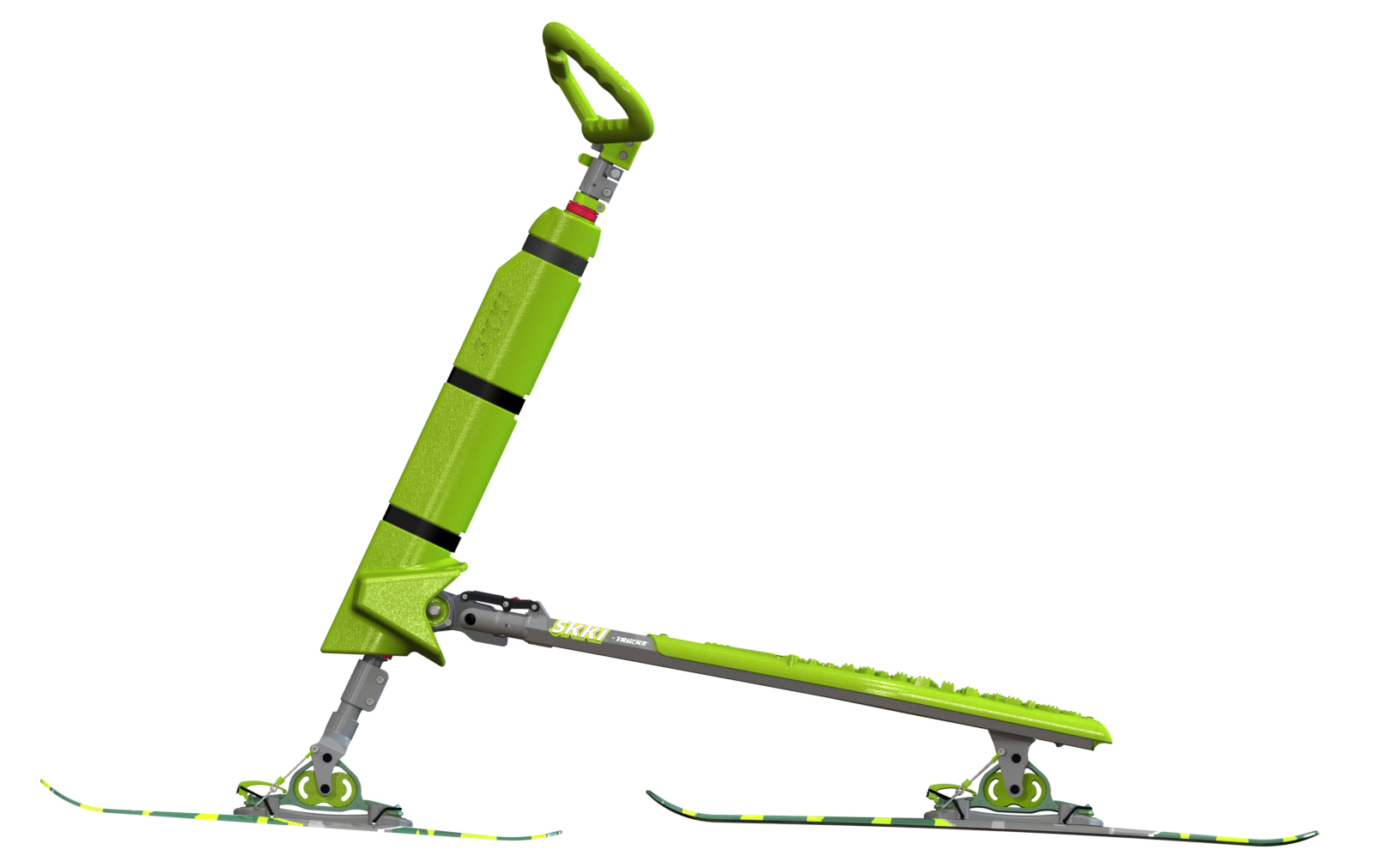
The Skki Trikke looks like someone crossed a carving ski with a stand-up scooter. Instead of fastening both feet into separate skis, the rider stands on two platforms supported by a pair of rear skis and holds a handlebar above a third ski at the front.
The result is a gravity-powered snow machine designed to carve downhill while providing three points of contact and something substantial to hold. Its Polish manufacturer positions it as an alternative for newcomers, experienced skiers looking for a different challenge and riders who find rigid ski boots uncomfortable.
It turns by leaning, not twisting the handlebar
Although the layout suggests scooter-style steering, the handlebar is not meant to be turned sharply while descending. Direction changes come primarily from shifting body weight and leaning the frame into the slope.
The Skki Trikke’s cambering mechanism angles all three skis onto their edges. During a turn, the outside leg presses through its platform while the inside hand places pressure on the handlebar, helping the skis hold an arc across the snow. The rider can alter that pressure and lean angle to tighten or widen the turn.
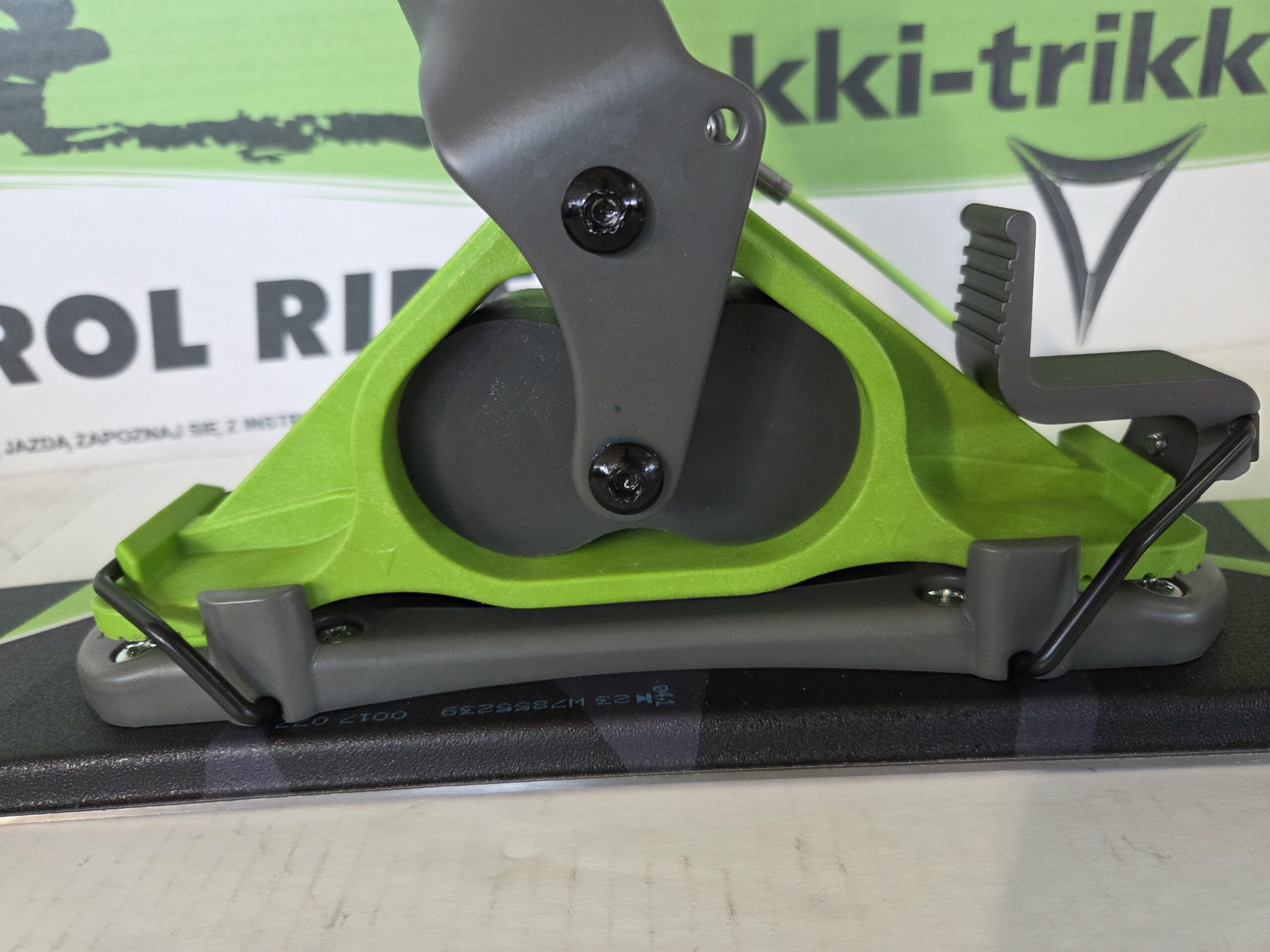
Stopping also relies on the ski edges rather than a brake lever. The rider turns the machine across the fall line and applies strong pressure through the downhill platform and handlebar, producing a maneuver broadly comparable to a skier’s hockey stop.
Skki Trikke says the fundamentals can be learned in approximately 15 minutes. That should be treated as an introductory estimate rather than a promise of immediate mastery: controlling speed, judging traffic and stopping confidently on a busy piste still require practice.
The 2026 model has been substantially redesigned
The current model uses a stiffer hexagonal frame made from 6061 aluminum. A redesigned locking joint is intended to remove unwanted play, while revised geometry allows deeper carving angles. The body is also 2.5 cm narrower than its predecessor to improve slalom-style transitions.
Its three wood-core skis have sintered bases, with wider and longer skis at the rear. Replaceable elastomers help absorb movement around the ski mountings, and the frame uses waterproof machine-grade bearings. More aggressive platform surfaces improve boot grip, while the handlebar mount has been lowered by 54 mm.
The machine weighs 15.5 kg (34.2 lb) and measures 184 cm (72.4 in) long with its skis installed. It is 63 cm (24.8 in) wide, while the handlebar adjusts between 116 and 135 cm (45.7–53.1 in). Maximum rider weight is listed at 135 kg (298 lb), and the current recommendation is for users aged 15 or older.
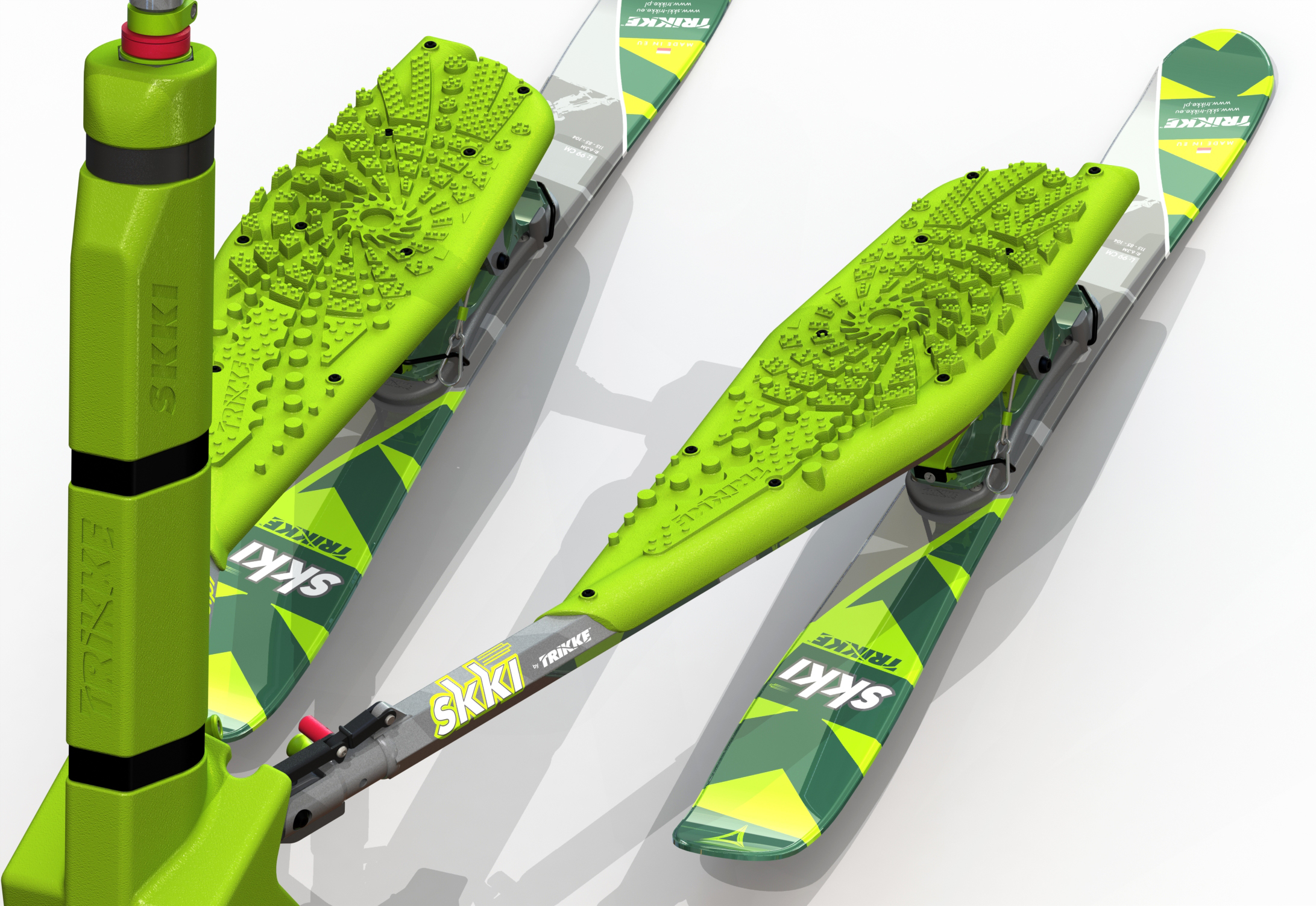
Because the rider is not locked into conventional ski bindings, the machine can be used with warm winter boots that have suitable tread. The arrangement may feel less restrictive than alpine ski equipment, but it does not eliminate the normal risks of a downhill snow sport. A helmet, appropriate protective clothing and responsible slope etiquette remain sensible.
Designed to work with common ski lifts
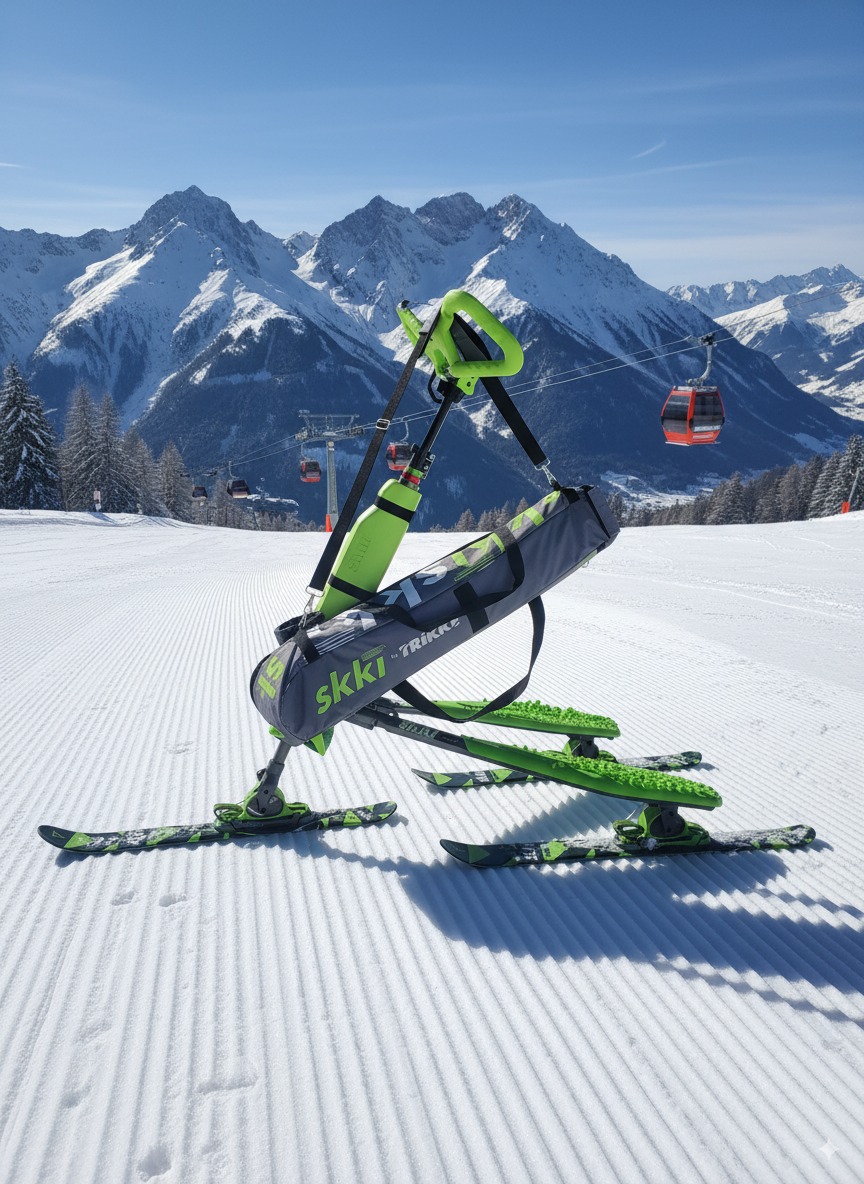
Two pins allow the frame to fold for transport and gondola access. The company also demonstrates the Skki Trikke on chairlifts, T-bars and button lifts. A detachable wheel system lets an owner pull it between a vehicle and the lift rather than carrying its full weight.
Importantly, acceptance is not universal. Skki Trikke maintains a map covering welcoming resorts, locations with restrictions and resorts where the machine is prohibited. Riders should obtain permission before travelling rather than assume that every operator or lift will accept it.
The package includes a rider safety leash, individual retention leashes for the skis, a ski bag, a front-fork bag and the transport wheels. Like conventional skis, its edges and running surfaces need periodic maintenance, including sharpening and waxing.
Pricing and availability
The 2026 Skki Trikke is offered in green-and-grey combinations with either a green or grey front bumper. Both versions are currently listed at €2,178, reduced from €2,399. The Polish store ships through European courier services and asks customers needing other arrangements to contact it directly.
That makes it considerably more expensive than simply renting skis, but it is also more specialized than ordinary slope equipment. Its real appeal lies in offering a distinctly different carving experience: three skis moving together, ordinary winter boots on the platforms and a handlebar that lets the rider involve the arms and upper body in every turn.
Source: Skki Trikke