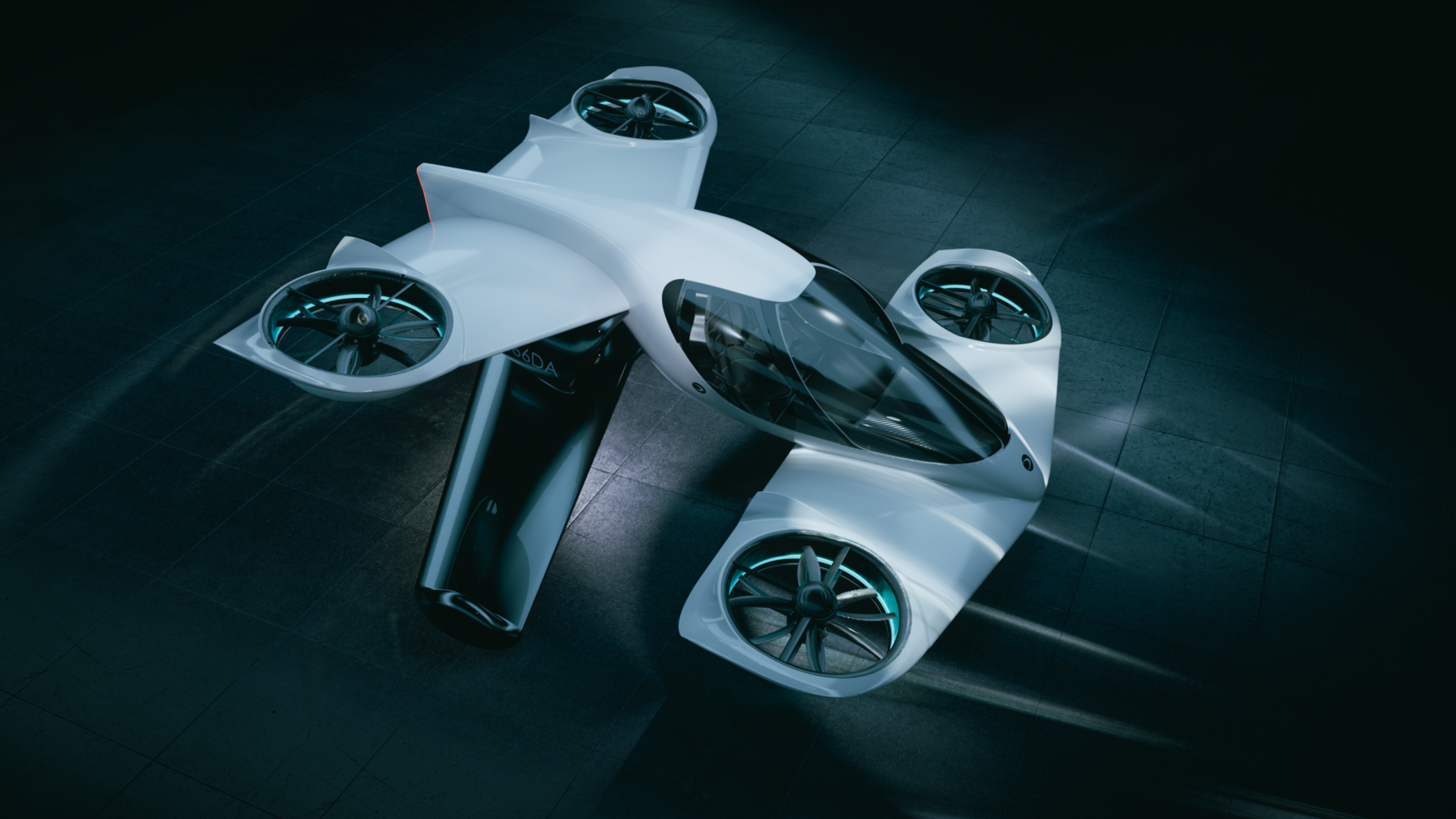
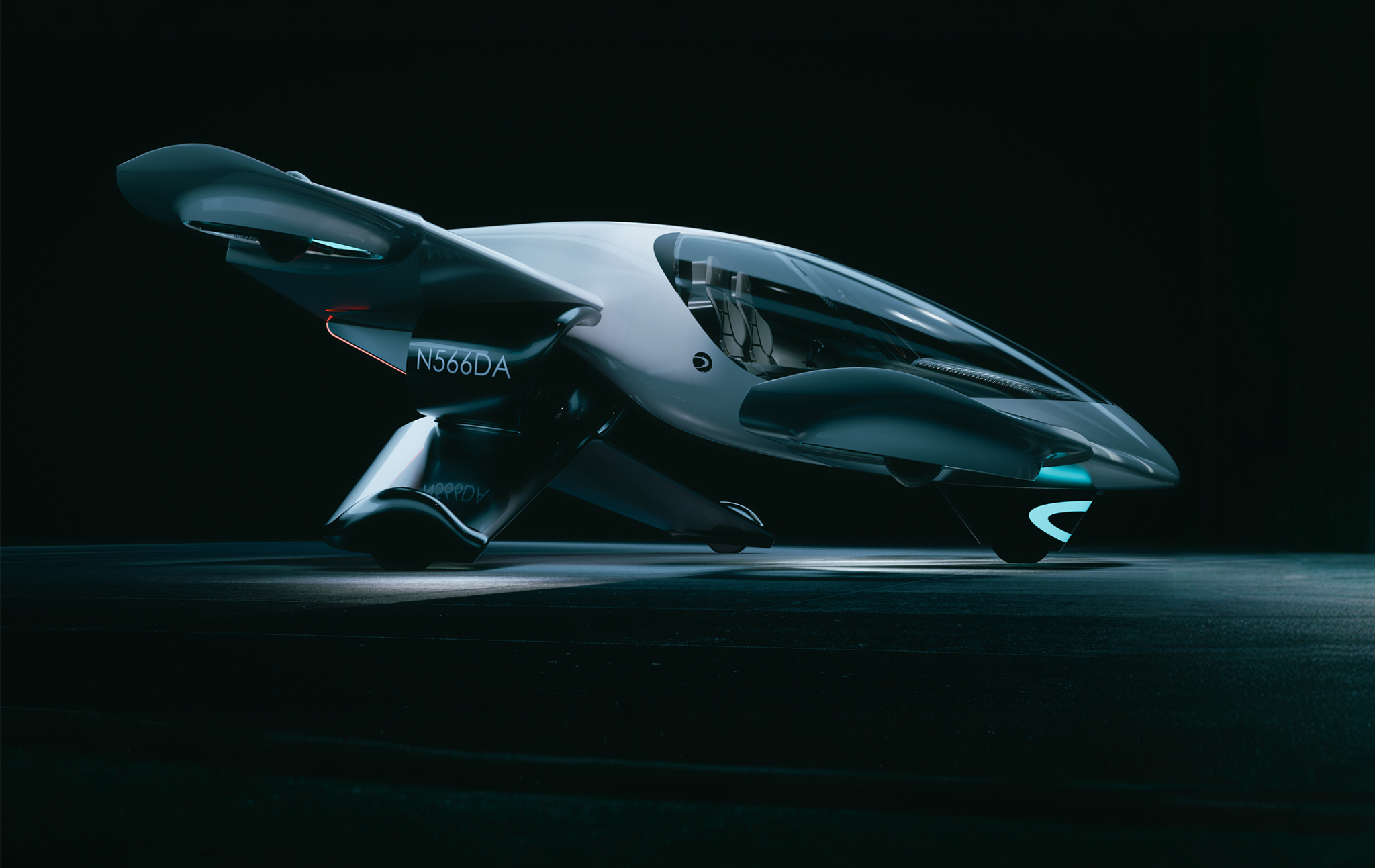
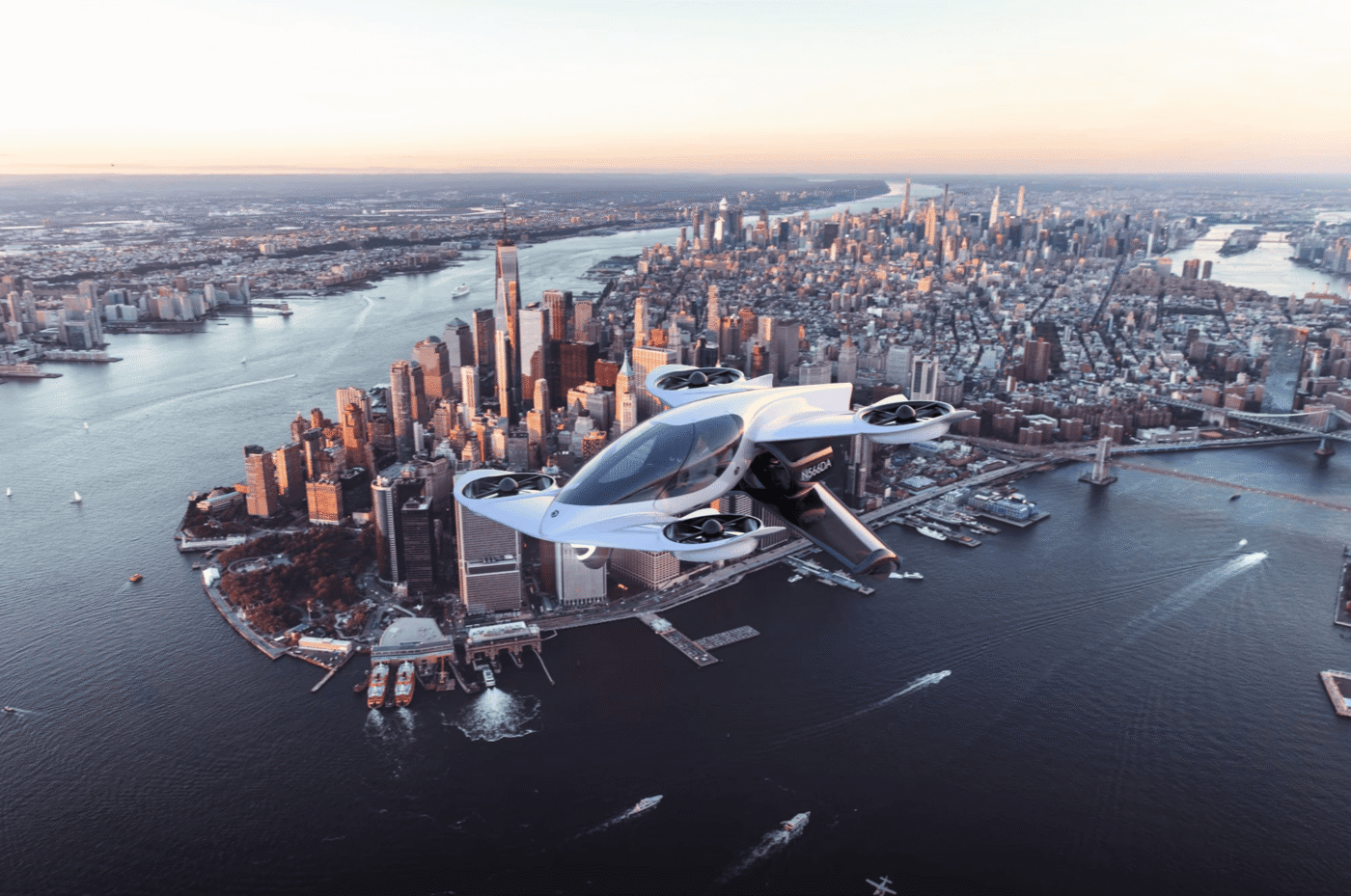
Florida-based Doroni Aerospace publicly revealed the H1-X at its “Soul of the Sky” launch event in April 2026, presenting the first full physical prototype of a two-seat electric vertical takeoff and landing aircraft designed for personal ownership. The company is positioning it as a privately operated flying vehicle that can take off from a driveway, charge at home in 25 minutes, and cruise at up to 120 mph — with customer deliveries targeted for 2028.
What the H1-X is
The H1-X is an eVTOL — short for electric vertical takeoff and landing aircraft — built for two passengers and intended for personal use rather than commercial air taxi service. That distinction puts it in a different category from most of the eVTOL companies currently working toward certification, which are focused on operator-run urban air mobility fleets rather than individual ownership.
Doroni’s pitch is closer to the personal aircraft model: a vehicle someone buys, charges at home, and pilots themselves. The company describes it as designed for everyday flight — no runway required, no commercial operator intermediary.
Performance and specifications
The H1-X is built around a carbon fiber airframe and uses a ducted fan propulsion system with dual-axis configuration. Key performance figures from Doroni’s published specifications:
- Top speed: 120 mph (193 km/h)
- Cruise speed: 95 mph (153 km/h)
- Range: 100 miles (161 km) per charge
- Charge time: 25 minutes
- Operating altitude: 500–1,500 feet above ground level
- Maximum payload: 500 lbs (227 kg)
- Maximum takeoff weight: 1,850 lbs (839 kg)
- Seating: 2 passengers
- Dimensions: 230 inches wide (19.2 ft / 5.8 m), 220 inches long (18.3 ft / 5.6 m)
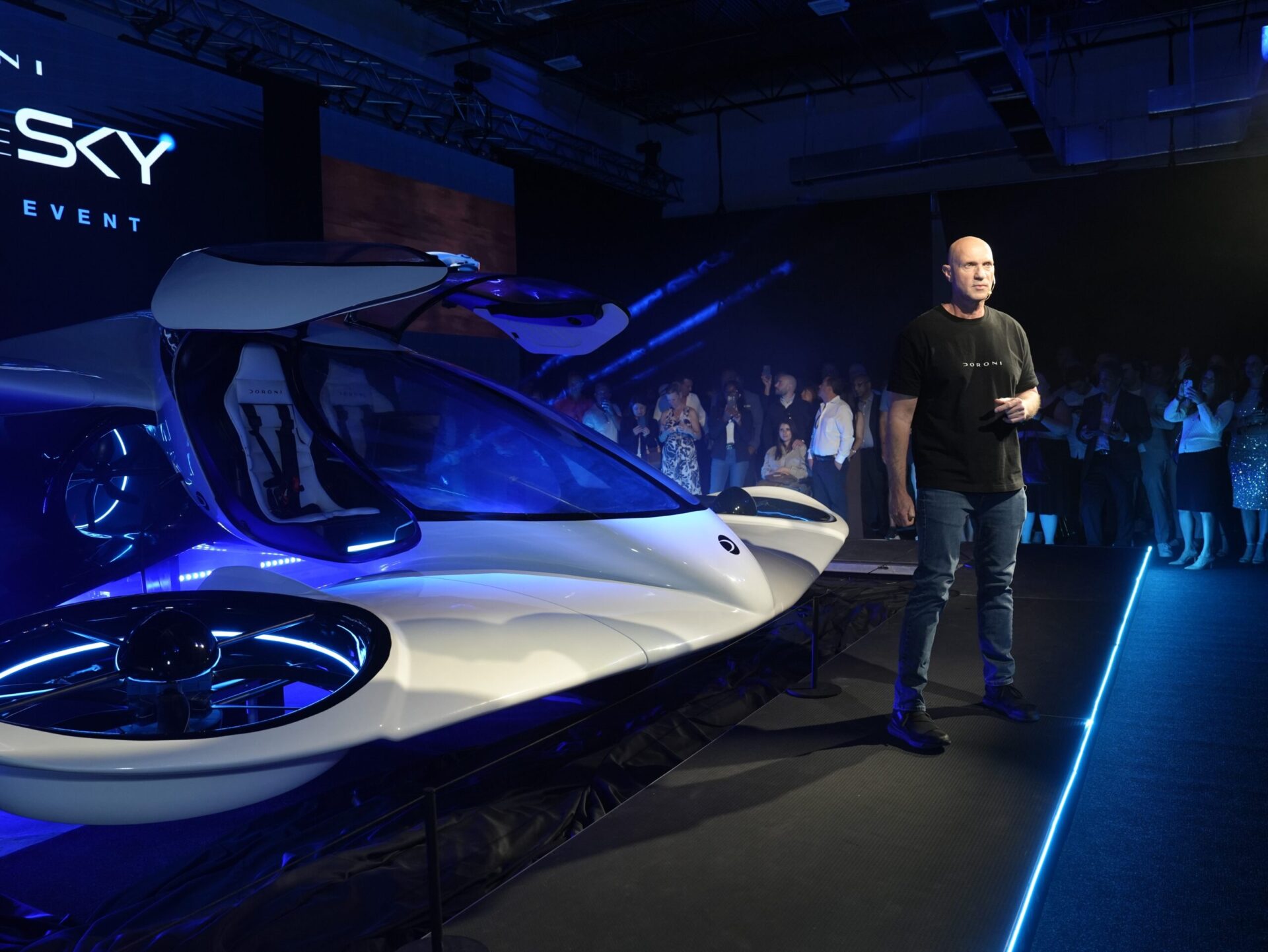
The aircraft uses four ducted fans for vertical lift and two horizontal ducted fans for forward propulsion, arranged in a tandem wing configuration. The cabin features a 270-degree panoramic view, racing-style seating, and a canopy that opens vertically for entry and exit.
Safety systems include a ballistic parachute — a full-aircraft emergency parachute that can be deployed in the event of a critical failure — and a redundant battery system designed to maintain power to essential systems if one battery pack fails.
The SOUL AI™ digital co-pilot
A significant part of Doroni’s pitch around the H1-X is SOUL AI™, an onboard AI system the company describes as a digital co-pilot. Rather than replacing the human pilot, SOUL AI™ is designed to reduce the cognitive load of operating the aircraft by managing information presentation and monitoring flight conditions continuously.
The system combines LiDAR, radar, and vision-based sensing to provide 360-degree situational awareness and real-time anti-collision alerts. It integrates live weather data, airspace restrictions, and charging station availability into a single navigation display. Cabin controls — climate, audio, and basic aircraft functions — are managed through voice commands and a companion mobile application that also enables remote diagnostics.
The design philosophy is described as adaptive rather than intrusive: the system remains in the background during routine flight and surfaces critical information only when a decision requires it.
Hardware and build
The H1-X sits on a four-point landing gear assembly and can perform ground taxiing in addition to vertical flight — a practical consideration for navigating small landing areas. The carbon fiber airframe is chosen for its combination of structural strength and weight management, both critical in an electric aircraft where every pound of structure competes directly with battery capacity and payload.
The cockpit is a single enclosed cabin with a panoramic canopy and two side-by-side seats. Entry is via the upward-opening canopy rather than conventional doors, which contributes to the cabin’s unobstructed sightlines. A cargo capacity is listed among the vehicle’s features, though specific volume figures are not published.
Where the H1-X fits in the eVTOL market
Most of the eVTOL companies that have received significant media and investor attention — Joby Aviation, Archer, Lilium, Wisk — are developing aircraft for commercial air taxi operations, where a trained pilot or autonomous system flies paying passengers on fixed routes. Regulatory certification for those use cases runs through the FAA’s Part 135 air carrier pathway.
Doroni is pursuing a different route, targeting private ownership and pilot-operated use. That pathway runs through FAA certification as a powered-lift aircraft — a category that the FAA has been actively developing regulatory standards for as the eVTOL sector has grown. Doroni has stated the H1-X is designed to be flown by holders of a sport pilot license or higher.
The company has reported completing more than 50 test flights at its Florida facility. The H1-X prototype unveiled at the April 2026 event represents the production-intent design rather than an earlier development mule.
Pre-orders and availability
Doroni is currently accepting pre-orders for the H1-X through its website, with customer deliveries estimated to begin in 2028. The company is also running a private investment round open to outside investors. Pricing has not been publicly disclosed.
What to keep in mind
The H1-X remains a pre-production aircraft. The 2028 delivery timeline is Doroni’s stated estimate and is subject to the FAA certification process, which for powered-lift aircraft in a new category carries meaningful uncertainty in both timeline and requirements.
The personal eVTOL ownership model also faces practical questions beyond certification — including airspace access, insurance frameworks, training requirements, and infrastructure for charging at locations other than home. These are industry-wide challenges rather than Doroni-specific ones, but they bear on how quickly personal eVTOL ownership becomes a routine reality versus a niche for early adopters.
For a company at this stage, the April 2026 reveal of a physical full-scale prototype — rather than renderings or a scaled demonstrator — represents a meaningful step in the development progression.
Source: Doroni