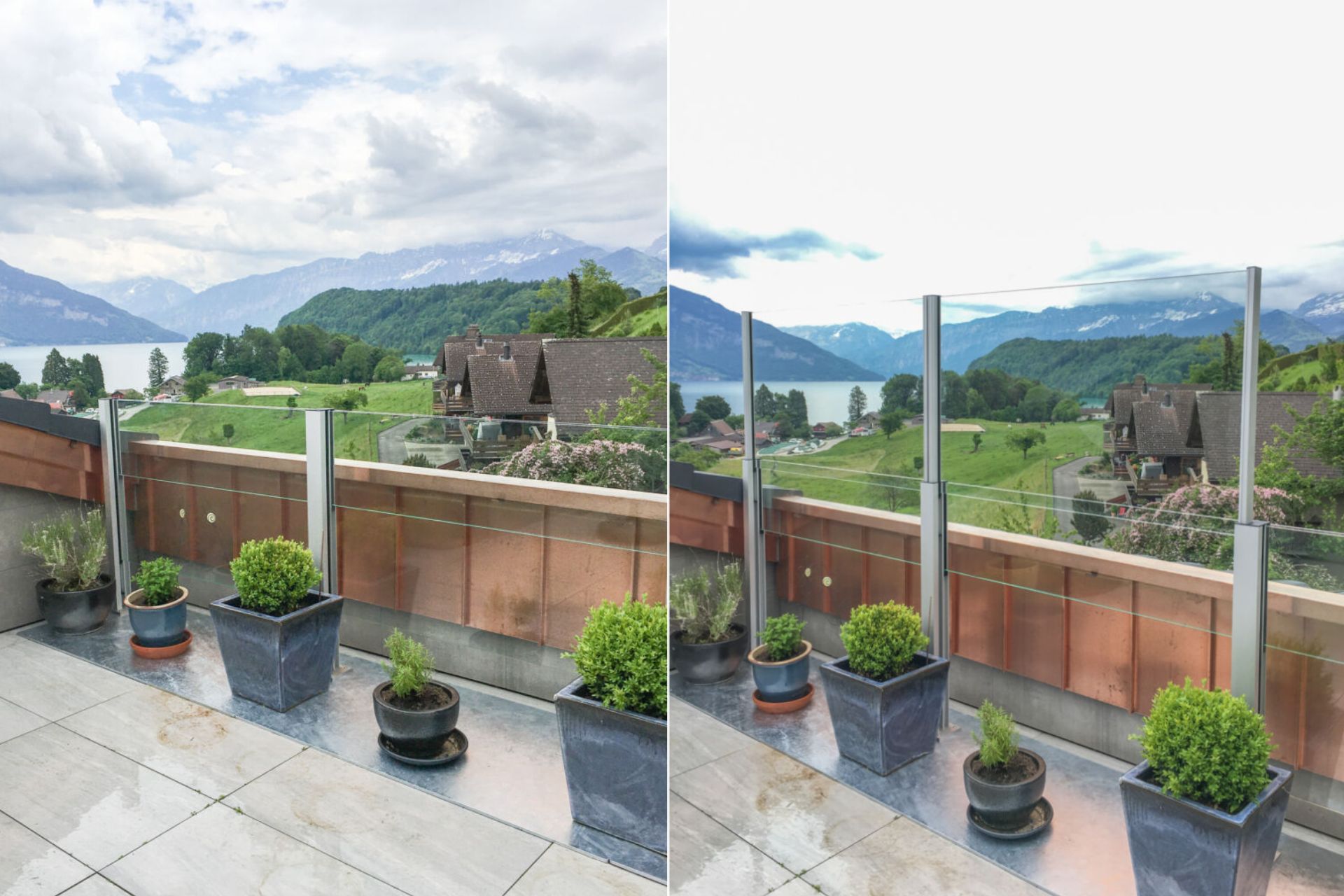
Most balconies sit empty for a large part of the year. Not because it’s too cold, but because the wind makes them genuinely unpleasant the moment you step outside. Furniture gets arranged, cushions get set out, and ten minutes later everyone retreats back indoors. SlideGlass is a Swiss product built around exactly that problem.
SlideGlass is a sliding glass windbreak railing made by Febatec GmbH, headquartered in Thun, Switzerland. The system functions as a standard safety railing while also allowing users to manually slide glass panels open or closed to manage wind exposure and privacy — no motors, no wiring, no tools required. The company offers two versions: the original windbreak railing and a simpler glass balustrade that can be upgraded to windbreak functionality at a later stage. Here’s a factual look at how both products work, what the specifications look like, and what makes this different from a conventional fixed railing.
Where it comes from
SlideGlass is a registered trademark of Febatec GmbH, located at Feuerwerkerstrasse 34 in Thun, Switzerland. The company designs, engineers, and manufactures the entire system within Switzerland — a point they make explicitly on their website: “The development and manufacture of SlideGlass takes place 100% in our home country.”
The team is relatively compact and covers the full production chain in-house. That in-house structure, the company says, is what allows them to move quickly on product changes: “Thanks to customer proximity and in-house development and production, innovations can be implemented quickly and effectively.”
On the environmental side, manufacturing runs entirely on 100% renewable electricity, and producing locally keeps transport distances — and the emissions that come with them — short. As the company puts it: “We are already thinking about tomorrow’s generation today.”
How it works
The SlideGlass Windbreak Railing 20 is built around aluminum posts and base plates that hold a series of glass panels on a sliding track system. Users push the panels open to let in a breeze or closed to block wind — entirely by hand. There are no motorized components, no electronics, and no mechanisms that require regular servicing. That simplicity is a practical advantage for an outdoor product exposed to the elements year-round.
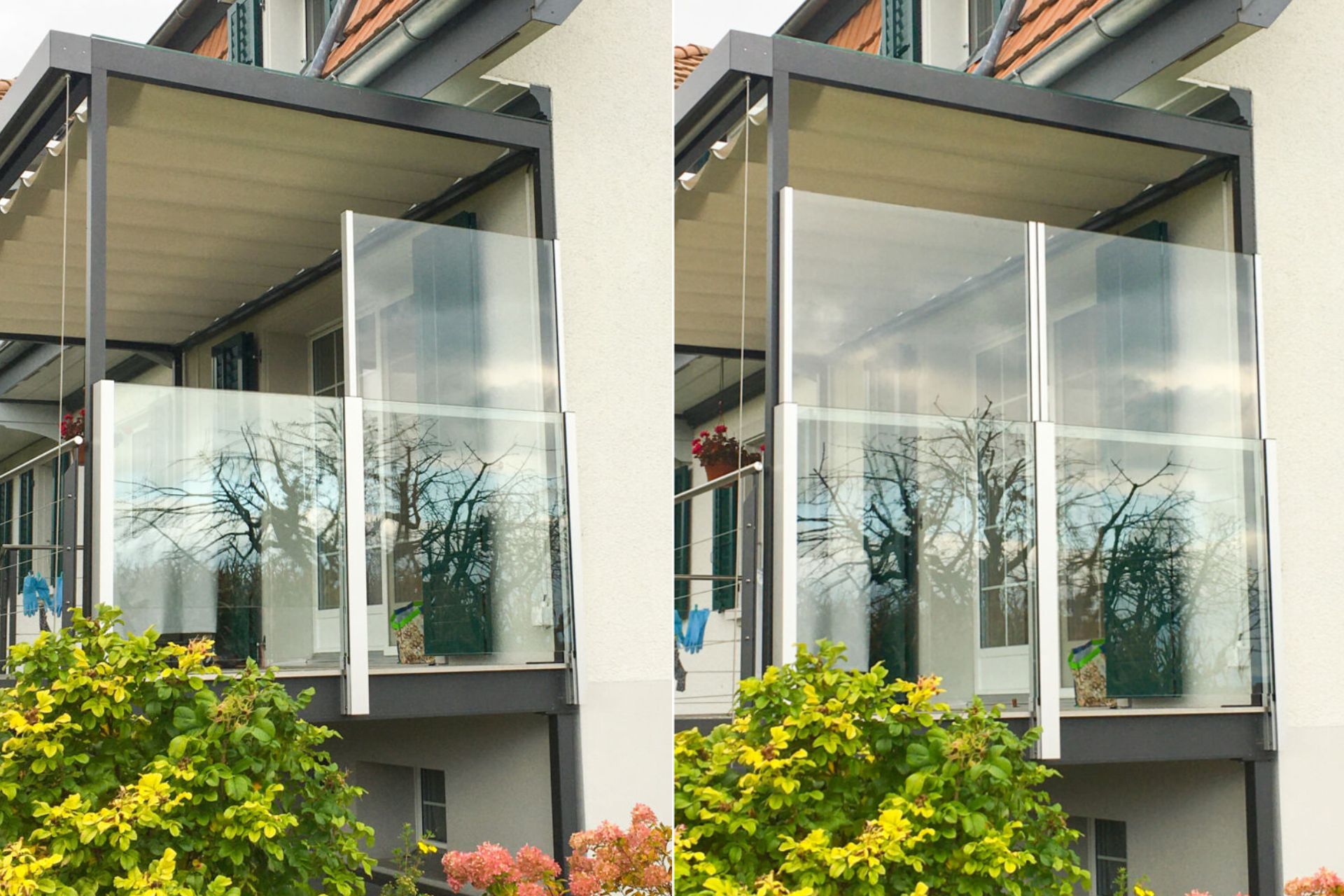
Posts and base plates are made from corrosion-resistant aluminum, a sensible material choice for something permanently mounted outside in conditions that can include heavy rain, humidity, and the freeze-thaw cycles common in alpine regions. The panels are available in custom colors, which allows the system to match a range of building exterior styles without looking out of place.
Because the glass panels extend well above the railing line when deployed, the system can serve a second function as a privacy screen — blocking sightlines from neighboring properties or the street when panels are in the closed position. One installation handles both tasks without requiring a separate screen or partition.
In many cases, the company notes, installation can proceed without a formal building permit — though this will naturally vary depending on local regulations and the specifics of each property.
The product range
SlideGlass offers two products built on the same underlying aluminum profile system.
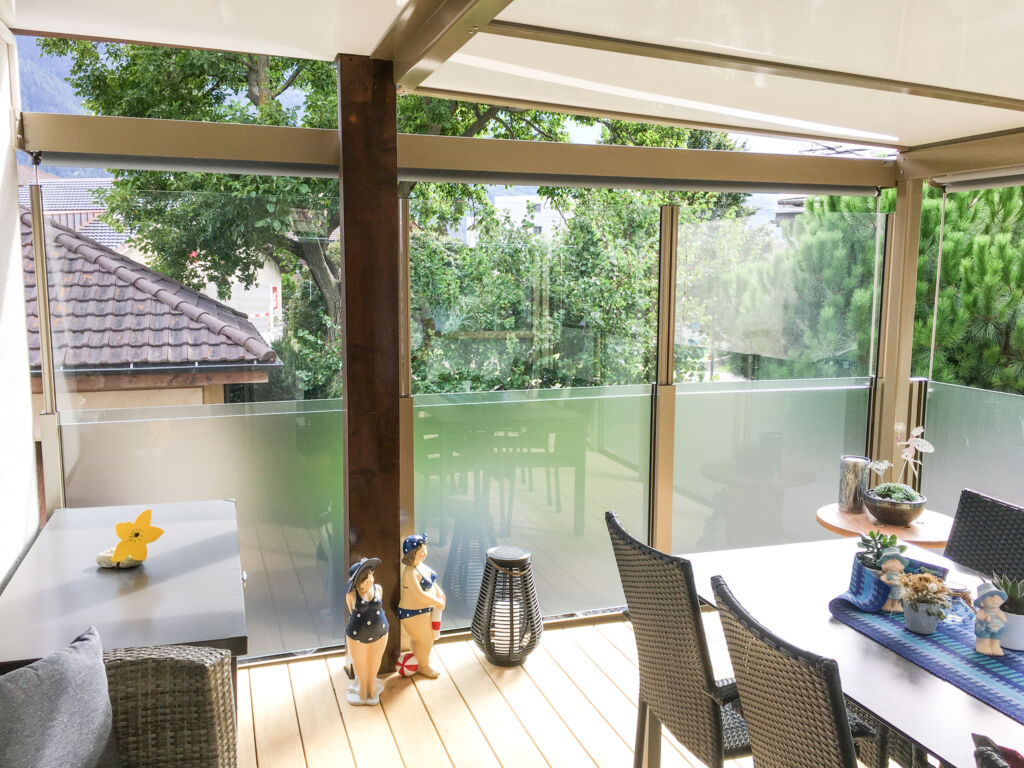
The SlideGlass Windbreak Railing 20 is the original and primary product. The railing itself stands at 1,100mm (approximately 43 inches, or just under 3.6 feet) — the height required to meet fall protection requirements under the Swiss SIA 358 standard. When the glass windbreak panels are fully extended, they reach a total height of 1,900mm (approximately 75 inches, or just over 6.2 feet), which provides meaningful coverage for people seated or standing on a terrace. Element lengths are custom-manufactured to order in a range from 400mm to 1,400mm per section (roughly 16 inches to 55 inches), allowing the system to be precisely configured to the width of any given balcony or terrace without visible gaps or awkward cutoffs.
The SlideGlass Balustrade 20 is the company’s “economical glass railing.” It uses the same aluminum profiles as the Windbreak Railing 20 and provides the safety railing function without the sliding windbreak mechanism. The key practical point: it can be upgraded to include full windbreak functionality at a later date. For buyers working on phased renovation projects or managing tighter upfront budgets, that upgrade path is worth factoring in from the start.
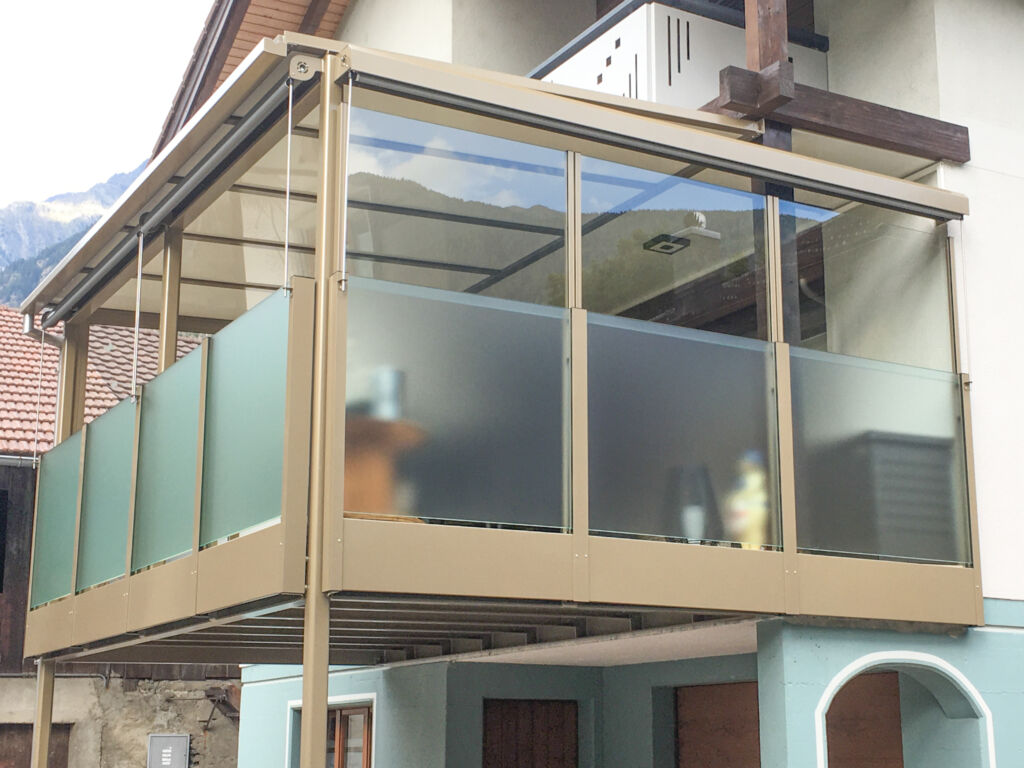
Both products are sold through direct consultation with the SlideGlass team and a network of regional sales and assembly partners across Switzerland.
Technical specifications and certifications
The SlideGlass Windbreak Railing 20 carries a set of technical credentials relevant to buyers assessing compliance and structural suitability.
The system qualifies as fall protection under SIA 358, the Swiss standard for safety railings and balustrades. It has been statically tested with formal structural verification, meaning load calculations and documentation are available — useful for building permit applications where they are required. The system is rated for conditions up to Wind Class 6 under European standards, covering the wind loads encountered in most residential outdoor settings, including the exposed lakeside and alpine locations common across Switzerland.
Structural components — posts and base plates — are corrosion-resistant aluminum throughout, which means no protective coatings or periodic treatments are needed to maintain structural integrity over time.
Who it suits
SlideGlass is a strong fit for homeowners and property developers working on balconies or terraces in exposed locations where wind regularly prevents outdoor use. The system is particularly relevant in Switzerland and neighboring Central European regions where mountain exposure, altitude, or lakeside positioning creates persistent wind challenges that a standard fixed railing does nothing to address.
The custom element sizing — from 400mm to 1,400mm per section — means the system can adapt to non-standard balcony widths without requiring compromise cuts or patchwork solutions. The upgrade path from the Balustrade 20 to the full Windbreak Railing 20 makes the product accessible for phased projects where the full installation isn’t practical from day one.
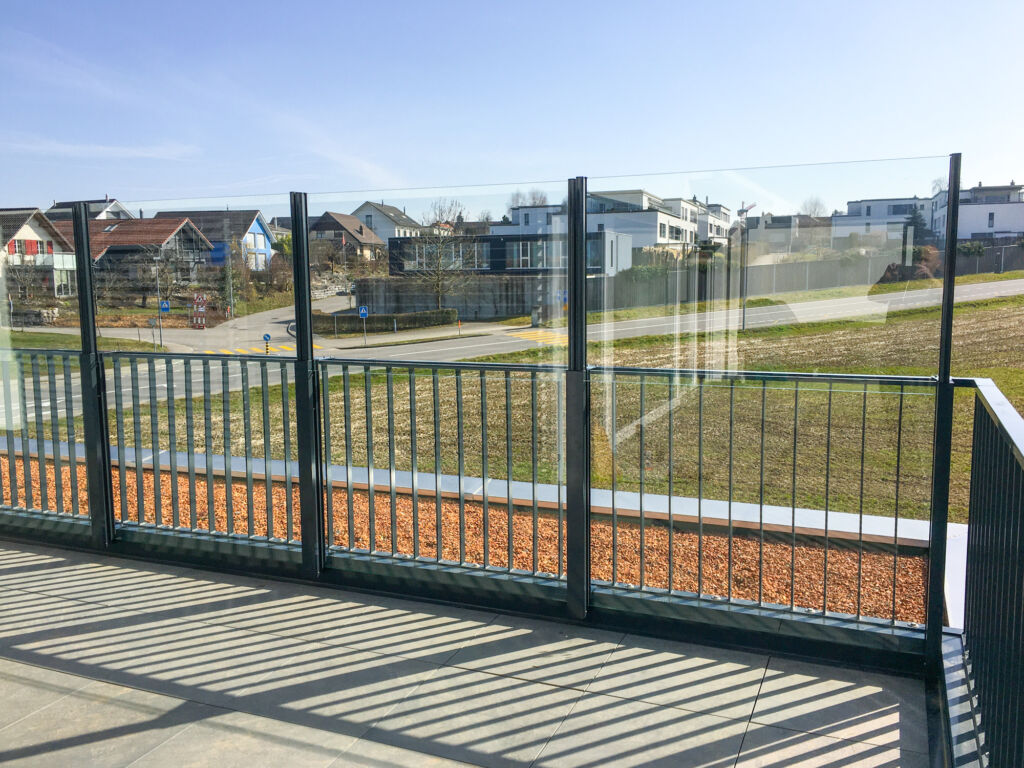
The system is less suited to buyers looking for an off-the-shelf product to self-install over a weekend. The custom sizing and consultation-based sales model position this as a planned installation — either direct or through a regional assembly partner — rather than a DIY retail purchase. For multi-unit residential buildings, the often permit-free installation could meaningfully simplify the approval process, though local requirements should always be confirmed beforehand.
For more information, a non-binding consultation, or to locate a regional sales and assembly partner, SlideGlass can be contacted through the company’s official website.
Source: SlideGlass