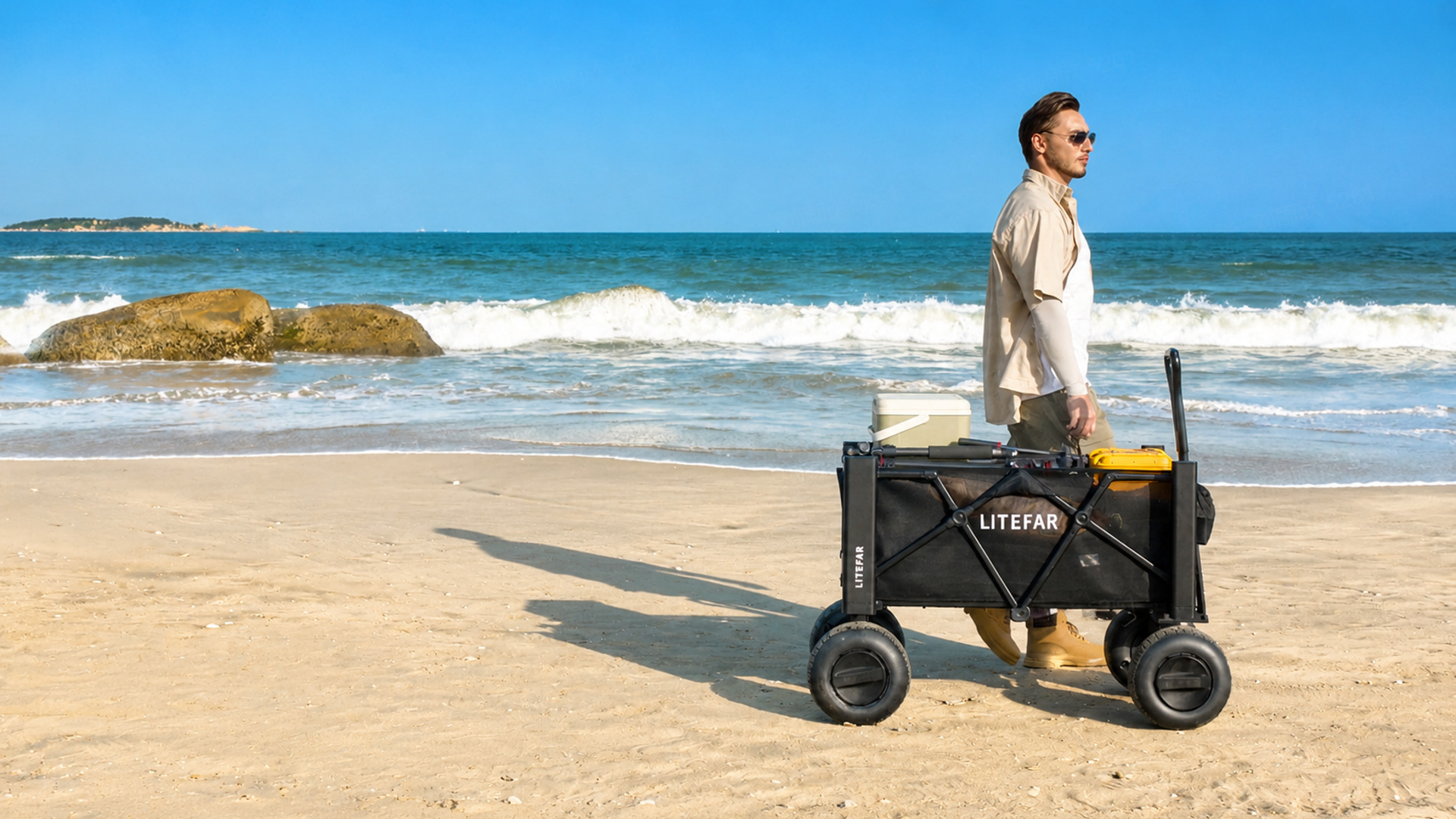
Pulling a wagon loaded with chairs, coolers and fishing equipment across a paved car park is usually straightforward. The experience changes as soon as its narrow wheels reach loose sand. They sink, the load becomes harder to move, and the final walk to the shoreline can feel like the most demanding part of the day.
The LITEFAR B1 takes a more specialized approach. It combines oversized balloon tires with powered rear wheels, creating a foldable electric wagon intended specifically for soft beaches. Rather than moving independently, it provides motorized assistance through its handle while the user guides it.
With space for 150 liters of equipment, a claimed moving-load capacity of 100 kg (220 lb), a removable battery and a frame that folds for transport, the B1 is designed for family beach days, fishing trips, camping and other gear-heavy outdoor outings.
Why ordinary wagon wheels struggle on sand
Small, narrow wheels concentrate the weight of a loaded wagon onto a relatively small patch of ground. On a firm surface that is not a major problem, but loose sand shifts beneath the tires and allows them to dig in. Pulling harder can make matters worse as the wheels plow through the surface.
The B1 uses four 10-inch wheels, with low-pressure balloon tires at the front and powered wheels at the rear. The broad tires spread the load over a larger area, helping reduce how deeply the wagon sinks. Electric torque from the rear wheels then assists the person at the handle.
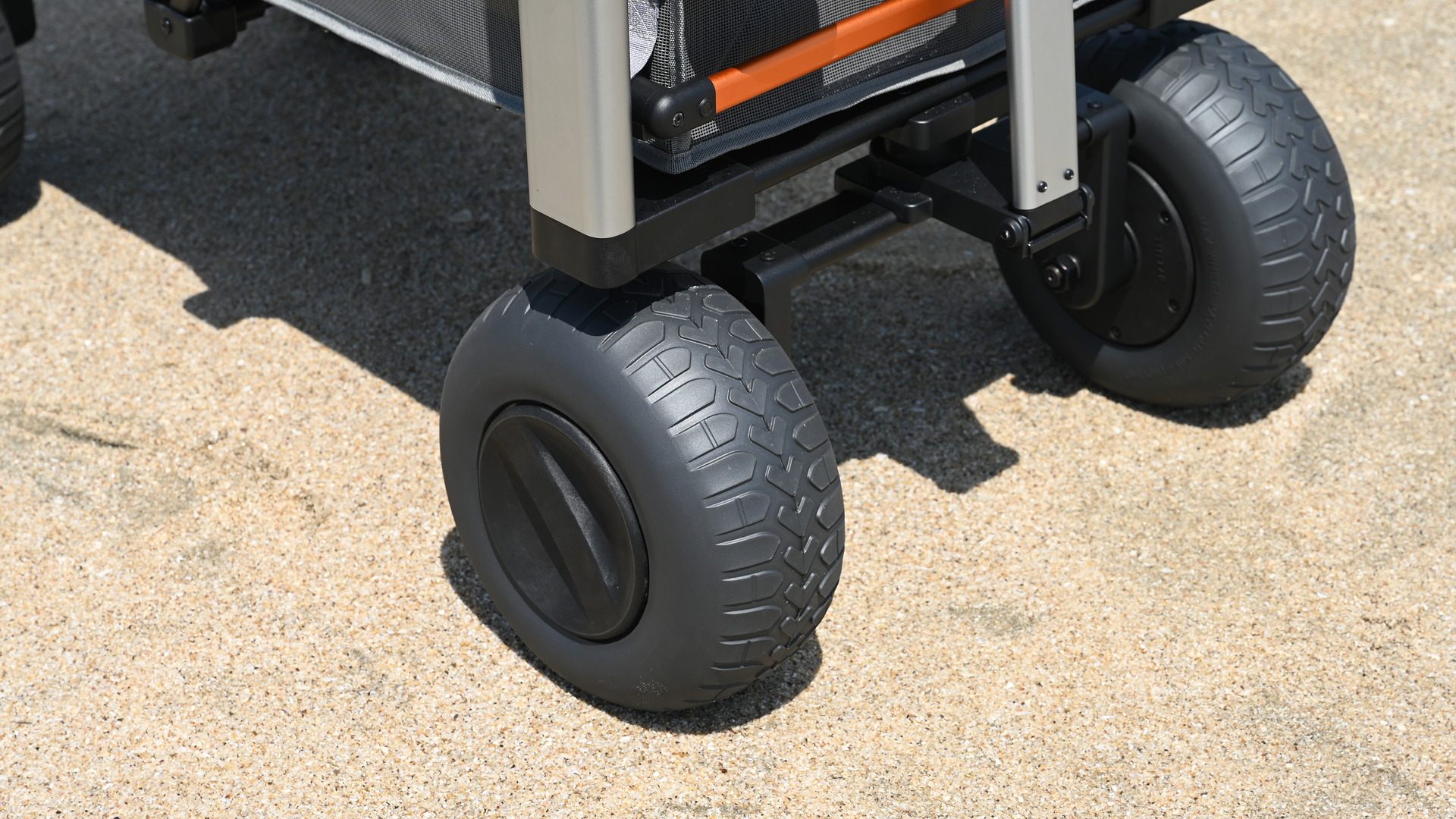
Litefar shows the wagon crossing dry sand, wet shoreline, coastal dunes and soft inclines. In one company demonstration, a five-year-old pulls it over sand while it carries a 70-kg (154-lb) load. That is a manufacturer demonstration rather than independent testing, but it illustrates the problem the design is trying to solve.
Powered assistance that follows the user’s pace
The B1 is controlled through what Litefar calls a Smart Handle. The user still steers and walks with the wagon, while the handle regulates the amount of electrical assistance. Its forward speed is continuously adjustable up to 1.5 meters per second, equivalent to about 5.4 km/h or 3.4 mph. It can also reverse at up to 0.5 m/s.
Power comes from a 600W brushless DC hub-motor system integrated into the rear wheels, producing a quoted maximum torque of 36 Nm. The powered wheels provide electric assistance as the user guides the wagon through its Smart Handle.
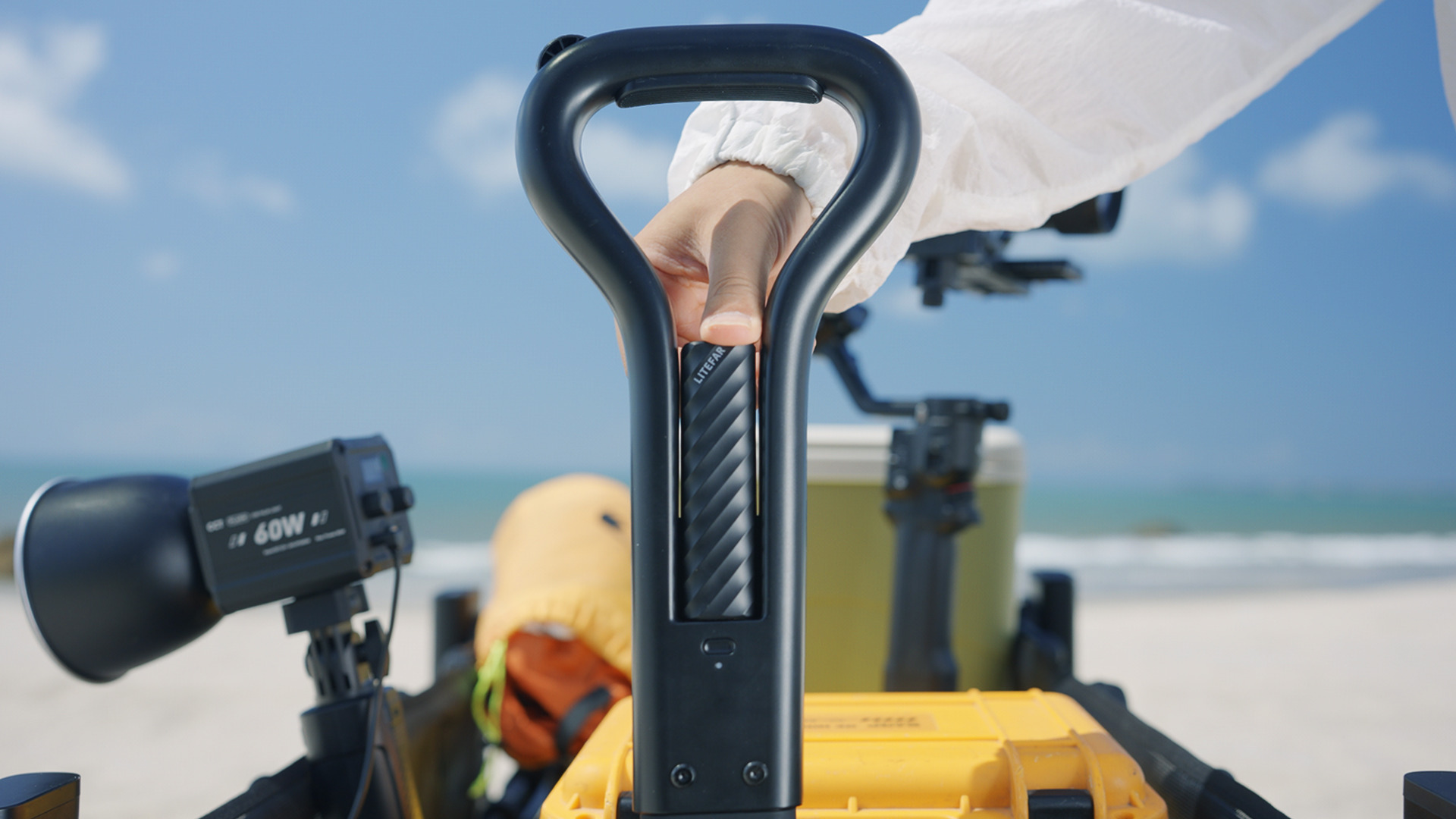
The wagon also connects to the Litefar app. According to the company, owners can personalize speed and assistance settings, view mileage records, change control preferences and receive over-the-air software updates. The practical value will depend on the finished app, but manual control remains available through the handle.
A 100-kg moving capacity and 150 liters of space
The cargo compartment provides 150 liters of volume—enough for combinations of beach chairs, a cooler, towels, toys, tackle boxes or camera equipment. Litefar lists a dynamic load capacity of 100 kg (220 lb), which is the relevant number while the wagon is moving.
The separate 200-kg (440-lb) figure shown in the specifications is its static capacity. In other words, the frame may support that weight while stationary, but buyers should not interpret it as the amount the wagon is rated to carry across a beach.
The B1 itself weighs 24 kg (53 lb). Its aluminum-alloy frame and Teslin mesh cargo body measure 102 × 60 × 110 cm (40 × 24 × 43 in) when open. Folding reduces the height to 54 cm (21 in), while its length and width remain unchanged.
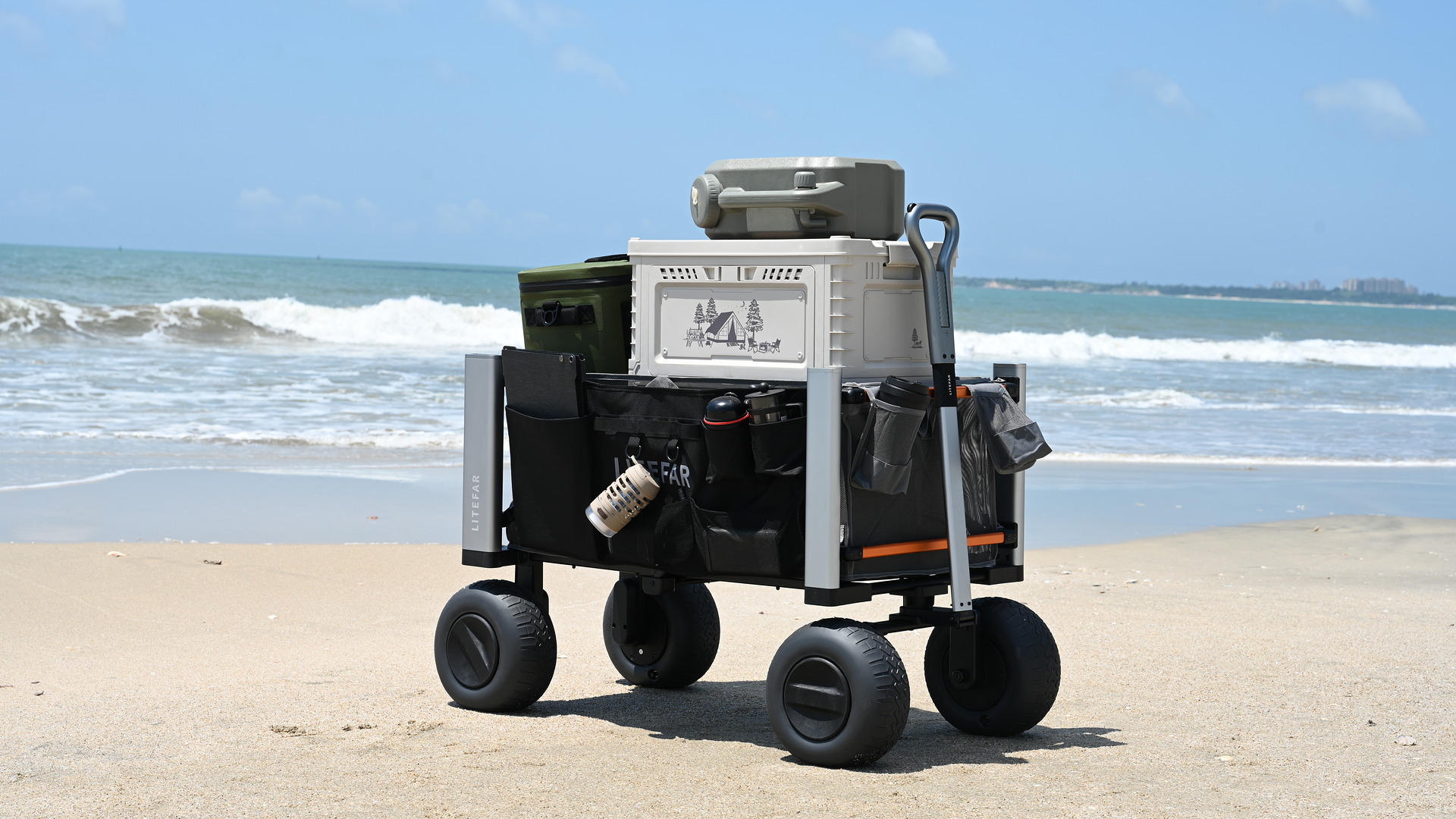
That makes the wagon easier to place in a larger SUV or pickup, but “foldable” should not be confused with especially small or light. A 53-lb wagon with a 40 × 24-inch folded footprint will still require meaningful cargo space and some effort to lift.
A removable battery that doubles as a power bank
The B1 uses Litefar’s removable A24 battery, rated at 24,000 mAh. The company quotes up to two hours of operating time and a full recharge in approximately 1.5 hours. Actual runtime is likely to vary with load, terrain, speed, incline and how much assistance the user requests.
The pack is swappable, allowing a second charged battery to extend the outing. It can also be removed and used as a portable power bank for phones and other equipment. Litefar advertises USB-C fast charging, although the B1 product page does not currently provide a specific maximum output figure.
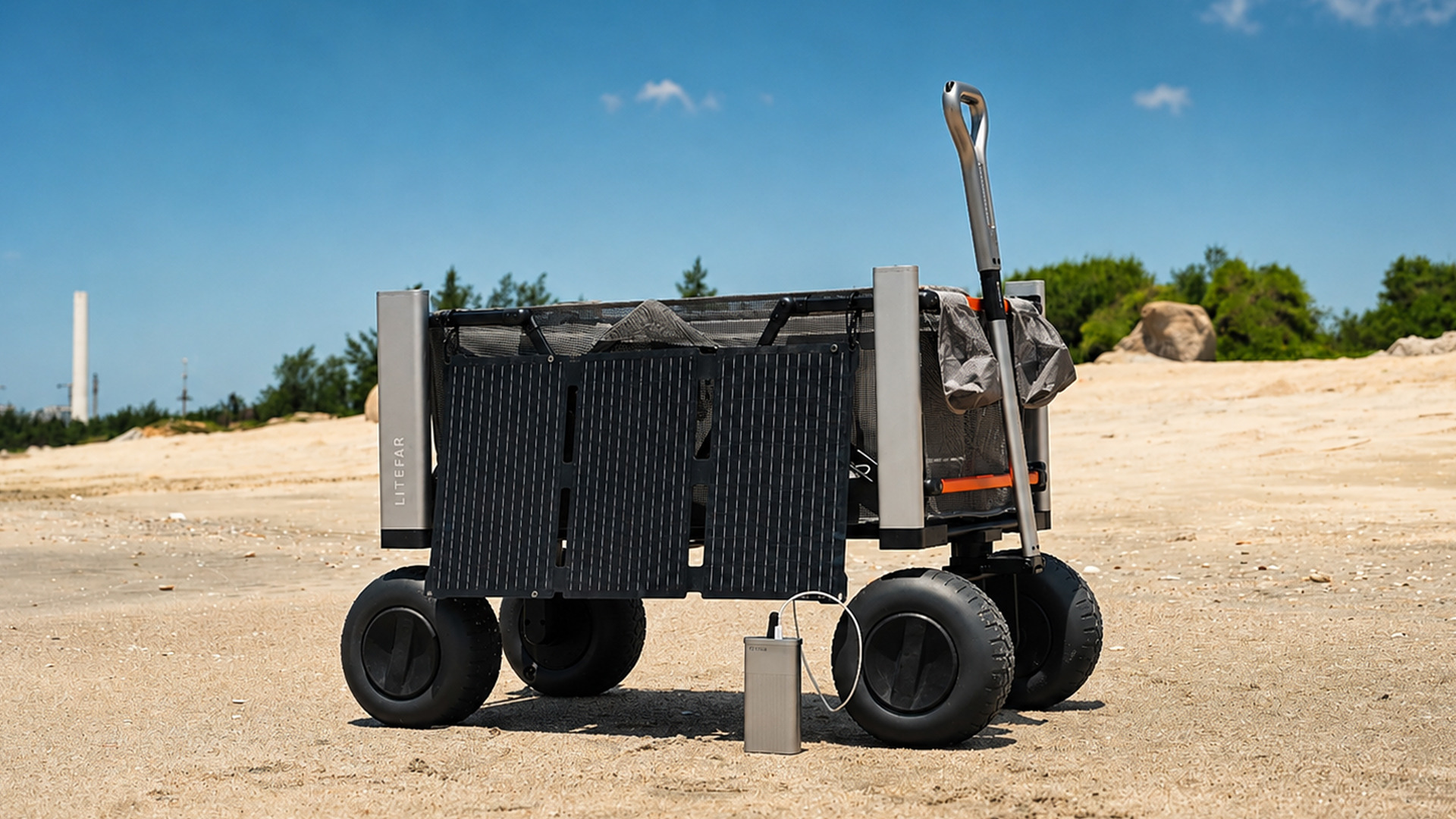
A telescopic lantern is integrated into the wagon for setting up or returning after sunset. App connectivity, the power-bank function and lighting make the B1 more versatile than a basic motorized cart, although its central purpose remains moving cargo across difficult ground.
Not only for beach chairs and coolers
Soft sand is the B1’s main selling point, but Litefar also positions it for grass, gravel, muddy ground and uneven outdoor paths. Potential users include surf anglers carrying rods and tackle, photographers moving equipment on coastal shoots, campers transporting supplies from a vehicle, and families bringing a full day’s gear to the water.
Optional accessories shown in Litefar’s promotional material include a fishing-rod holder. Buyers should check the final campaign reward carefully to see which accessories, batteries and lighting components are included rather than assuming every item in the footage comes with the base wagon.
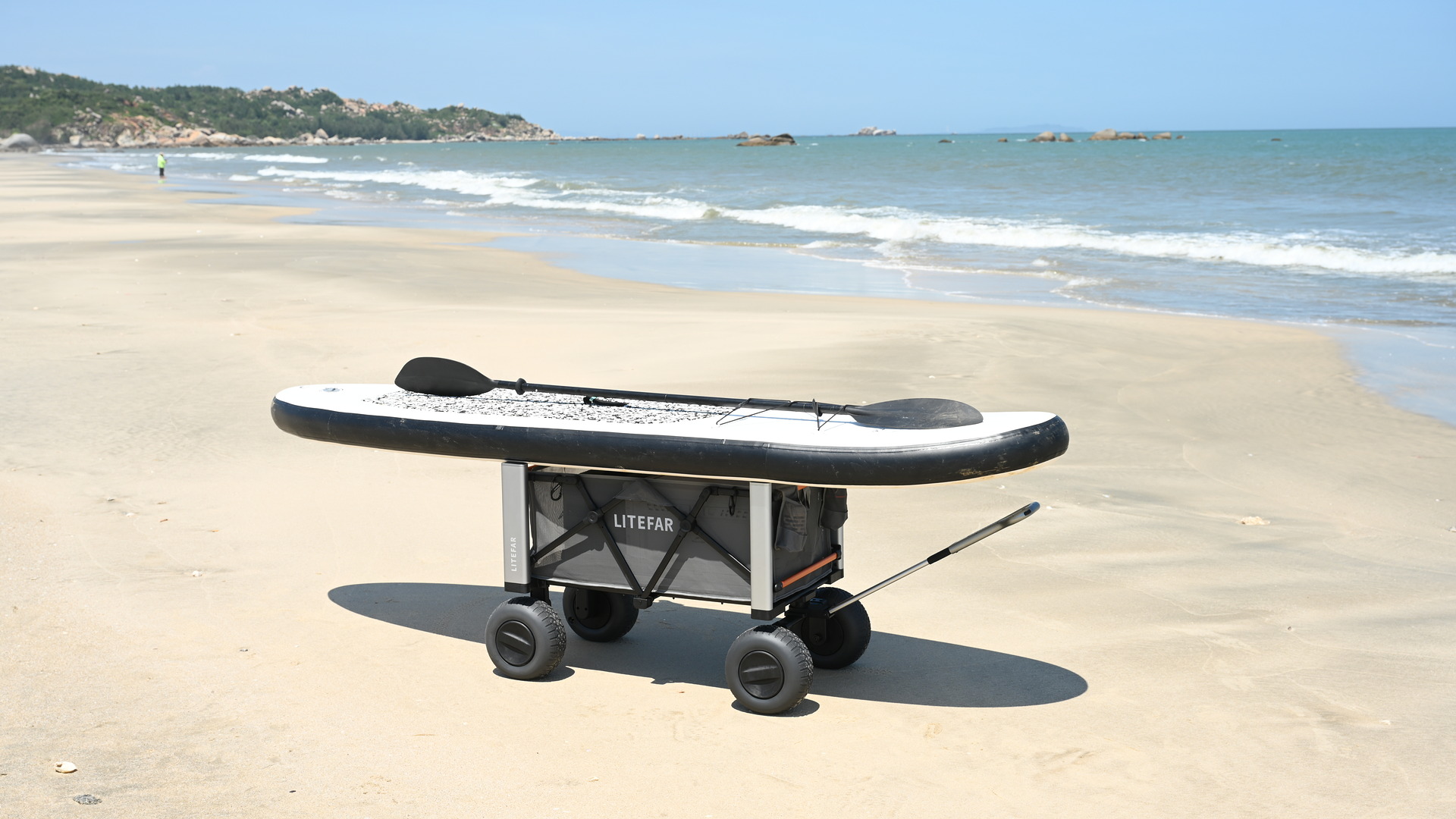
The B1 is designed as a cargo carrier, not as a passenger vehicle. Its high weight ratings should therefore not be taken as approval to transport children or adults inside it.
Pricing and availability
As of August 18, 2026, Litefar is introducing the B1 through an Indiegogo crowdfunding campaign. The company’s product page advertises a launch offer of US$569, compared with a stated future retail price of US$999—a claimed saving of US$430 or 43%.
Litefar says the wagon has completed key design validation and tooling preparation and is ready for production. However, a crowdfunding pledge is not the same as buying an in-stock retail product. The final delivery schedule, shipping charge, eligible destinations, taxes and exact contents of each reward should be checked on the live campaign page before pledging. Crowdfunding projects can also encounter manufacturing and fulfilment delays.
For beachgoers who regularly move heavy equipment across loose sand, the underlying idea is compelling: use balloon tires to stay on top of the surface and electric assistance to reduce the drag. The B1 adds substantial capacity, folding transport, portable power and lighting to that formula — it offers a focused answer to one of the least enjoyable parts of a gear-heavy day at the beach.
Source: LITEFAR B1 (Indiegogo)