A Spanish space startup is preparing an orbital test of a satellite propulsion system designed to “breathe” the thin upper atmosphere.
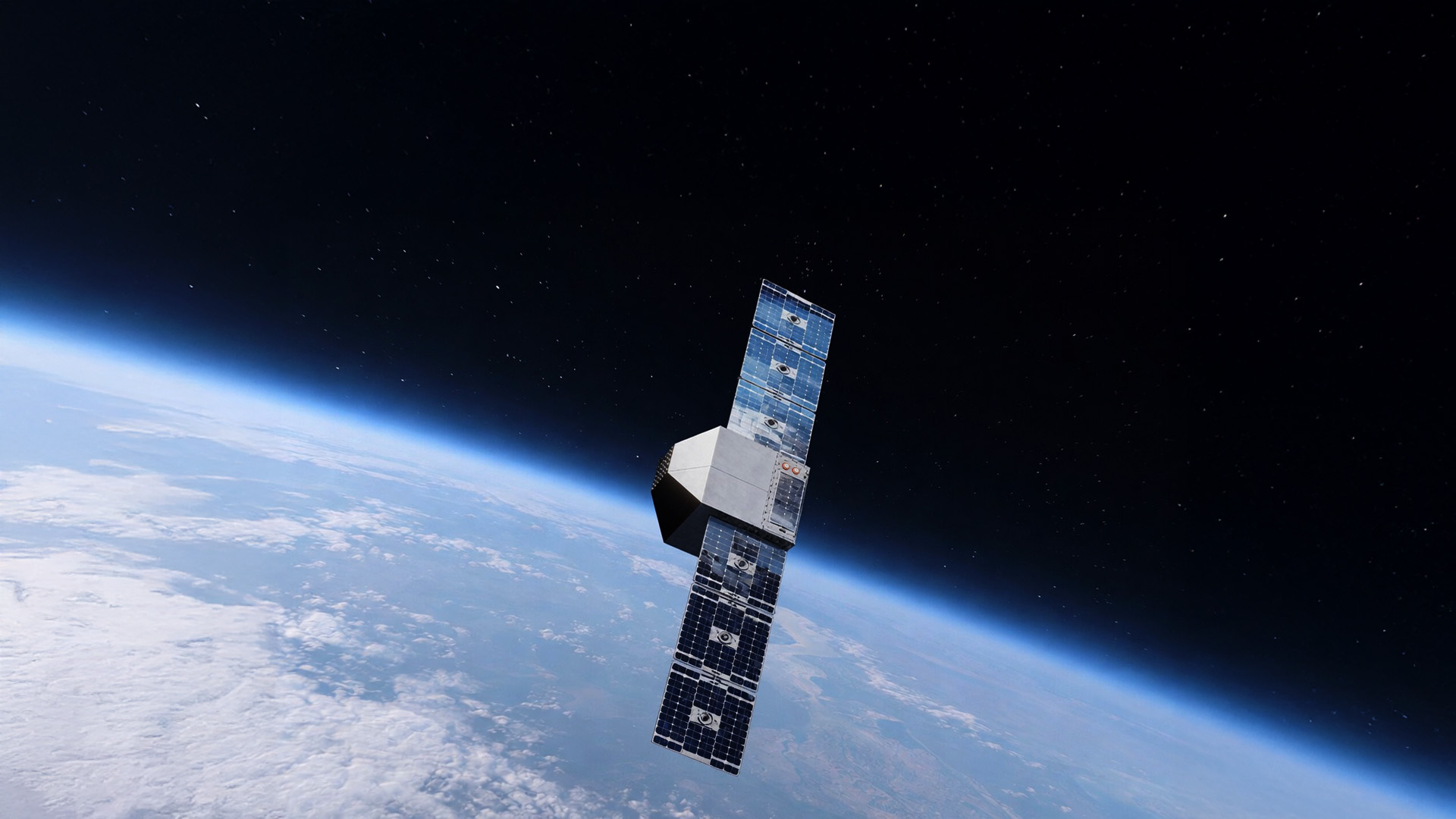
Kreios Space has selected Kongsberg NanoAvionics to build a demonstration spacecraft for its air-breathing electric propulsion system. The mission is intended to show whether a satellite can collect the sparse gas surrounding it and use that material as propellant while operating in very low Earth orbit, or VLEO.
Kreios is targeting altitudes between roughly 150 and 300 km (93 and 186 miles). Flying this close to Earth could give imaging satellites a closer view of the surface and shorten the distance traveled by communications signals.
There is, however, a major obstacle: the atmosphere does not end at a sharp boundary. Even at those altitudes, enough gas remains to create significant aerodynamic drag. Without regular orbit-raising maneuvers, a spacecraft loses altitude and eventually re-enters the denser atmosphere.
Turning atmospheric gas into propellant
Conventional electric-propulsion satellites carry a finite supply of material such as xenon or krypton. Electricity ionizes that propellant, and the resulting charged particles are accelerated to generate a small but highly efficient thrust.
Kreios proposes replacing the stored propellant with gas collected in orbit. An intake would capture residual atmospheric particles—principally oxygen and nitrogen—before the system ionizes the gas and accelerates it through an electric thruster. Solar panels would supply the electrical power.
The atmosphere would therefore serve as the propellant, rather than as a fuel burned in a combustion engine. If the intake and thruster can collect and accelerate enough material to balance the drag acting on the spacecraft, the system could avoid the lifetime limit imposed by a conventional onboard propellant tank.
That is the theory. Air-breathing electric propulsion has been investigated in laboratories and research programs, but Kreios’ planned mission is intended to test its own complete system in the environment where it would actually have to operate.
A 200-kg satellite will put the idea to the test
The demonstrator will use NanoAvionics’ MP42 microsatellite platform. Kreios says the finished spacecraft will weigh approximately 200 kg (441 lb), including an optical payload whose supplier has not yet been announced.
NanoAvionics will customize the satellite bus, integrate the imaging equipment and support testing and commissioning. During the mission, the spacecraft is expected to operate through the VLEO region while engineers validate the propulsion system and collect measurements of the surrounding atmospheric environment.
The satellite is also intended to capture visible and near-infrared images at sub-meter resolution. That payload will help demonstrate one of VLEO’s potential advantages: a camera can achieve finer ground detail from a lower altitude without necessarily requiring the larger optics associated with a more distant orbit.
Kreios also argues that sustained VLEO operations could support lower-latency communications and smaller, less expensive spacecraft. Those benefits remain projections, however, and will depend on factors including power consumption, intake efficiency, thruster performance, spacecraft drag and the changing density of the upper atmosphere.
The flight date is not yet fixed
Kreios describes the mission as the first orbital demonstration of its air-breathing system and currently identifies 2027 as a provisional target. The joint announcement with NanoAvionics did not provide a firm launch date, launch provider or deployment schedule.
That distinction matters. The spacecraft has not yet shown that it can produce sufficient thrust from the extremely thin atmospheric gas available at these altitudes, much less maintain an orbit for years. Until the demonstrator flies, the system’s endurance and economic advantages remain engineering goals rather than proven capabilities.
If it works, though, the technology could open an unusual operating region for future Earth-observation and communications missions. Instead of fighting the upper atmosphere with a dwindling tank of imported propellant, a satellite could potentially use the same gas responsible for pulling it down to help keep itself aloft.
Sources: Kreios Space, Space.com