Shipping a conventional solar farm to a temporary or remote location is not particularly practical. Panels, mounting structures, cables and electrical equipment normally arrive separately, after which a crew has to build the installation on site.
An Austrian company called SolarCont has developed a different approach. Its Solarcontainer packs a largely preassembled photovoltaic power plant into the transport footprint of a 20-foot high-cube container.
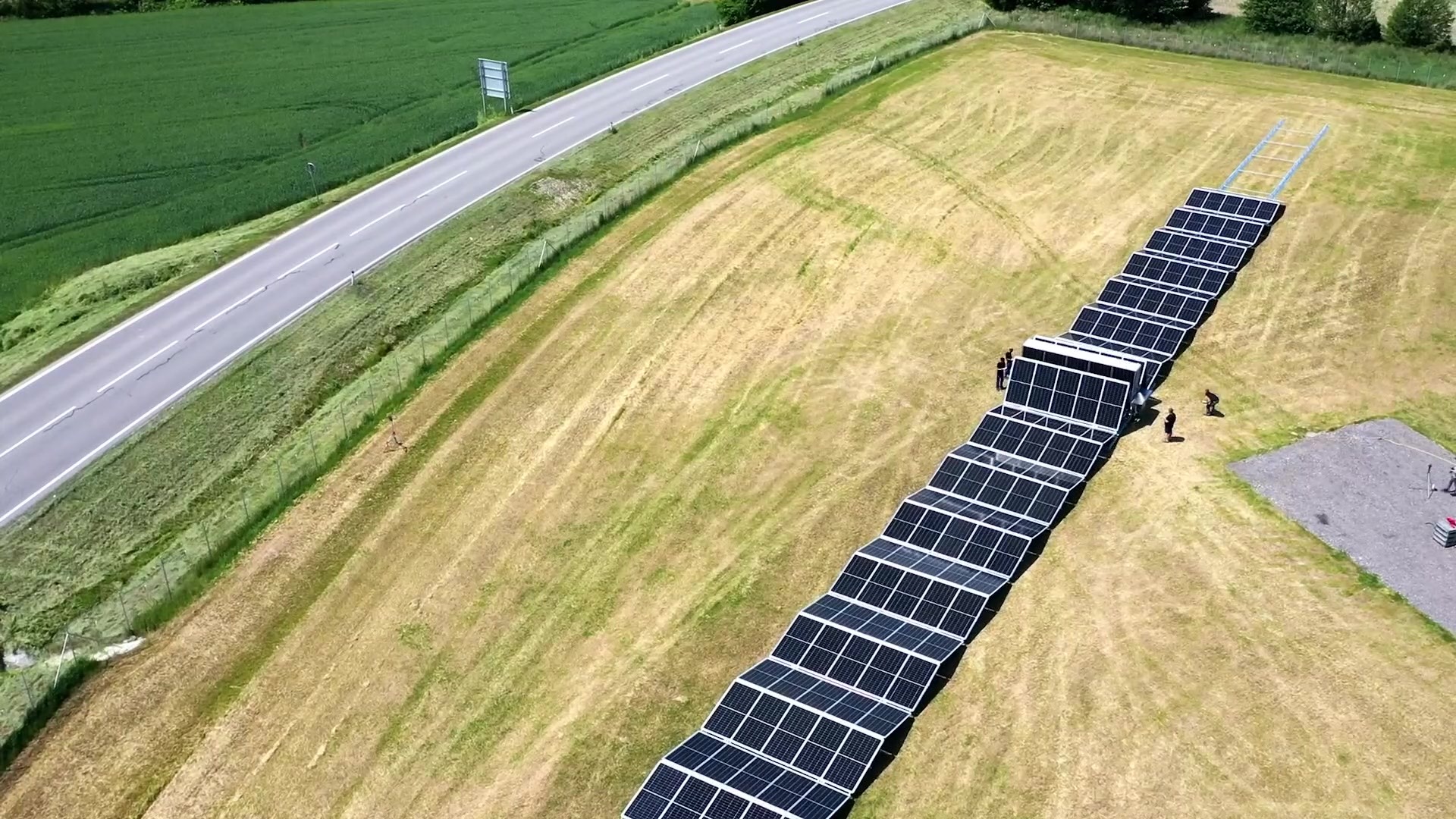
After arriving at its destination, rail sections are installed on both sides of the central frame. Stacks of hinged solar-panel assemblies then travel outward along those rails and unfold into two long rows.
Fully deployed, the current system contains 240 photovoltaic modules, covers approximately 720 square metres (7,750 sq ft) and provides up to 140 kWp of installed solar capacity.
It is an impressive transformation, but the word “container” needs some context. This is not a conventional shipping container with panels simply stored inside. It is a purpose-built, open container frame engineered around a folding photovoltaic system.
From a 20-foot footprint to a 116-metre solar array
In transport configuration, the Solarcontainer measures approximately 6 metres long, 2.4 metres wide and 2.9 metres tall—about 19.7 × 7.9 × 9.5 ft.
Its dimensions, corner lifting points and twist-lock fittings are based on a 20-foot high-cube container format compliant with ISO 668 and carrying a CSC approval plate. This allows the unit to be handled using established container-transport equipment and carried by truck, train or cargo ship.
SolarCont lists the complete system at less than 20 tonnes. Its shipping page gives a deadweight figure of approximately 19 tonnes (41,900 lb), so unloading requires a crane with sufficient lifting capacity.
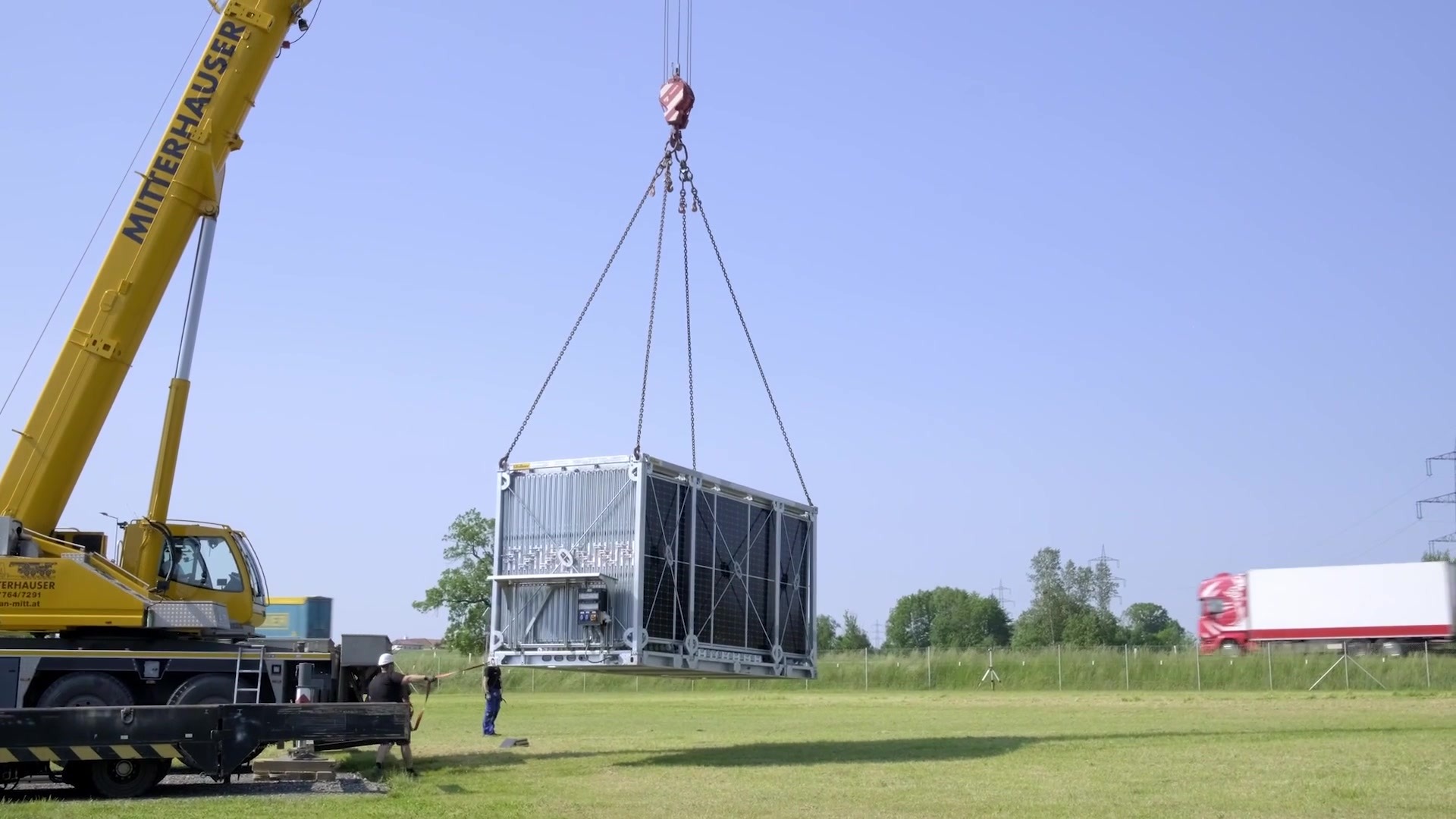
Once installed, the solar-panel fields extend in opposite directions from the central base. SolarCont quotes a total deployed length of approximately 116 metres (381 ft), with the two-sided arrangement helping keep cable runs between the modules and inverter comparatively short.
As the panels move away from the center, the original transport structure becomes almost invisible beneath the array. This prevents a tall container body from remaining in place and casting a shadow over nearby modules.
The first installation still requires people and machinery
Promotional footage makes the unfolding process look almost automatic, but two separate stages are involved.
The first is the physical installation. Workers unload the unit, remove external transport components and assemble multiple galvanized-steel rail sections on the ground. The rails connect with the centrally positioned floor frame and can be laid without drilling into the site.
SolarCont lists up to five hours of assembly time. Its FAQ says at least three to four installers and one crane operator are required to bring a unit into operation within one day.
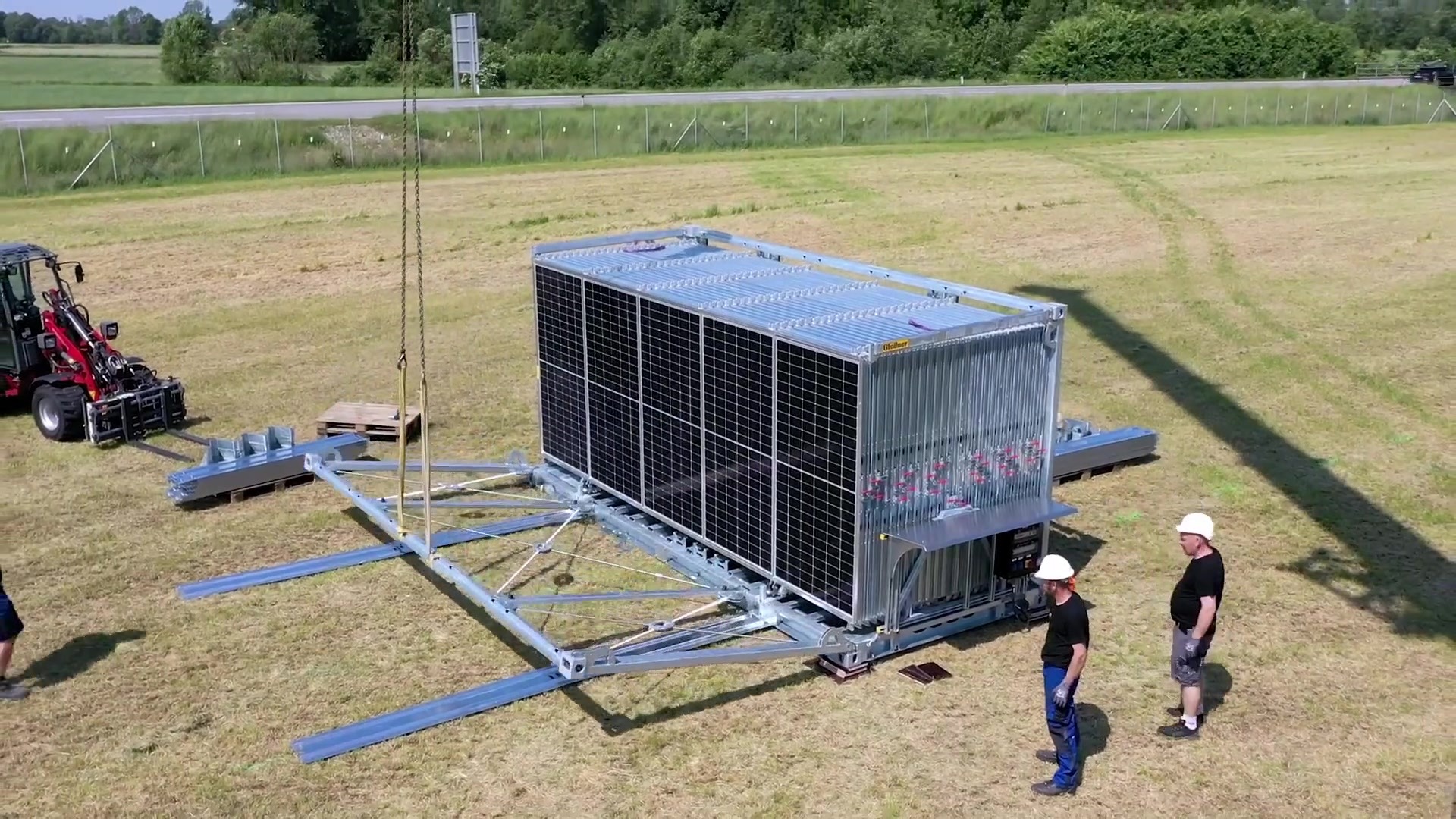
The second stage is panel movement. Once the rails and conveyor mechanism are in place, an electrically driven system moves the preassembled and prewired panel frames outward. A separate vehicle is not needed to pull the arrays open or push them closed.
The system therefore reduces site work compared with constructing a similarly sized temporary solar array from individual components, but it should not be described as a solar farm that becomes operational immediately after being dropped from a truck.
How the folding panel system works
The 240 modules are arranged in hinged frames that stand closely packed together while the Solarcontainer is folded for transport.
During deployment, the conveyor separates and moves the frames along the rails. The modules open into low, repeating pairs extending away from the central unit.
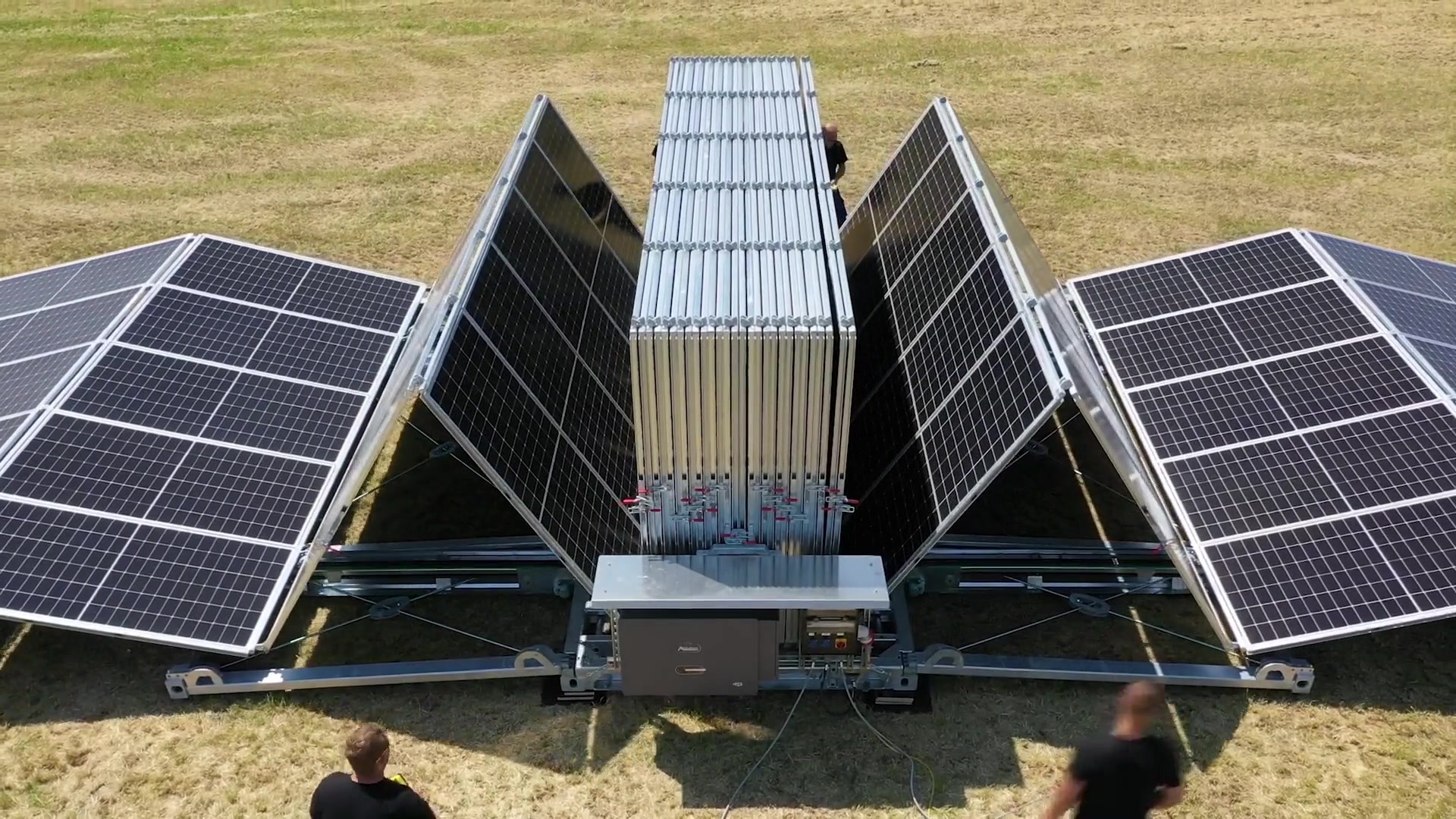
SolarCont says the panel angle is intended to balance electricity generation with a degree of natural cleaning from rainfall. The exact energy yield will depend on module specification, latitude, orientation, weather, shading and local site conditions.
The manufacturer estimates that, at a site in southern Germany, annual production could equal the consumption of approximately 32 four-person households, assuming 4,000 kWh of electricity per household per year. It says stronger solar irradiation in southern Europe could raise that comparison to as many as 50 households.
Those figures are location-dependent annual-energy comparisons—not a claim that the system can continuously power that many homes at every moment.
The inverter is included, but a battery is not standard
SolarCont says the photovoltaic modules are preassembled and fully wired, while the inverter and other electrical equipment can be delivered installed and commissioned with the system. A customer can alternatively specify another inverter where local grid requirements demand it.
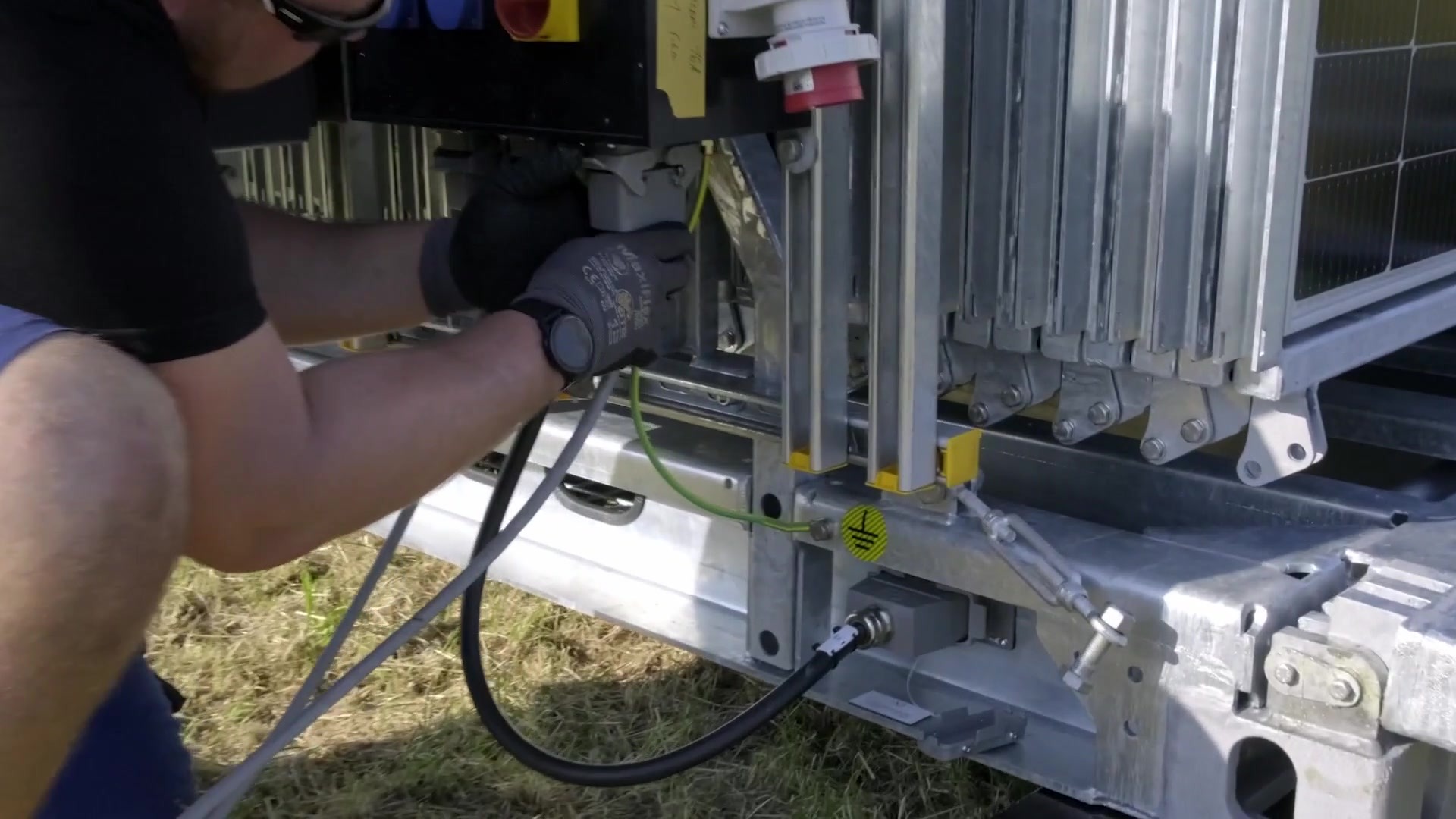
The Solarcontainer can operate in an on-grid installation, feeding a local facility and potentially exporting excess electricity where regulations and grid infrastructure allow.
For a genuinely off-grid installation, however, the photovoltaic array cannot create a stable electricity network by itself. SolarCont says it must be combined with a grid-forming component such as a battery-storage system or diesel generator.
Storage can absorb solar production for use after sunset or during periods of weak sunlight. At sites already dependent on diesel generation, daytime solar output could reduce generator running time, fuel use and maintenance requirements rather than necessarily replacing the generator completely.
Battery capacity is not included in the headline 140-kWp solar specification, and SolarCont does not advertise a single standard storage capacity on its product pages. The appropriate battery, generator and inverter arrangement must be designed for the individual site and its electrical loads.
It can retract for severe weather—with one limitation
The steel rails and panel frames use their own weight for resistance against lifting and movement. Ballast blocks can be added to the rail system where greater wind resistance is required, while SolarCont recommends concrete foundations for locations exposed to very high wind loads.
When extreme wind or snow is forecast, the electric conveyor can retract the arrays and secure the panels on the central frame within minutes, according to the company.
There is an important limitation: the panels cannot retract during a power failure unless an external source is connected. SolarCont recommends an emergency generator or energy-storage system for that situation.
Site-specific structural calculations, anchoring requirements and local electrical approvals would still be necessary. The company has not published a universal wind-speed rating that would apply to every installation.
Designed for temporary and difficult locations
Potential applications include construction sites, agriculture, mining, temporary events, emergency response, remote charging locations and communities with weak or nonexistent grid connections.
One particularly interesting use proposed by SolarCont involves seasonal land. A parking area serving a mountain railway, for example, could host the deployed array during a quiet summer period. The panels could then be retracted and the space returned to parking before winter visitors arrive.
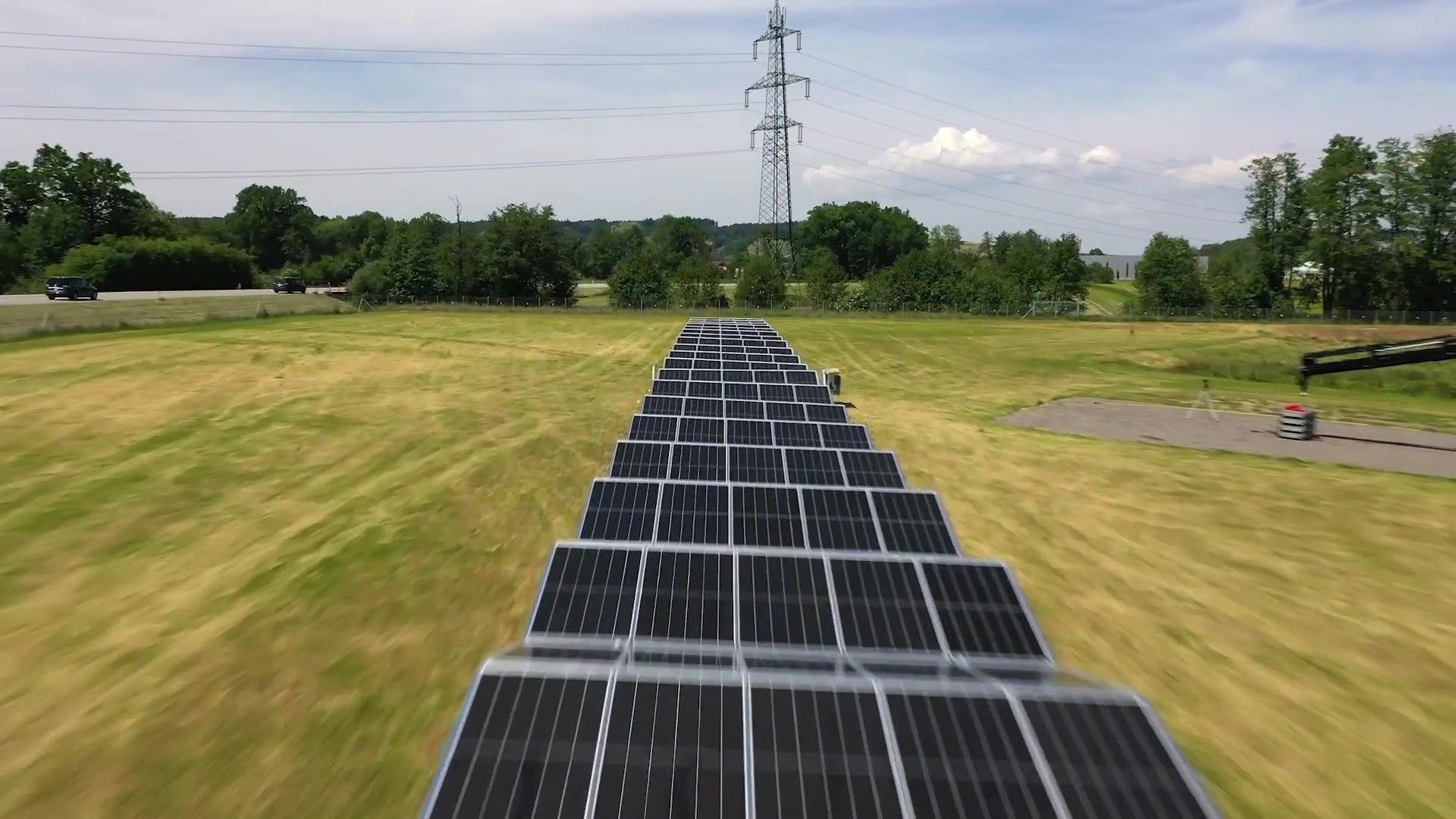
Multiple Solarcontainers can also be combined when a project requires greater capacity. That modularity could suit temporary industrial sites or remote operations that expand over time.
Mobility does not mean the system can be moved every day without preparation. The modules must be retracted, rails dismantled, transport components refitted and the heavy central unit lifted onto a suitable vehicle. Its advantage is that the power plant can be relocated and reused rather than permanently fixed to one piece of land.
Made by an Austrian joint venture
SolarCont GmbH was established in Austria in 2022 as a joint venture between Hilber Solar and Gföllner Fahrzeugbau und Containertechnik.
Hilber Solar contributes photovoltaic-system experience, while Gföllner brings expertise in special vehicles and container construction. Austria’s official business directory lists SolarCont as a registered company based in St. Georgen bei Grieskirchen.
The product received wider industry attention in 2024, when pv magazine reported the launch of the 240-module, 140-kWp configuration.
SolarCont does not publish a fixed retail price. Systems are quoted individually according to the intended location, electrical configuration, installation requirements and any supporting equipment. The company says purchase, rental and leasing arrangements may be available.
The Solarcontainer will not replace a permanent solar farm where land is available and the installation is expected to remain for decades. Its substantial weight, crane requirement and ground-mounted footprint also make it very different from a small portable generator.
Where a comparatively large solar plant must be transported, installed for a limited period and later recovered, however, packaging 240 modules into a standardized transport frame offers an unusual middle ground between portable power equipment and fixed renewable infrastructure.
Sources: SolarCont Solarcontainer, pv magazine