
Personal aircraft usually demand a runway, a pilot’s license and a substantial amount of conventional flight training. The Pivotal Helix approaches recreational aviation very differently.
It is a single-seat electric aircraft that takes off and lands vertically, transitions into wing-supported forward flight and is designed to qualify as a Part 103 ultralight in the United States. Pivotal says that means an eligible owner can fly it recreationally without holding a pilot’s license, although training and compliance with ultralight operating rules remain essential.
The aircraft is also something customers can actually reserve. Its current base price is $190,000, with a staged ordering process beginning with a refundable $9,000 reservation.
The entire aircraft tilts into flight
Helix does not resemble the multicopter air taxis being developed for passenger services. It uses two fixed wings arranged in tandem, with electrically driven propellers distributed across the airframe.
For takeoff, the aircraft rests in a near-vertical orientation and rises directly from the ground. The complete airframe then rotates into a horizontal attitude as the wings begin supporting it in forward flight. It reverses that process when landing.
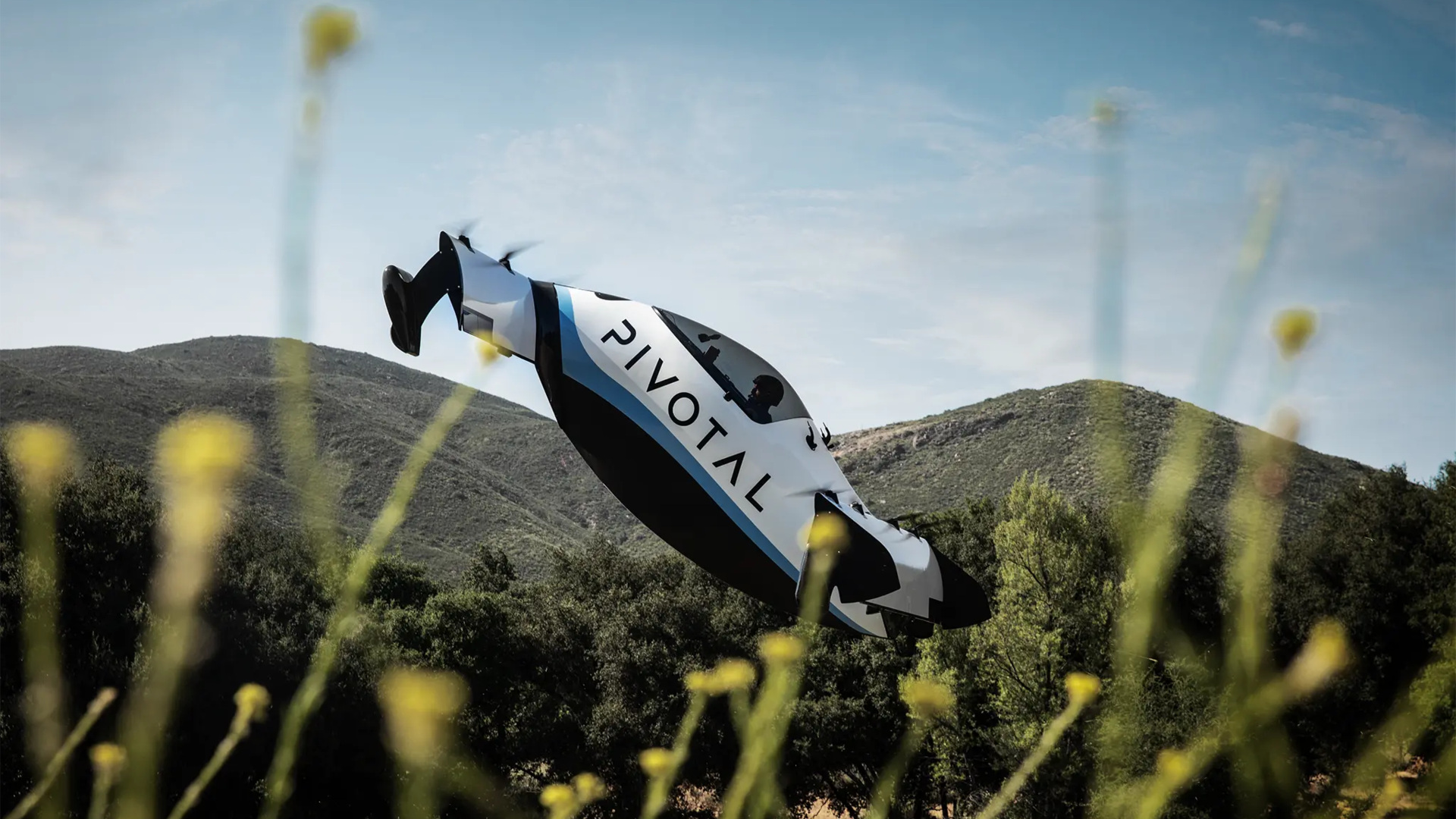
Pivotal argues that moving the airframe instead of adding tilting wings or rotor mechanisms reduces mechanical complexity. The unusual configuration evolved from the company’s earlier BlackFly aircraft and gives Helix its distinctive appearance in the air and on the ground.
A single control stick and automated assistance
The cockpit is intentionally simpler than that of a conventional airplane. Helix uses a single control stick and touchscreen display, while automated systems assist with takeoff and landing.
Pivotal describes the aircraft as offering Level 2 autonomy. That does not make it a self-flying passenger vehicle: a trained person remains responsible for operating it. Automation is intended to manage demanding parts of flight and make the aircraft’s responses more predictable.
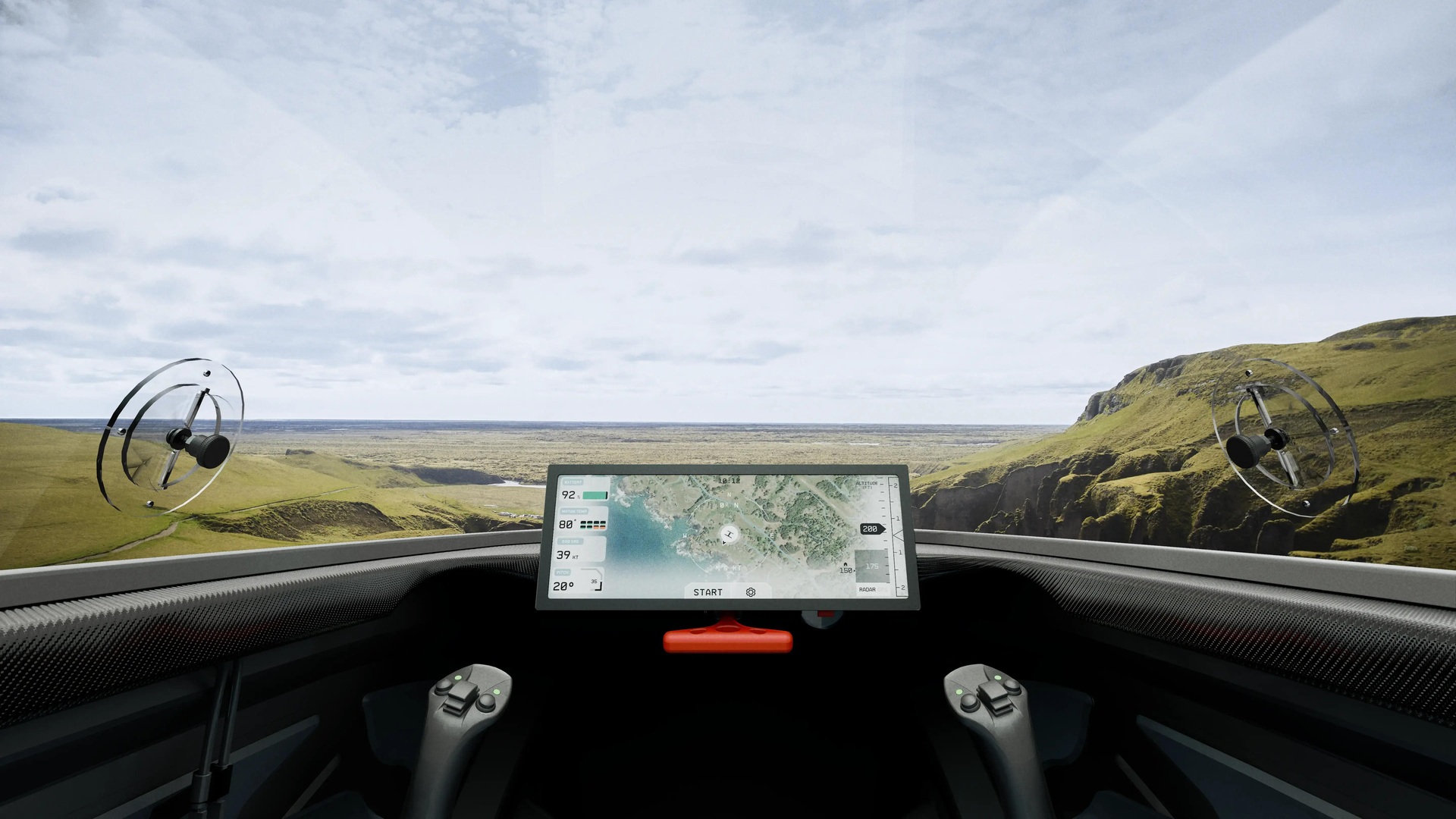
The canopy provides a broad field of view, and customers can choose a clear or tinted version. The standard flight deck also includes an HD landing camera.
It can fly for about 20 minutes
Helix has a listed cruising speed of 55 knots (62 mph or 100 km/h). Maximum endurance is 20 minutes, with a stated maximum range of 20 miles (32 km).
Those figures make it better suited to short recreational flights, property exploration and reaching nearby destinations than long-distance transportation. Pivotal highlights uses such as waterfront access, island trips and travel between nearby properties where takeoff and landing are legally permitted.
Maximum gross takeoff weight is 568 lb (258 kg), while payload is limited to 220 lb (100 kg). The payload figure has to cover the pilot and anything carried aboard, making occupant weight a significant purchasing consideration.
With its wings assembled, Helix occupies a 14 × 14-ft (4.3 × 4.3-m) footprint. Disassembled, it narrows to approximately 14 × 5 ft (4.3 × 1.5 m), allowing it to be transported in a small enclosed trailer. Pivotal quotes a 75-minute charging time using a 240-V charger.
Parachute, floats and redundant controls
An aircraft designed for non-professional pilots needs safety systems that do more than simplify normal flight. Pivotal says Helix uses triple-redundant flight-control systems so that a single failure does not immediately remove control of the aircraft.
It also has automated landing functionality and an aircraft parachute intended to lower the complete vehicle during a rare emergency.

Emergency flotation equipment is available for operations over water. These systems may provide additional layers of protection, but they do not eliminate the risks of low-altitude aviation, changing weather, unsuitable terrain or pilot error.
Pivotal includes ground, simulator and flight training with the aircraft. Even though a pilot’s license is not required for qualifying US operations, training should not be confused with an optional orientation session.
No pilot’s license does not mean unrestricted flight
Pivotal classifies Helix as a Part 103 ultralight in the United States. Aircraft in this category do not require the same registration, airworthiness certification or pilot licensing as conventional private aircraft.
However, Part 103 carries substantial operating restrictions. Ultralights are for a single occupant and sport or recreational use. They cannot be operated over congested areas or open-air assemblies of people, and access to certain controlled airspace requires authorization. Operations are generally limited to daylight, subject to the specific civil-twilight provisions in the regulations.
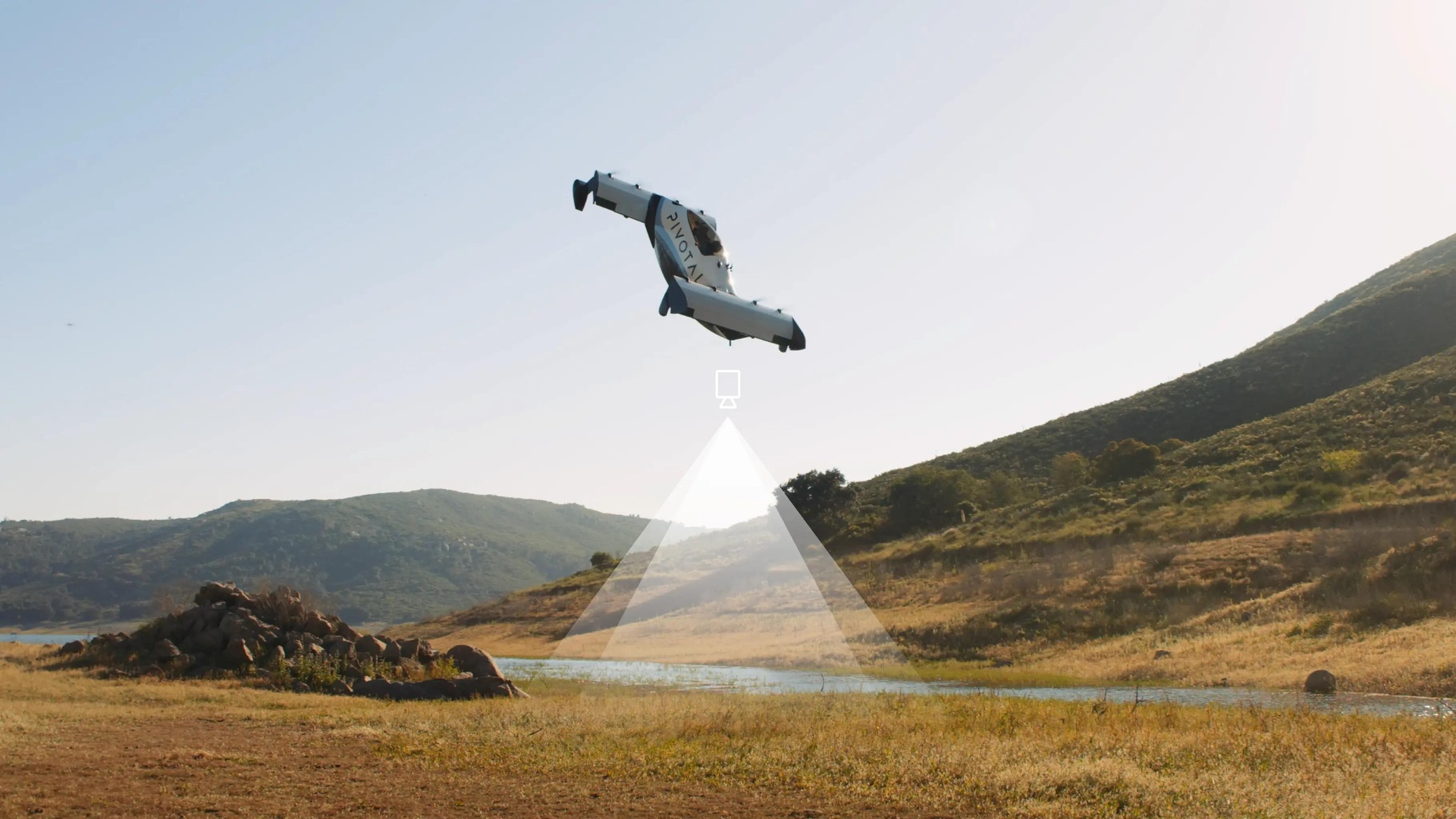
Takeoff from private land also requires the landowner’s permission, while local rules may further limit where the aircraft can operate. Helix should therefore be viewed as a recreational aircraft for suitable open locations—not as a machine that can routinely lift off from a suburban driveway and cross a city.
Price and ordering process
The live Pivotal order page lists the Helix Base Package at $190,000. Sales tax and shipping are additional, while customization may increase the final price.
Pivotal divides the purchase into four stages:
- Reserve the aircraft: Place a fully refundable $9,000 reservation, which locks in pricing and secures a delivery position. The order page says the reservation is refundable until 30 days before scheduled training and is applied to the total price.
- Move it into production: Place a $50,000 deposit, then work with Pivotal’s sales team to customize the aircraft and establish a delivery date.
- Make the final payment: Submit the remaining balance at least five days before the scheduled aircraft delivery.
- Take delivery: Collect Helix from Pivotal headquarters using a trailer or arrange delivery to another location.

The base package includes the white and carbon-fiber aircraft, custom aircraft marking, clear or tinted canopy, standard flight deck, HD landing camera, charger, vehicle cart, training and standard warranty. Pivotal currently advertises 2026 delivery positions, although actual timing depends on production and the customer’s order.
At $190,000, Helix is not attempting to make personal flight inexpensive. Its more unusual proposition is that it packages vertical takeoff, electric propulsion, simplified controls and included training into a recreational aircraft that fits within the US ultralight framework.
Its short endurance and strict operating environment rule out many of the everyday journeys associated with futuristic “flying car” imagery. For owners with suitable land, nearby destinations and the resources to operate it responsibly, however, Helix offers something far more tangible: a personal electric aircraft that can already be reserved.
Sources: Pivotal Helix personal aircraft, Pivotal Helix order page, 14 CFR Part 103