In the quest for more flexible uses of solar energy, Sunbooster’s “VERTICAL” product presents an interesting twist: instead of mounting panels on a roof or a ground rack, this solution integrates solar power directly into a standard double‑wire mesh fence — converting an otherwise passive boundary into an electricity‑producing asset.
What is Sunbooster VERTICAL
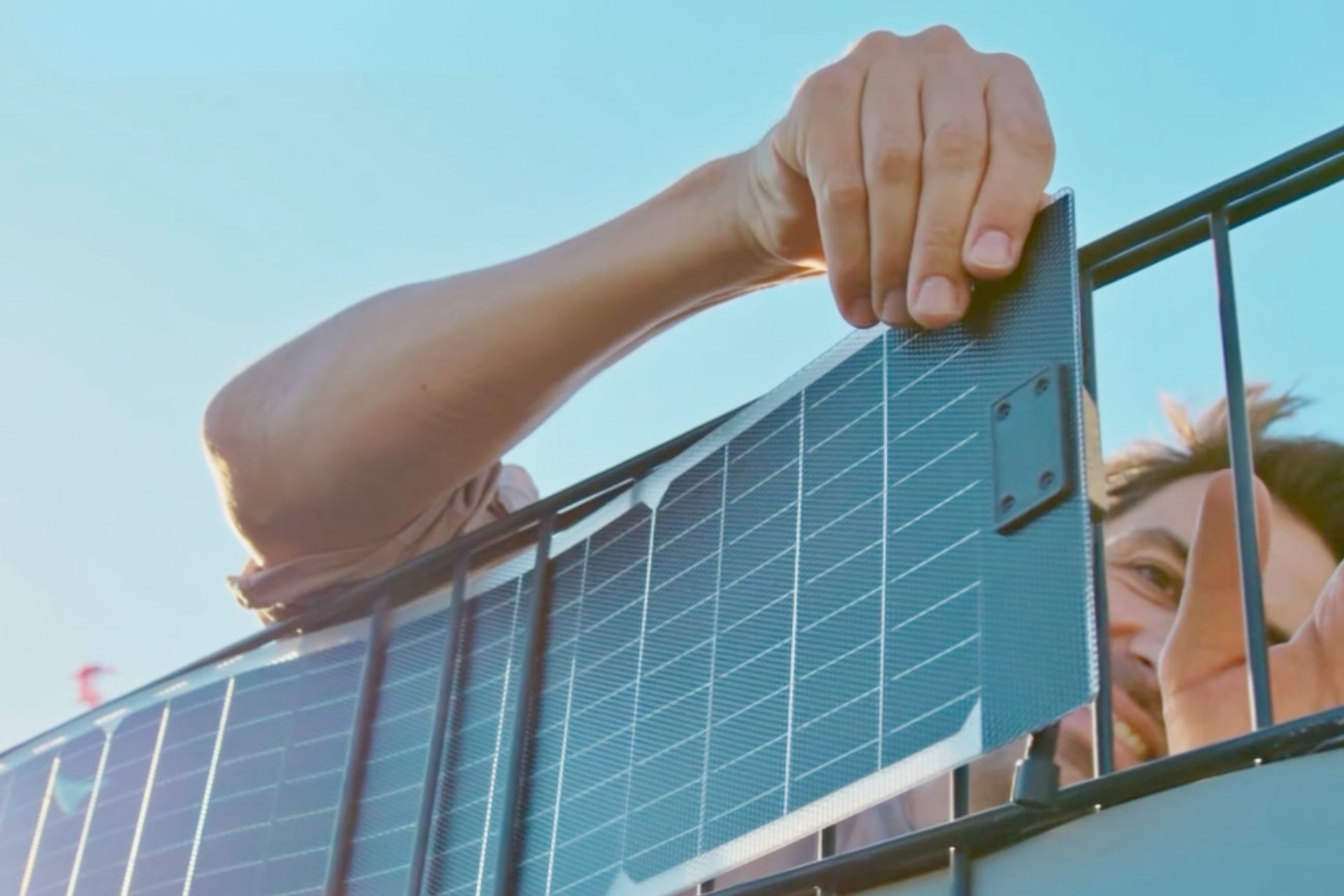
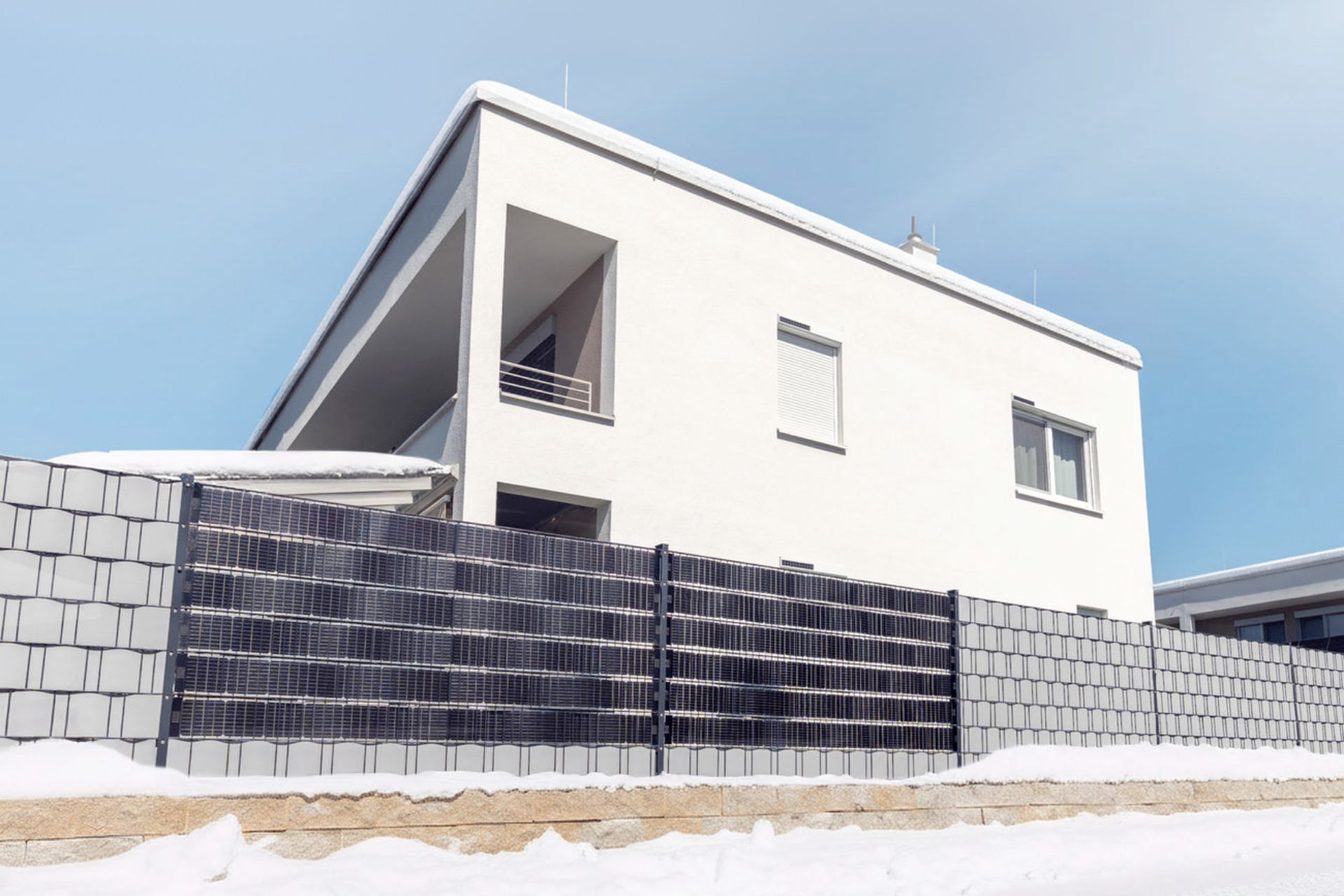
Sunbooster VERTICAL consists of flexible, bifacial monocrystalline solar strips designed for easy installation in existing double‑wire mesh (Doppelstabmatten) fences. Rather than requiring heavy mounting structures or bespoke racks, the solar strips are simply “threaded” into the gaps of the fence — in a manner similar to privacy slats.
Each strip is thin (about 1.8 mm thick) yet durable, and is available in two standard lengths — roughly 2.0 m or 2.5 m — matching typical fence panel widths. A 2.0 m strip weighs about 1.0 kg; a 2.5 m strip about 1.2 kg.
The solar cells are bifacial — meaning they can generate electricity from light hitting either side — which allows them to take advantage of both direct sunlight and reflected or diffused light from the environment (e.g. bright ground surfaces or snow).
Sunbooster offers its VERTICAL product in modular “sets.” The smallest set begins at about 372 W output (including inverter and cabling), making it a plug‑and‑play solution for many home‑installations.
Larger configurations are also possible: a “4‑unit set” — effectively covering a larger fence — provides up to 1.872 kWp.
Because the system is modular, multiple sets can be combined along longer fence lines. Sunbooster notes that a fence of about 100 meters could, in principle, host over 18 kWp of capacity, with a potential annual yield around 22 MWh.
Claimed Benefits & Use Cases
- No extra space needed: Since the strips integrate into existing fences, there’s no need for building additional racks or using roof space.
- Optimized for low-angle light & reflection: The vertical orientation — especially with bifacial cells — can harvest light in early morning and late afternoon, or capture reflected light (from bright ground surfaces or snow), potentially smoothing production across the day.
- Winter and all‑weather resilience: According to the manufacturer, the vertical mounting reduces snow accumulation (common problem for roof-mounted panels), helping maintain energy output even in winter.
- Modularity and scalability: Users can start with a small system (e.g. 372 W) and expand gradually depending on energy needs and available fence length.
- Easier retrofit for existing fences: Owners of typical wire‑mesh fences can upgrade to solar without heavy construction, screws or concrete racks.
Sunbooster positions the system as suitable for a wide range of scenarios — from residential gardens to industrial fencing — especially where roof space is lacking, or where fence‑based installation is simpler or more practical.
Technical Details and Performance
- Cell efficiency: about 22.8% (monocrystalline bifacial cells) for VERTICAL strips.
- Operating temperature range: from –20 °C to +60 °C. Modules carry an IP67 rating, indicating strong resistance to moisture, dust, and weather conditions.
- For the 2.5 m strip variant, each row delivers approximately 79 Wp under standard test conditions; for 2.0 m, about 62 Wp.
- Sunbooster includes inverters and wiring in the kit; smaller systems come with inverters sized appropriately for their output (enabling plug‑and‑play installation).
Pricing and Economics
As of this writing, the official price for a single Sunbooster VERTICAL system (2.0 m variant) is €619.90 (approx. US$714) including inverter and cabling.
Sunbooster claims that due to lower acquisition costs — reportedly only about one‑third of what conventional glass‑module solar fences cost per meter — the system can pay for itself within 2 to 2.5 years (depending on energy prices and local conditions).
What to Keep in Mind
- While the concept is novel and the convenience appealing, some considerations remain:
As with all bifacial/vertical PV systems, ground reflectivity and orientation matter. The “rear‑side” gain (from reflected light) will only be significant if the surroundings — ground, nearby surfaces — have enough reflectivity, or if there is snow cover. - For best performance, fences should use the standard widths (2.0 m or 2.5 m) that match the strip lengths offered. Custom fence sizes may not be supported.
- As with many solar systems, real‑world yield depends heavily on local climate, shading, orientation, and how well the installation avoids obstructions.
Verdict: A Useful, Flexible Renewable‑Energy Option — With Real Use Cases
Sunbooster VERTICAL stands out as a creative adaptation of solar PV technology, especially for contexts where traditional roof or ground‑mounted panels are impractical. Its modular, retrofit‑friendly design, combined with bifacial cells and vertical orientation, offers a quiet but potentially efficient way to harvest solar energy using existing fence infrastructure.
For homeowners or small businesses with suitable fencing — especially where roof access is limited — the system could represent a relatively low‑effort entry into solar self‑generation. However, realizing the claimed benefits will depend strongly on local site conditions (sunlight exposure, reflectivity, orientation, fence layout).
In short: Sunbooster VERTICAL deserves attention as a practical and flexible PV solution — not a one‑size‑fits‑all replacement for rooftop solar, but an interesting–and in some cases cost‑effective–alternative for those willing to match installation to context.
Source: Sunbooster